Oregon Lawyers Face $110,000 Fine for AI-Fabricated Court Filings
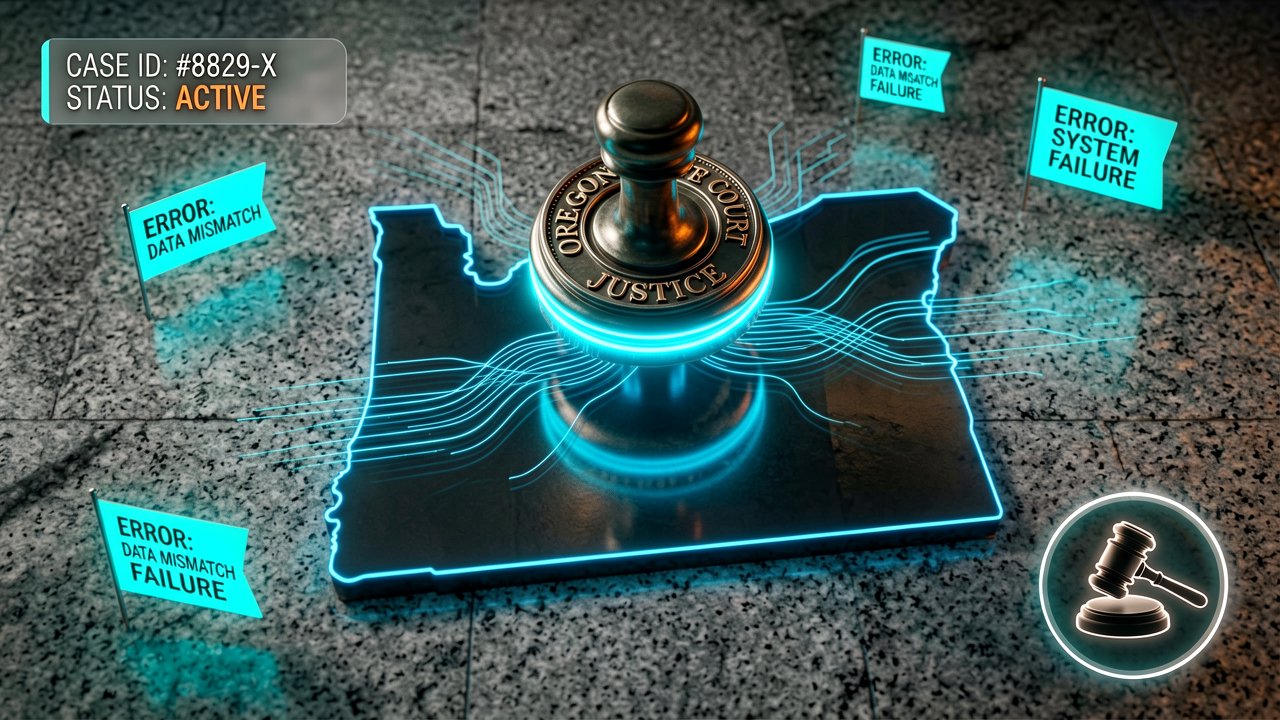
A federal judge recently fined two Oregon lawyers a combined $110,000 for submitting legal documents filled with cases and citations that never existed. The penalty came after artificial intelligence tools generated what lawyers call "hallucinations" — completely fabricated legal authority that passed through to court filings.
According to Ankur Doshi, general counsel of the Oregon State Bar, approximately five identified court filings in Oregon have contained these AI hallucinations. The national picture is far worse. Doshi told Oregon Public Broadcasting that the number of cases across the United States referencing AI fabrication issues is closer to 900, with about 350 committed by lawyers themselves.
The OPB report details how generative AI programs like ChatGPT or Claude can produce inaccurate or misleading information, including inventing information that does not exist. When attorneys submit these documents without verification, they risk sanctions ranging from fines to disbarment.
Erin C. Lagesen, chief judge of the Oregon Court of Appeals, issued a public warning describing the problem as "rapidly escalating." She directed court staff to track the time spent addressing fabricated authority so Oregonians can have an accounting of the resources consumed. The court has already imposed a $10,000 fine in March on an attorney who filed at least 15 fabricated case citations in a marijuana production license case.

Another attorney received approximately an $8,000 fine after filing a brief containing fabricated quotations and propositions of law falsely attributed to existing cases. The Oregon Court of Appeals guidance describes what constitutes false information: citations of cases that do not exist, quotations that do not appear in the case cited, or factual support made up with no basis in the record.
The Oregon State Bar released formal guidance last year stating lawyers must take "reasonable steps to become competent in the use of such technology." Competence is an ongoing obligation, the guidance reads. At this point, AI includes thousands of rapidly evolving tools, and the associated benefits and risks are constantly changing (which means lawyers need to keep up or get sanctioned).
Doshi explained that discipline depends on aggravating or mitigating factors. If a lawyer discloses how they used AI to the court, they may only get a slap on the wrist. If they try to hide it, they could face fines, suspension, or disbarment. The two Oregon lawyers who received the $110,000 penalty apparently did not disclose their AI use.
Many lawyers continue using AI despite the risks because it represents substantial time savings and efficiencies. Doshi noted that AI has capability for reviewing and drafting work when integrated properly into the work process. The key element is that there has to be a human element who checks the work and is able to respond to it.

One of the first discipline cases involved an attorney who had been practicing since 1990 with substantial experience. There's no pattern of newer attorneys or specific age sets being more prone to misuse. Instead, it's a misunderstanding of how generative AI functions and whether the output reflects actual research versus fabrication.
AI mistakes could cost courts more time and money when opposing counsel must take on extra work to review potentially fabricated cases. Down the road, these mistakes could erode the integrity of the legal system. It's not only fabricated cases but fabricated statements of law, meaning entire arguments have no basis in law, which strikes directly at the precedent-based system.
Self-represented litigants are also using generative AI tools to draft their own pleadings. Doshi noted that because these tools are available to the public, individuals representing themselves pro se are going into court using AI to draft documents. These people could face court sanctions, including fines, for misusing AI.
The Oregon Court of Appeals guidance states that to avoid penalties, anyone using the technology must verify cases cited and quotations, as well as check if paraphrases are objectively reasonable in light of what the case actually says. Using fabricated evidence is grounds for striking the legal filing from the record and imposing sanctions such as monetary payments, attorney fees to the opposing party, and dismissal of an appeal case.
Whether the $110,000 fine becomes a deterrent or just another line item in legal expenses remains to be seen. The technology isn't going away, and the pressure to work efficiently isn't either. Someone's still going to skip the verification step and hope the judge doesn't notice.
Artūras Malašauskas is an AI Systems Integrator with 20+ years of production-grade web engineering experience. He has designed, shipped, and scaled enterprise Python/PHP systems for logistics, SaaS, and public-sector clients. For the past year, he has focused exclusively on AI integrations: deploying open-source LLMs, building generative media pipelines (image, audio, video), and engineering multi-agent workflows for real production environments. His standard: reproducibility, security, cost-efficient inference—no vaporware. He documents and evaluates emerging AI tooling, separating verified capabilities from marketing noise. Technical editor at: muza-ai.eu, ai-verslas.lt, ai-naujinos.lt Connect on LinkedIn
Comments