Hacks Season 5 Episode 6 Explores AI Threat to Creative Work
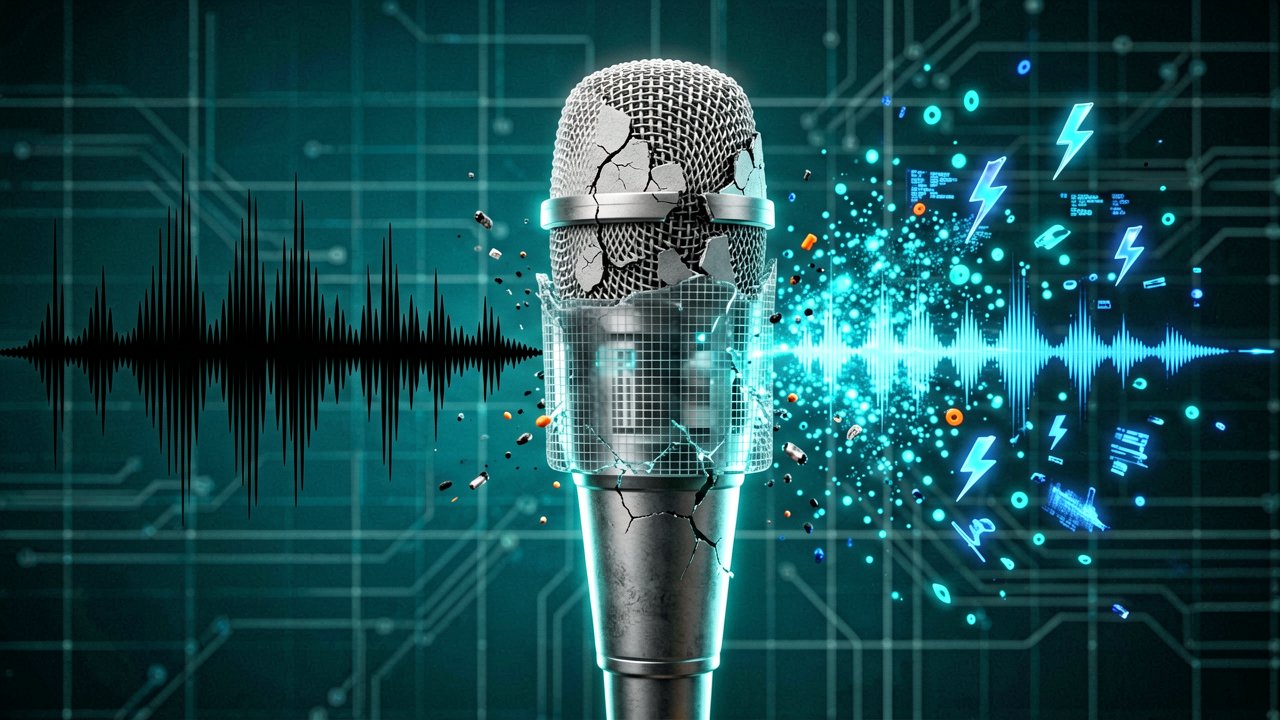
The Emmy-winning comedy series Hacks released its fifth season, Episode 6 on May 7, 2026, according to Rotten Tomatoes episode listings. The installment, titled "Quik Scribbl," marks a deliberate pivot from the show's ongoing plot threads to confront artificial intelligence head-on.
This is not a technical documentary. The episode filters AI through character insecurities and creative anxiety. Deborah Vance, played by Jean Smart, faces a proposal from Graham Sweeney, a Silicon Valley billionaire who believes technology can eventually replace almost every human process. His offer: train an AI model using Deborah's voice, rhythm, and comedic style.
The miscelana.com recap notes the episode works precisely because it refuses to treat the subject as a purely technical debate. Everything is filtered through the characters' human insecurities. While Deborah remains obsessed with securing Madison Square Garden, another problem quietly grows in the background: The Diva's construction costs are spiraling out of control. The electrical system needs rebuilding, the HVAC requires millions more, and even the giant Deborah statue planned for the entrance becomes a source of internal debate.
That financial pressure is exactly what leads Deborah to accept the meeting with Sweeney. His proposal sounds tempting enough given the circumstances. From there, the episode builds one of the season's most interesting generational conflicts. Deborah still sees business as a brutal space where adaptation equals survival. Ava Daniels, played by Hannah Einbinder, reacts emotionally because she still believes some boundaries should not be crossed.
While Deborah thinks about money, practicality, and sustainability, Ava immediately understands what's truly at stake the moment creativity becomes just another database. And Hacks understands perfectly where the real horror lies. This is not simply about technology. It's about replacing human process with artificial efficiency.
One of the most common arguments from AI enthusiasts is the idea that it can "optimize" creative work by eliminating wasted time, trial, repetition, and failure. But that imperfect space is precisely where any authentic artistic voice is born. When Graham suggests that someday Deborah may not even need to write her own jokes anymore, something finally shifts inside her. For the first time in the episode, Deborah completely aligns herself with Ava.
Failing, insisting, testing, rewriting, and eventually finding your own voice is what gives art meaning. There are no shortcuts to that (and anyone who's tried to write a joke at 3 AM knows this intimately). The episode ends with Deborah making what may be the most important decision of the season. Instead of clinging to The Diva's almost narcissistic scale, she chooses to downsize the entire project and transform it into a smaller, more intimate comedy club focused on emerging talent.
After spending entire seasons trying to immortalize her own image, Deborah finally seems to understand that legacy may have less to do with giant monuments and more to do with creating space for other voices to exist. The physical reality of this choice matters—smaller venues mean different acoustics, closer audience proximity, and the kind of friction that forces comedians to actually listen to room reactions rather than just perform at them.
Meanwhile, Jimmy LuSaque Jr. and Kayla Schaefer experience one of the season's most chaotic side stories as they attempt to recruit comedian Bruno Fox for a residency at The Diva in Las Vegas. What should have been a straightforward negotiation quickly spirals into alcohol, drugs, paranoia, and emotional collapse. Bruno eventually confesses to committing a fatal hit-and-run years earlier, and everything implodes from there.
Instead of securing a major star to help save Deborah's casino project, Jimmy and Kayla end up encouraging Bruno to turn himself in to the police—a decision that triggers another disaster when Kayla loses the financial support of her father, the very agent representing Bruno. It's exactly the kind of absurd disaster Hacks excels at transforming into deeply uncomfortable comedy.
The show's creators—Paul W. Downs, Lucia Aniello, and Jen Statsky—have built five seasons on the tension between legacy and relevance. This episode asks whether AI threatens that tension or simply accelerates it. The answer seems to be both. Whether the show's treatment of AI holds up against actual industry developments remains to be seen.
Season 5 is the final season with 10 episodes total, according to Forbes reporting. The series has won the last two Primetime Emmy Awards for Outstanding Comedy Series and has been nominated for 55 Primetime Emmys in its first four seasons.
Whether viewers actually care about AI ethics when they're watching Jean Smart deliver a perfectly timed insult remains the real question. The episode treats the subject seriously, but it's still a comedy about a comedian who once told someone to "go back into the closet and pick something else." Time will tell if the show's AI commentary lands with the same precision as its character work—or if it's just another plot device to get Deborah to Madison Square Garden.
Artūras Malašauskas is an AI Systems Integrator with 20+ years of production-grade web engineering experience. He has designed, shipped, and scaled enterprise Python/PHP systems for logistics, SaaS, and public-sector clients. For the past year, he has focused exclusively on AI integrations: deploying open-source LLMs, building generative media pipelines (image, audio, video), and engineering multi-agent workflows for real production environments. His standard: reproducibility, security, cost-efficient inference—no vaporware. He documents and evaluates emerging AI tooling, separating verified capabilities from marketing noise. Technical editor at: muza-ai.eu, ai-verslas.lt, ai-naujinos.lt Connect on LinkedIn
Comments