NVIDIA NCCL 2.30 Adds Real-Time Prometheus Monitoring
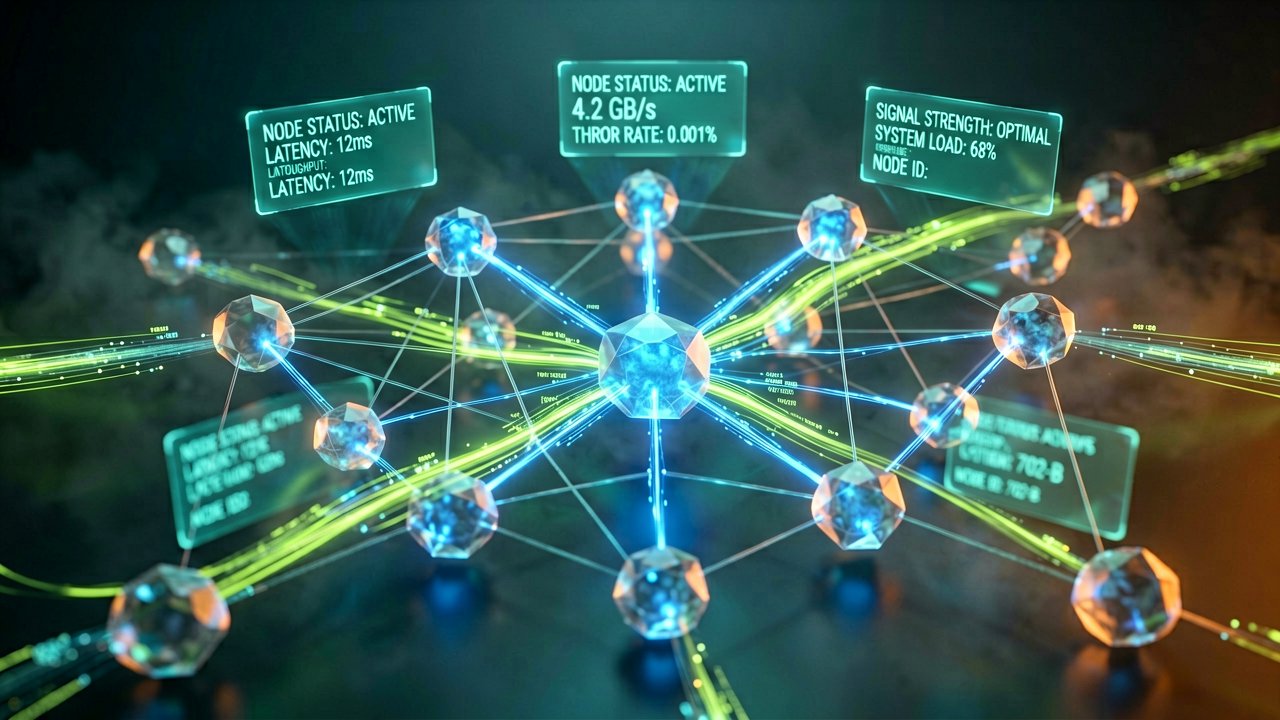
The NVIDIA Collective Communications Library (NCCL) has received a significant observability upgrade with version 2.30, introducing real-time performance monitoring through Prometheus integration. This enhancement transforms how engineers debug GPU-to-GPU communication bottlenecks in distributed deep learning environments.
According to the official NVIDIA Developer Blog announcement, the new Prometheus Mode replaces the previous JSON-based offline analysis workflow. Previously, NCCL Inspector required generating performance metrics from each rank and storing them individually in JSON files on shared storage before processing could occur. The new approach streams metrics directly to a time-series database, enabling live visualization without the storage overhead.
NCCL is the backbone for multi-GPU and multi-node communication in AI workloads. It handles collective operations like all-gather, all-reduce, and broadcast across PCIe, NVLink, and network interconnects. When training slows down, identifying whether the problem spans computation, communication, a specific rank, or underlying hardware has historically been a challenge. The Prometheus integration addresses this by providing continuous, lightweight reporting with minimal overhead.
The metrics collected include bus bandwidth, execution time, and message sizes, categorized by context such as GPU device, node, and collective operation type. These are rendered as dashboard graphs in Grafana, allowing engineers to correlate live data with observed slowdowns. For example, NVIDIA demonstrated this capability in an experiment with a large language model where network-induced constraints reduced compute performance by 13%. With live dashboards, engineers isolated the issue to a network bottleneck, significantly reducing time to resolution.

Deployment requires configuring environment variables and deploying the profiler plugin. The NCCL Inspector Profiler plugin must be built and the following variables set: NCCL_PROFILER_PLUGIN pointing to the inspector library, NCCL_INSPECTOR_ENABLE=1, NCCL_INSPECTOR_DUMP_THREAD_INTERVAL_MICROSECONDS=3000000, NCCL_INSPECTOR_PROM_DUMP=1, and NCCL_INSPECTOR_DUMP_DIR specifying the node exporter log location. The dump thread interval and directory should be tuned according to the node exporter used.
Once configured, NCCL Inspector dumps collective performance into the specified directory. The Prometheus Node Exporter then sends metrics to the Prometheus time-series database. The output file format is nccl_inspector_metrics_<uuid_of_the_gpu>.prom, where the GPU UUID is included since CUDA device IDs can overlap in multi-user environments. The file is designed to be overwritten continuously—once the node exporter collects metrics, they're no longer needed on disk.
Each metric is labeled with context including NCCL version, Slurm job ID, node, GPU, communicator name, number of nodes, number of ranks, and message size. This granularity enables performance attribution for post-mortem analysis, correlating performance drops with specific time periods and network conditions. Temporary throughput degradations can be traced back to disruptions in NVLink and network communication.
The MEXC Exchange cryptocurrency platform published coverage of this announcement on May 7, 2026, though the exchange has no technical partnership with NVIDIA regarding this feature. The actual implementation details come directly from NVIDIA's developer documentation and GitHub repositories, where Grafana templates for dashboard customization are also available.

Setting up the infrastructure means clicking through Grafana dashboards to watch bandwidth graphs spike and dip in real time rather than waiting hours for JSON files to populate and process. The physical reality is engineers staring at live charts during long-running jobs instead of digging through offline logs after the fact (a workflow that has frustrated teams for years, frankly).
This move toward real-time observability aligns with the increasing complexity of AI models and the infrastructure needed to train them. As large language models and other computationally intensive workloads grow in scale, tools like NCCL Inspector become instrumental in ensuring efficient and reliable performance. The ability to monitor bandwidth and execution performance across mixed communication layers like NVLink and network interconnects provides actionable insights for troubleshooting.
Whether organizations actually adopt this workflow depends on whether their existing Prometheus infrastructure can handle the additional metric load without introducing new bottlenecks. The technology works, but the real test is whether data center operators will integrate it into their monitoring stacks or stick with familiar offline analysis methods.
Artūras Malašauskas is an AI Systems Integrator with 20+ years of production-grade web engineering experience. He has designed, shipped, and scaled enterprise Python/PHP systems for logistics, SaaS, and public-sector clients. For the past year, he has focused exclusively on AI integrations: deploying open-source LLMs, building generative media pipelines (image, audio, video), and engineering multi-agent workflows for real production environments. His standard: reproducibility, security, cost-efficient inference—no vaporware. He documents and evaluates emerging AI tooling, separating verified capabilities from marketing noise. Technical editor at: muza-ai.eu, ai-verslas.lt, ai-naujinos.lt Connect on LinkedIn
Comments