Meta's AI Push Is Tracking Employees and Cutting Jobs
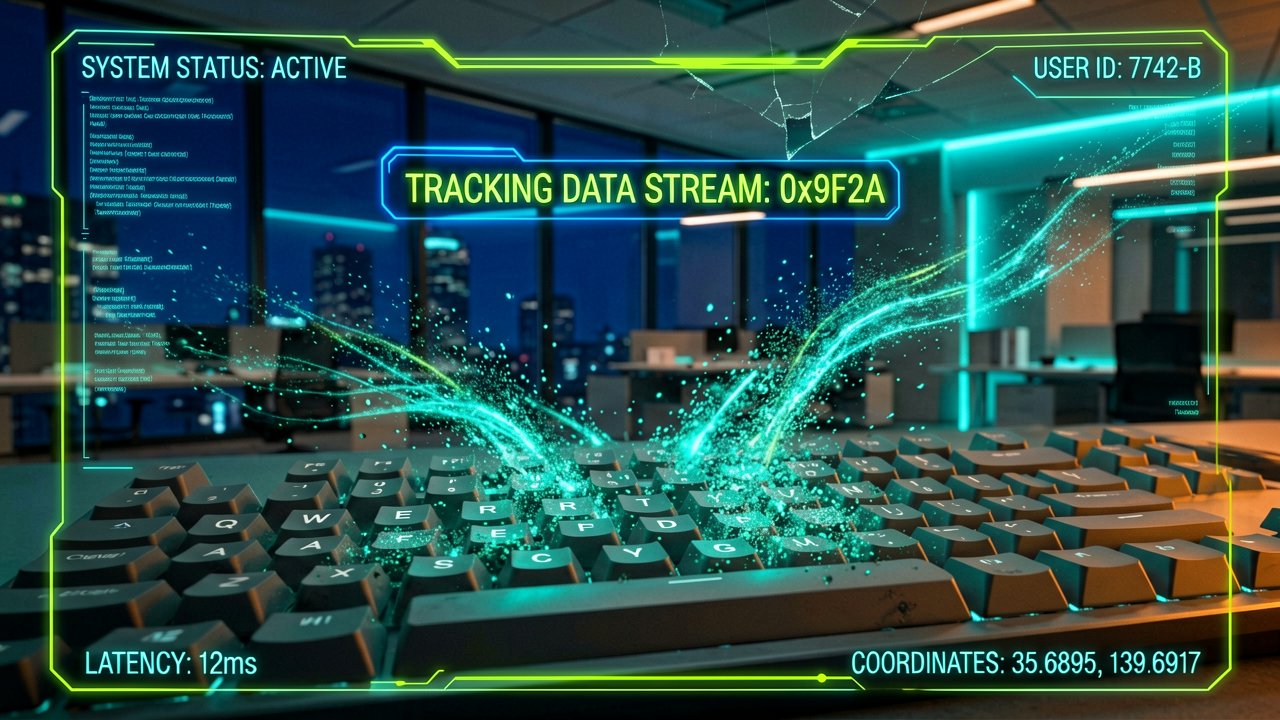
The handheld console manufacturer Meta announced a formal policy update that has sent shockwaves through its 78,000-person workforce. The company is now tracking what employees type into their computers, how they move their mouse, where they click, and what they see on their screen. The stated goal: capture employee data so Meta's artificial intelligence models could learn "how people actually complete everyday tasks using computers."
Many workers immediately revolted. In online comments, they blasted the tracking as a privacy violation, calling it antisocial and callous. One engineering manager wrote in an internal post reviewed by The New York Times: "This makes me super uncomfortable. How do we opt out?" The answer came quickly from Andrew Bosworth, Meta's chief technology officer. "There is no option to opt-out on your corporate laptop," he replied. Employees reacted by posting more than 100 angry and surprised emojis, according to the messages.
This surveillance initiative is part of a broader, more painful transformation. Meta plans to cut 10 percent of its work force, or roughly 8,000 employees, and close another 6,000 open roles. The cuts were confirmed in an internal memo from Janelle Gale, Meta's chief people officer. "We're doing this as part of our continued effort to run the company more efficiently and to allow us to offset the other investments we're making," Gale wrote. "This is not an easy trade-off and it will mean letting go of people who have made meaningful contributions to Meta during their time here."
The physical reality of this transition is stark. Workers who once navigated familiar interfaces now find their keystrokes logged, their cursor movements mapped, their screen time quantified. The friction isn't just psychological—it's embedded in the hardware itself. Every corporate laptop becomes a data collection device, every login a moment of surveillance. (a problem that has plagued users for years, frankly).
Mark Zuckerberg, Meta's chief executive, has staked the future of his company on AI by weaving the powerful technology into apps like Facebook and Instagram and spending hundreds of billions of dollars on developing AI models and data centers. He has made no secret of his AI ambitions, describing developing AI-powered social media products that are a kind "personal superintelligence" that he hopes people will incorporate into their daily lives. "At Meta, we have the resources to build the massive infrastructure required and the ability to deliver new technology to billions of people," Zuckerberg said in a video posted to his Facebook page in July.
Across the technology industry, companies have been laying off employees as they experiment with AI. In February, Block, the financial technology company that owns Square, Cash App and Tidal, said it was cutting 40 percent of its work force as it embraced new AI tools. Microsoft on Thursday said it was offering buyouts to 7 percent of its work force as it invests in AI. Meta's approach is more aggressive in its data collection, but the pattern is consistent: AI adoption requires restructuring, and restructuring requires human casualties.
The tracking initiative represents a fundamental shift in the employer-employee relationship. What was once private work behavior—how someone types, where they pause, what they research—becomes training data for the very systems that may eventually replace them. The irony is palpable. Workers are being asked to generate the data that will optimize their own obsolescence. It's like asking a factory worker to design the robot that will take their job, then thanking them for their cooperation.
Documentation from the company reveals the scope of the data collection. What employees typed into their computer, how they moved their mouse, where they clicked and what they saw on their screen would be tracked, Meta said. The goal, the company said, was to capture employee data so Meta's artificial intelligence models could learn "how people actually complete everyday tasks using computers." This isn't productivity monitoring in the traditional sense—it's behavioral data mining at scale.

Independent reporting from The New York Times corroborates the timeline and scope of the changes. The article details the internal post from last month where Meta told its U.S. employees that it was making a change that would affect tens of thousands of them. The tracking announcement came alongside the layoff memo, creating a compound effect of anxiety and uncertainty.
The financial calculus is clear. Meta is spending hundreds of billions on AI infrastructure while simultaneously reducing headcount. The company employed more than 78,000 people at the end of 2025. Cutting 8,000 employees and closing 6,000 open roles represents a significant reduction in operating costs. But the human cost extends beyond severance packages and unemployment claims. It's the erosion of trust, the degradation of workplace culture, the psychological toll of knowing your every digital move is being recorded.
Some workers are finding ways to game the system. If you're asked to "run a draft through ChatGPT," you don't need to tell your boss that your prompt was "proofread this and don't otherwise change it," or "simply reproduce this exact text so I can tell my doltish boss that I ran the draft through ChatGPT without lying." This kind of workarounds reveals the gap between management's AI enthusiasm and employees' practical skepticism.
The broader implication extends beyond Meta. As AI becomes embedded in workplace workflows, the question isn't whether companies will track employee behavior—it's what they'll do with that data. Will it optimize workflows? Will it identify inefficiencies? Or will it become another tool for surveillance and control? The answer likely depends on which executives are making the decisions and what incentives they face.
Whether users actually pay for it remains the real question. Meta's AI investments are massive, but the return on investment isn't guaranteed. The company is betting that AI will drive engagement, increase advertising revenue, and reduce operational costs. But if the workforce becomes demoralized, if productivity suffers, if talent leaves for less surveilled environments, the math changes. The tracking data might show how people complete tasks, but it won't show why they're doing them—or whether they want to keep doing them.
Time will tell if this works is not the right question. The right question is whether this is sustainable. Companies can track keystrokes and cut headcount, but they can't track morale or measure the long-term impact of eroded trust. The data collection might be complete, but the human cost is still being calculated. And that calculation is happening in real time, in every office, on every corporate laptop, with every click that's being logged.
Artūras Malašauskas is an AI Systems Integrator with 20+ years of production-grade web engineering experience. He has designed, shipped, and scaled enterprise Python/PHP systems for logistics, SaaS, and public-sector clients. For the past year, he has focused exclusively on AI integrations: deploying open-source LLMs, building generative media pipelines (image, audio, video), and engineering multi-agent workflows for real production environments. His standard: reproducibility, security, cost-efficient inference—no vaporware. He documents and evaluates emerging AI tooling, separating verified capabilities from marketing noise. Technical editor at: muza-ai.eu, ai-verslas.lt, ai-naujinos.lt Connect on LinkedIn
Comments