OrcaRouter Launches Zero-Markup LLM API Router with MIT License

The LLM infrastructure market just got a new competitor that's flipping the pricing model on its head. Continuum AI announced OrcaRouter and OrcaRouter Lite on May 8, 2026 — a unified inference layer routing across 200+ frontier and open-source language models with zero markup on bring-your-own-key traffic.
According to the official press release, the company is positioning itself against incumbents like OpenRouter that charge a 5% spread on every token. OrcaRouter charges nothing on the data plane. Developers bring their own keys, pay providers directly, and Continuum monetizes higher up the stack — caching, governance, SSO, audit, and policy controls.
The team puts it bluntly: the data plane is free. The control plane is the product.
What actually ships today breaks into two distinct offerings. OrcaRouter Lite is fully open-source, MIT-licensed, and self-hostable. It defaults to SQLite — no Postgres, no Redis, no Kubernetes required. The documentation claims 127 tests passing. It runs on a laptop, a VPS, or a cluster. For developers tired of wrestling with container orchestration just to route API calls, this is a relief.
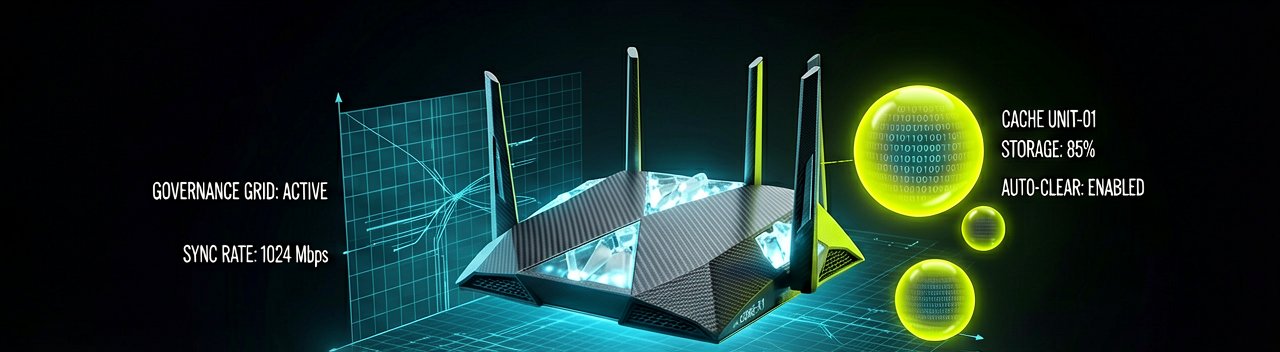
OrcaRouter (hosted) offers accelerated inference with sub-50ms failover and adaptive prompt-aware routing that learns from real traffic. Unified billing consolidates one invoice across OpenAI, Anthropic, Google, Mistral, DeepSeek, and 100+ models. Keys stay encrypted at rest with AES-256-GCM.
Free credits are being distributed globally to AI developers and indie builders. No card required.
This release reflects Continuum's broader thesis: that infrastructure compounds, that the substrate beneath models will outlast the models themselves, and that the next decade of AI is won by whoever quietly owns the rails. OrcaRouter is the opening move. What comes next has not been disclosed.
The timing matters. Every product team has a 30-line file in their codebase called pick_model.py. Nine if/else branches. Three retry decorators. A hardcoded fallback to gpt-3.5. A comment that reads "TODO: this should not exist." (We've all been there, honestly.) OrcaRouter-Lite showed developers what the alternative looks like: self-hosted, your keys, MIT licensed. One developer on X noted it took longer to read the README than to deploy it.

From a technical standpoint, the architecture addresses a real friction point. Most LLM routing solutions require managing multiple API keys across different providers, handling rate limits, implementing retry logic, and tracking costs across invoices. OrcaRouter consolidates this into a single layer. The physical reality of using it means fewer dashboard tabs open, fewer API key rotations to manage, and one place to check when something breaks.
The MIT license for OrcaRouter Lite is significant. It means developers can modify, distribute, and even sell derivatives without attribution requirements. This contrasts with more restrictive licenses that limit commercial use or require open-sourcing modifications. For enterprises concerned about vendor lock-in, this provides an escape hatch.
However, the zero-markup model raises questions about sustainability. If the data plane is free, how does Continuum cover infrastructure costs for the hosted version? The answer lies in the control plane features — caching, governance, SSO, audit, and policy. These are enterprise-grade features that justify pricing. But for small teams or indie developers, the value proposition hinges on whether they need those features.
Secondary reporting from Yahoo Finance corroborates the core claims about the launch, model count, and pricing structure. The article emphasizes the "zero markup" positioning and the MIT license as differentiators in a market where most competitors charge spreads.
Industry context matters here. The LLM routing space has been dominated by solutions that take a cut of every transaction. OpenRouter, for example, charges a 5% spread. Other providers bundle routing with additional services that may or may not be needed. OrcaRouter's approach — separating the data plane from the control plane — could pressure competitors to reconsider their pricing models.
The sub-50ms failover claim for the hosted version is worth scrutiny. In production environments, failover latency directly impacts user experience. A 50ms threshold is aggressive but achievable with proper infrastructure. Whether Continuum can maintain this across 200+ models during peak traffic remains to be seen.
For developers evaluating OrcaRouter, the decision tree is straightforward. If you need self-hosted control with MIT licensing, OrcaRouter Lite is available now. If you need enterprise features like unified billing, governance, and audit trails, the hosted version makes sense. The free credits program lowers the barrier to testing the platform.
Whether users actually pay for the control plane features remains the real question. Infrastructure that compounds is a compelling thesis, but developers have shown they'll switch providers for marginal cost savings. Continuum's bet is that the value of governance, caching, and audit trails outweighs the zero-markup advantage. Time will tell if the market agrees.
Artūras Malašauskas is an AI Systems Integrator with 20+ years of production-grade web engineering experience. He has designed, shipped, and scaled enterprise Python/PHP systems for logistics, SaaS, and public-sector clients. For the past year, he has focused exclusively on AI integrations: deploying open-source LLMs, building generative media pipelines (image, audio, video), and engineering multi-agent workflows for real production environments. His standard: reproducibility, security, cost-efficient inference—no vaporware. He documents and evaluates emerging AI tooling, separating verified capabilities from marketing noise. Technical editor at: muza-ai.eu, ai-verslas.lt, ai-naujinos.lt Connect on LinkedIn
Comments