RBC Raises S&P 500 Target to 7,900 on AI Earnings Momentum

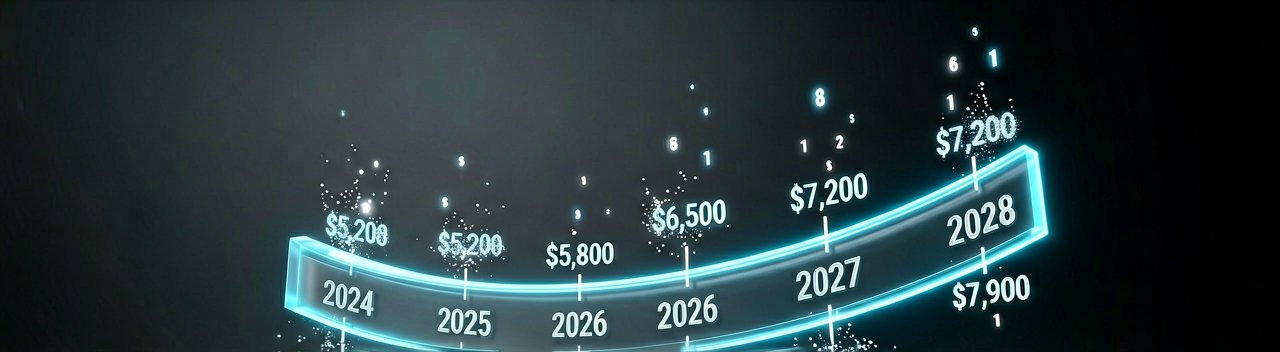
RBC Capital Markets raised its year-end target for the S&P 500 to 7,900 on Friday, marking a 150-point increase from its previous 7,750 forecast. The Canadian brokerage's revision reflects continued confidence in artificial intelligence-linked earnings growth, even as inflation data and Federal Reserve policy timing remain uncertain.
The new target implies approximately 7.7% upside from the index's Thursday close of 7,335.66. That's not a dramatic leap, but it signals that analysts see enough momentum to justify higher valuations. The move comes after the S&P 500 posted its largest monthly percentage gain since November 2020 last month.
According to Reuters reporting, RBC's bullish stance hinges on two core factors: positive earnings revisions driven by technology and AI-linked firms, alongside sustained demand for AI infrastructure. The firm noted that U.S. companies have demonstrated resilience to higher costs and geopolitical risks, though leadership remains concentrated in large-cap growth stocks.
This concentration matters. When a handful of mega-cap tech firms drive most index gains, the headline number masks significant divergence underneath. Investors clicking through their portfolio dashboards might see the S&P 500 at record highs while their healthcare or small-cap holdings lag behind. That's the reality of narrow market leadership.
RBC's analysis also included a sector downgrade that reveals the uneven nature of this optimism. The firm downgraded U.S. healthcare stocks to "market weight" from "overweight" due to earnings revisions, fund outflows, and policy uncertainty. Even with still-attractive valuations, the sector isn't participating in the AI-driven rally. (Wall Street loves a narrative, but earnings eventually force a reckoning.)
The broader context shows RBC isn't operating in isolation. Major Wall Street brokerages including J.P. Morgan and Barclays raised their S&P 500 targets last month, citing easing geopolitical risks and improving earnings momentum. When multiple institutions move in the same direction, it suggests shared data points rather than outlier thinking. The consensus is forming around AI as a genuine earnings driver, not just a speculative theme.
Markets are increasingly treating AI as an earnings test rather than a buzzword. Forecasts are rising for companies selling chips, cloud services, and other infrastructure components for the buildout. This represents a shift from the 2023-2024 period when AI enthusiasm often outpaced actual revenue recognition. Now, the scoreboard is being checked more frequently.
Interest rates remain the price of optimism. When rates are high, investors tend to pay less for profits expected far in the future. The path ahead depends on two moving pieces: whether AI spending turns into sustained profits, and whether the Federal Reserve's eventual rate cuts arrive without reigniting inflation. Sticky inflation continues to complicate the macro backdrop.
For active funds and retirement portfolios diversified beyond headline winners, sector shifts matter significantly. A downgrade like healthcare's can impact returns even when the broader index climbs. The physical experience of checking a portfolio app shows this clearly: the green arrows on tech stocks don't offset the red on healthcare positions.
Geopolitical risks remain a wildcard. Open questions over when the Federal Reserve will cut interest rates, combined with geopolitical flare-ups that can shake confidence, create a messy backdrop. RBC's more cautious tone on certain sectors reflects this awareness. The bullish view runs alongside real uncertainty.
One takeaway from RBC's analysis is how narrow the leadership has been. The biggest gains have clustered in large, fast-growing companies even as the broader index hits record highs. This concentration creates vulnerability if those mega-caps face earnings disappointment. Diversification isn't just a textbook recommendation; it's a practical necessity.
The 7,900 target represents about an 8% rise from the index's recent close. That's meaningful but not transformative. It suggests analysts see steady growth rather than a breakout scenario. The math works if AI infrastructure spending continues to translate into earnings across the supply chain.
Whether users actually pay for AI-driven services remains the real question. Infrastructure spending is one thing; end-user monetization is another. Companies building the picks and shovels have shown revenue growth, but the broader economy's adoption of AI tools will determine sustainability. The earnings revisions depend on this conversion.
Investors should note that RBC's forecast assumes continued earnings momentum without major macro shocks. The challenging backdrop marked by sticky inflation and uncertainty over rate cuts means the path isn't smooth. Market participants need to watch earnings reports closely for confirmation that AI spending is generating returns.
The revision from 7,750 to 7,900 is incremental, but it reflects updated data rather than speculation. Analysts are adjusting to actual earnings trends, not just market sentiment. That's a more reliable foundation than the hype cycles that characterized earlier AI enthusiasm.
Time will tell if this works. Whether the S&P 500 reaches 7,900 depends on earnings delivery, not analyst optimism. The real test comes when quarterly reports show whether AI investments are producing sustainable profits across the broader market, not just in a handful of tech giants.
Artūras Malašauskas is an AI Systems Integrator with 20+ years of production-grade web engineering experience. He has designed, shipped, and scaled enterprise Python/PHP systems for logistics, SaaS, and public-sector clients. For the past year, he has focused exclusively on AI integrations: deploying open-source LLMs, building generative media pipelines (image, audio, video), and engineering multi-agent workflows for real production environments. His standard: reproducibility, security, cost-efficient inference—no vaporware. He documents and evaluates emerging AI tooling, separating verified capabilities from marketing noise. Technical editor at: muza-ai.eu, ai-verslas.lt, ai-naujinos.lt Connect on LinkedIn
Comments