Seoul’s $950 Billion Gambit: South Korean Giants Anchor Western Alliances to Dictate Global AI Infrastructure
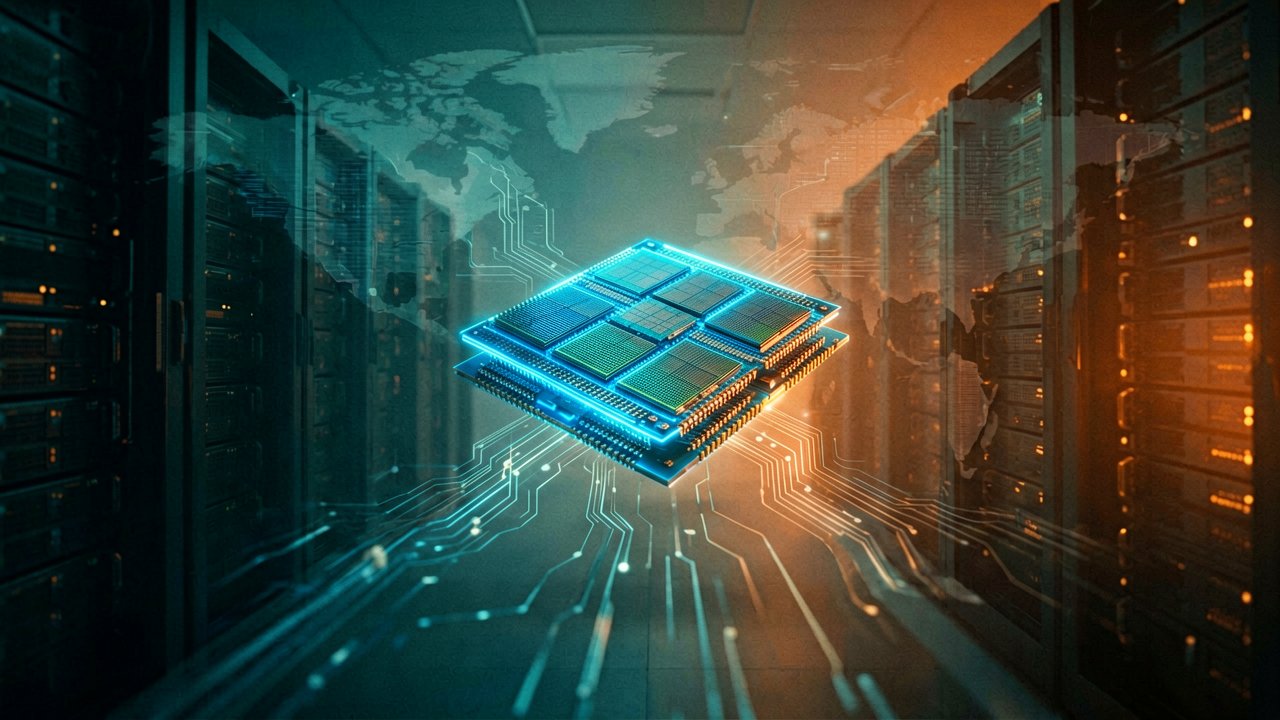
South Korea’s premier industrial conglomerates have radically shifted the geography of artificial intelligence by orchestrating an unprecedented $950 billion ecosystem alliance with dominant Western technology firms. Officially unveiled at a major technology summit hosted by South Korean President Lee Jae-myung, these expansive commercial agreements establish a deeply integrated hardware and software matrix. As reported by Reuters, the massive fiscal commitments are explicitly designed to secure long-term semiconductor supply chains while systematically developing foundational computing layers worldwide.
The sheer scale of this corporate mobilization signals a structural evolution from localized technology manufacturing toward absolute dominance in the global AI infrastructure layer. Rather than operating merely as merchant chip suppliers, South Korea's industrial flagships are embedding themselves directly into the deployment pipelines of major Western buyers. According to a market breakdown published by The Chosun Daily, the five-year frameworks primarily involve Memorandums of Understanding (MOUs) and Letters of Intent (LOIs) tailored to institutional chip orders, infrastructure financing, and cross-border manufacturing factories.
SK Group and Nvidia Formalize Sub-Trillion-Dollar Supply and Hyperscale Data Architecture
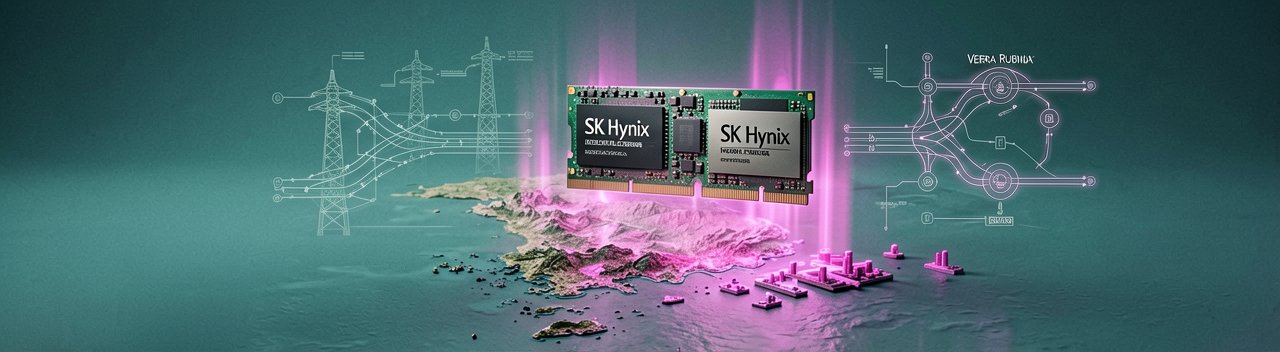
At the center of this tectonic market shift is SK Group, which has solidified a partnership infrastructure with Nvidia valued at more than $500 billion. Under the terms detailed by The Star, the overarching SK Group initiatives total $750 billion, anchored heavily by SK Hynix's multi-year commitments to deliver next-generation High Bandwidth Memory (HBM) directly to Nvidia's computing platforms. Concurrently, wireless and digital infrastructure subsidiary SK Telecom has finalized plans to construct a massive 2-gigawatt AI data center within South Korea, optimized for early allocation of Nvidia’s upcoming Vera Rubin architecture, alongside strategic co-investments from Anthropic.
Samsung and Broadcom Solidify $200 Billion Advanced Silicon Packaging Alliance
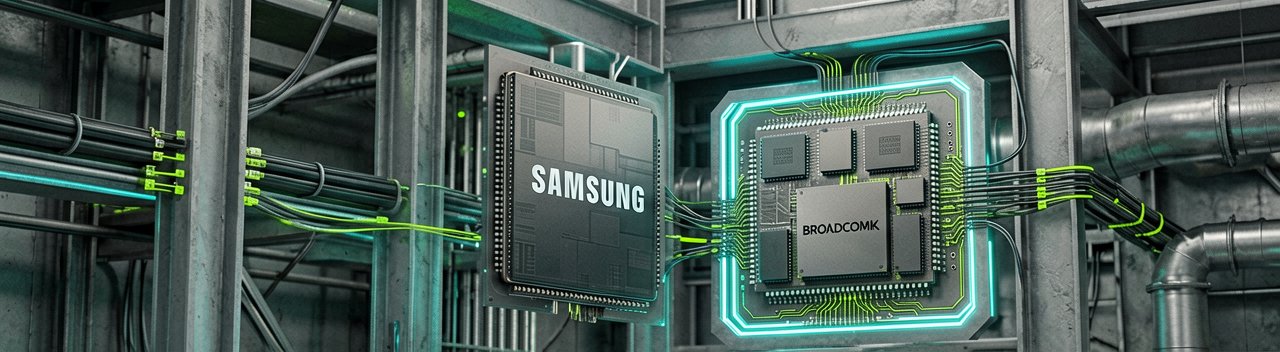
Samsung Electronics has simultaneously countered with its own macroeconomic play, signing an expansive $200 billion memorandum of understanding with Broadcom. As confirmed by reports from The Elec, this high-stakes partnership spans advanced memory delivery, cutting-edge foundry allocations, and next-generation packaging capabilities designed to alleviate global chip shortages. Beyond silicon production, Samsung SDS has finalized a strategic agreement with Anthropic to jointly cultivate specialized AI engineering talent and identify untapped international enterprise markets.
Hyundai and Naver Diversify into Physical AI Systems and Hyperscale Facilities
The infrastructure push extends beyond pure semiconductor foundries into physical robotics and regional cloud clusters. Hyundai Motor Group has formally partnered with Nvidia to engineer a standardized Robot Reference Platform intended to accelerate autonomous development across academic institutions and early-stage startups. Simultaneously, South Korean internet pioneer Naver secured a combined $10 billion in infrastructure capital—consisting of $1 billion from Nvidia and $9 billion from Brookfield Asset Management—to fund a network of domestic AI factories and large-scale industrial data centers.
Anatomy of the High-Stakes Geopolitical Silicon Hedge
Behind the Scenes: This staggering deployment of capital is far more than a routine technology refresh; it represents a coordinated geopolitical hedging strategy by South Korea’s powerful chaebols. For decades, conglomerates like Samsung and SK Group operated comfortably as vendor-neutral merchant suppliers to the highest bidder. However, as the United States aggressively re-shores silicon manufacturing through the CHIPS Act and restricts cross-border flows of sensitive IP, Seoul's industrial titans have realized that neutrality is no longer a viable business model. By embedding themselves into the foundational infrastructure of Western Big Tech, South Korean leadership is ensuring their firms remain indispensable to the Western technological hegemony, effectively insulating their revenues from shifting regulatory sands.
The strategic shift also exposes an intense internal rivalry between Samsung and SK Hynix for absolute dominance over the AI memory layer. SK Hynix gained an early, highly lucrative lead by becoming the primary supplier of High Bandwidth Memory (HBM) to Nvidia, a triumph that caught Samsung off-guard. The newly minted alliances represent Samsung’s massive counter-offensive. By committing its deep-pocketed foundry and advanced packaging ecosystems to Broadcom and Anthropic, Samsung is attempting to leapfrog SK Hynix’s pure-play memory advantage, offering Western buyers a completely integrated, turn-key manufacturing alternative that spans from raw silicon wafers to finished AI servers.
Furthermore, the inclusion of non-semiconductor giants like Hyundai highlights how deeply artificial intelligence is rewriting traditional industrial playbooks. Hyundai’s collaboration with Nvidia to establish a standardized Robot Reference Platform signals a transition from legacy automaking to software-defined mobility and autonomous logistics. For Hyundai, securing guaranteed allocations of Nvidia's compute architectures is a prerequisite for powering the next generation of automated factories and autonomous vehicle fleets. This cross-industry mobilization ensures that the broader South Korean economy remains synchronized with rapid advancements in machine learning, rather than risking obsolescence as traditional mechanical engineering becomes secondary to autonomous software intelligence.
Western technology hyperscalers, conversely, view these massive South Korean commitments as a vital lifeline for their insatiable infrastructure demands. As Western cloud providers race to construct gigawatt-scale data centers, they face severe bottlenecks in power availability, advanced packaging, and memory supply. By partnering with South Korean firms that possess unmatched expertise in large-scale industrial manufacturing and infrastructure execution, Western Big Tech effectively outsources the complex, asset-heavy burdens of hardware scaling. This symbiotic relationship ultimately locks in long-term production capacities, stabilizing global supply chains and anchoring the physical footprint of the next generation of cloud computing.
The Hidden Fault Lines of Seoul’s Trillion-Dollar AI Directives
Reading Between the Lines: The breathless narrative surrounding these massive multi-billion-dollar alliances conveniently glosses over a glaring structural contradiction: Memorandums of Understanding and Letters of Intent are not binding procurement contracts. In the volatile theater of global technology capital, an MOU functions primarily as a non-binding declaration of intent rather than a guaranteed revenue stream. By treating these preliminary infrastructure frameworks as immediate market triumphs, industry analysts risk miscalculating the true conversion rate of these pledges. Should Western hyperscaler demand soften or the current generative AI monetization model plateau, these heavily promoted capital deployments could easily face quiet deferrals or outright cancellations without legal penalty.
Furthermore, this unprecedented alignment with Western Big Tech introduces a perilous single-point-of-failure risk for the South Korean economy. By tethering their corporate destinies so tightly to the silicon requirements of American hyperscalers, conglomerates like Samsung and SK Group are effectively abandoning market diversification in favor of a monolithic customer base. This dependency strips Seoul of its historic leverage as an independent technology power broker. If a regulatory shift in Washington or an economic contraction in Silicon Valley disrupts American capital expenditure budgets, the shockwaves will reverberate instantly across the South Korean GDP, proving that these alliances may be less about market dominance and more about a risky, high-exposure dependency.
There is also a profound technical irony embedded within these massive hardware commitments. While South Korean giants spend hundreds of billions to construct the physical scaffolding of the AI revolution, the true high-margin value remains fiercely concentrated in the proprietary software layer and foundational models owned entirely by Western firms. Samsung and SK Hynix are assuming the immense, asset-heavy financial risks of building foundries and fabs, yet they remain vulnerable to the commoditization of the very hardware they produce. This dynamic risks relegating South Korea’s most sophisticated technology companies to the status of glorified, high-tech industrial utilities, pouring trillions into infrastructure while Western software platforms capture the lion's share of the economic rents.
"Building the physical infrastructure for the future of artificial intelligence is an incredibly noble, trillion-dollar civic service—right up until you realize you have spent your entire national treasury constructing an exquisitely engineered highway, only to watch your neighbors drive all the profitable delivery trucks on it."
Artūras Malašauskas is an AI Systems Integrator with 20+ years of production-grade web engineering experience. He has designed, shipped, and scaled enterprise Python/PHP systems for logistics, SaaS, and public-sector clients. For the past year, he has focused exclusively on AI integrations: deploying open-source LLMs, building generative media pipelines (image, audio, video), and engineering multi-agent workflows for real production environments. His standard: reproducibility, security, cost-efficient inference—no vaporware. He documents and evaluates emerging AI tooling, separating verified capabilities from marketing noise. Technical editor at: muza-ai.eu, ai-verslas.lt, ai-naujinos.lt Connect on LinkedIn
Comments