The Algorithmic Appetite: Why Diners Are Spitting Out the Silicon
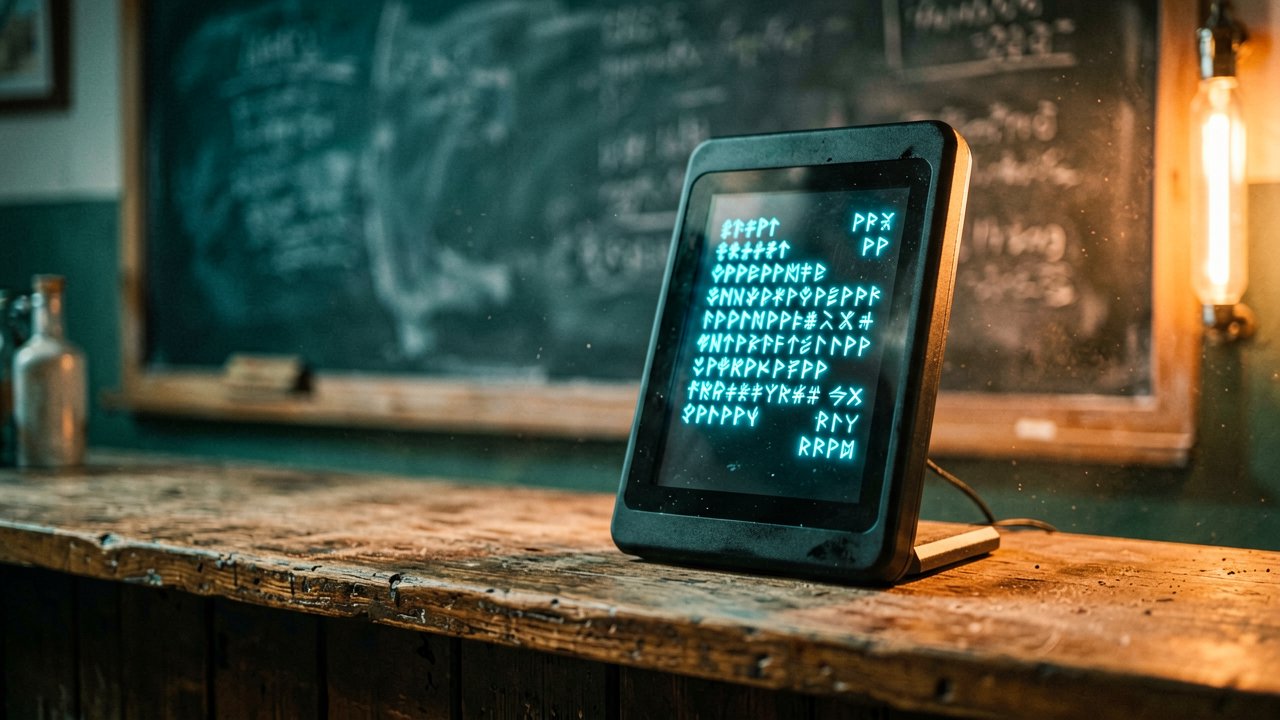
There was a time when walking into your neighborhood joint meant entering a sanctuary of human fallibility. The floorboard creaked, the specials were scrawled on a dusty slate, and the host greeted you with a knowing nod that money simply could not buy. Today, you are more likely to be greeted by a plastic kiosk demanding your phone number or a disembodied voice-assistant taking your drive-thru order with all the warmth of a corporate compliance seminar. The spreadsheet mechanics of Silicon Valley have officially breached the dining room, and hospitality is dying a death by a thousand algorithms.
We were promised a utopia of friction-free dining, where kitchen predictive models would trim food waste and machine-learning bots would eliminate long lines. Instead, the tech industry gave us a sterile, unappetizing landscape of hyper-optimized disappointment. When San Francisco’s Grind & Unwind café plastered its menu and storefront with hyper-realistic, AI-generated pastries that looked closer to Lego blocks than actual laminated dough, the community did not applaud the efficiency. They revolted, forcing the owners to scrub the plastic-looking digital fabrications and hastily return to displaying real, imperfect, human-baked goods on the counter, as chronicled by Seoul Economic Daily. It turns out that when people pay for the intimate act of consuming food, they want to look at something born of craftsmanship, not a prompt typed into Midjourney by a hurried manager looking to cut corners.
This boiling resentment is not just anecdotal internet grumbling; it is a fundamental market rejection that is grinding the industry's automated pipeline to a halt. Diners are actively voting with their wallets against the algorithmic takeover because it strips away the cultural and emotional weight of the culinary arts. Academic research has repeatedly validated this deep-seated psychological barrier, with a study published in ScienceDirect revealing that consumers exhibit a significantly lower purchase intention when exposed to robot-themed or AI-driven culinary appeals compared to human ones. We are hardwired to view food as an exchange of care and culture. When a cold piece of automated software tries to simulate that intimacy, the illusion shatters, leaving a bad taste in the consumer's mouth that no amount of predictive convenience can wash away.
The Myth of Frictionless Hospitality
The core mistake tech evangelists make is treating a restaurant like a fulfillment warehouse. They assume the optimal dining experience is one where you never have to speak to another living soul. Yet, industry data highlights that loss of the human touch remains the number-one anxiety for hospitality guests worldwide, according to a consumer sentiment report by Customer Experience Dive. When you replace a seasoned server with an automated interface, you do not remove friction; you remove the soul. You eliminate the waiter who notices a guest is having a rough day and quietly drops off an extra dessert, or the bartender who remembers your name and how you like your drink.

Worse yet, the tech frequently fails at the very operational efficiency it claims to master. We have all seen the viral horror stories of voice-recognition drive-thrus adding rogue ingredients to simple orders or freezing up entirely when a customer dares to deviate from a rigid, pre-programmed script. When an AI bot stumbles, the customer is left stranded in a digital dead-end, forced to wait for a human employee to unravel the machine's mess. It is a double failure that costs time, breeds immense frustration, and exposes the entire corporate push for automation as a thin excuse to slash labor costs at the expense of genuine customer care.
The Radical Return to the Analog
As the corporate chains double down on their silicon investments, an interesting counter-rebellion is quietly taking shape across the culinary landscape. A growing contingent of independent restaurants, bistros, and bakeries are turning their backs on digital marketing templates and automated operations entirely. They are leaning heavily into bespoke, explicitly handmade touches—from hand-drawn menus and old-school chalkboard signs to face-to-face ordering systems—positioning themselves as radical safe havens from the omnipresent screen culture, a shift highlighted by Eater.
This analog revival proves that dining out was never merely about fueling our bodies with maximum caloric efficiency. It is a ancient, cherished human ritual centered around community, storytelling, and shared spaces. By forcing algorithms into the center of this delicate ecosystem, tech companies are jeopardizing the very essence of why we step out of our homes to eat in the first place. Consumers are clearly signaling that they do not want to navigate a digital labyrinth just to get a plate of pasta. If the hospitality industry refuses to listen to this growing cultural backlash, it may find itself operating highly efficient, flawlessly automated dining rooms that are entirely empty.
The digital veneer is cracking, and the backlash is moving from the dining room straight to the boardroom. Corporate executives who once salivated over the prospect of endless labor savings are hitting a brick wall built from pure customer resentment. The dream was simple: replace costly human workers with tireless digital proxies, lower overhead, and watch profit margins soar. Yet, the reality of deploying unproven, rigid software into the messy, unpredictable world of public dining has turned into an operational nightmare. Instead of smoothly guiding customers through a streamlined transaction, these systems often feel like a digital interrogation, alienating the very patrons keeping the business afloat.
The financial fallout of this miscalculation is already forcing massive corporate about-faces across the fast-food landscape. McDonald's recently pulled the plug on its highly publicized automated drive-thru ordering partnership with IBM, concluding a multi-year test across more than 100 restaurants after customers grew entirely fed up with bizarre order mix-ups and glacial processing speeds, as reported by CNBC. The tech giant's failure to master a basic drive-thru lane exposed a fundamental truth that the hospitality industry is learning the hard way. Algorithms are spectacularly bad at navigating human nuances, regional accents, and the spontaneous, chaotic nature of ordering a meal on the go.
The Disillusionment of the Connected Kitchen
Behind the swinging kitchen doors, the narrative of automated perfection is unraveling just as quickly. Line cooks and kitchen managers are finding that instead of alleviating stress, AI-driven inventory managers and predictive prep software add an exhausting layer of bureaucratic friction. When a machine miscalculates a sudden Friday night rush because it cannot account for a local high school football game or an unseasonal thunderstorm, the human staff is left to pick up the pieces, working twice as hard to correct a computer's blind spots. The technology meant to liberate restaurant workers has instead tethered them to a demanding, glitchy digital taskmaster.
This operational friction is fueling a profound worker shortage and morale crisis within heavily automated chains. Employees who entered the hospitality industry to engage with people and craft tangible goods find themselves reduced to mere organic cogs, serving an inflexible automated pipeline. When the joy of hospitality is stripped from both the worker and the guest, the entire business model hollows out. The industry is discovering that you cannot build a sustainable, thriving brand when your staff feels as automated and disposable as the software driving the kitchen line.
Reclaiming the Table
The ultimate irony of this aggressive automation push is that it has inadvertently sparked a golden age for authentic, fiercely independent dining. By turning the corporate dining experience into a sterile transaction, major chains have created a massive cultural vacuum that smaller, human-centric establishments are eagerly filling. Diners are actively seeking out places where the soup is seasoned by taste rather than an algorithm, and where the person taking the order actually cares about the answer to how their day is going. This shift is transforming dining out from a thoughtless convenience back into an intentional, celebratory act of community resistance.
Ultimately, the hospitality industry stands at a critical crossroads that will define its cultural footprint for the next generation. The widespread consumer rebellion against algorithmic dining proves that some human spaces are simply sacred, resistant to the cold logic of maximization and efficiency. Restaurants will always belong to the realm of culture, comforting rituals, and genuine connection. By rejecting the silicon takeover, diners are sending a clear, unyielding message to the tech world that the human soul is not an inefficiency to be optimized out of existence.
The great restaurant automation experiment has delivered its verdict, and the results are utterly unpalatable. What Silicon Valley pitched as a glorious leap forward in consumer convenience has revealed itself to be nothing more than a poorly disguised cost-cutting exercise that treats customers like variables in an optimization problem. By reducing the complex, deeply emotional ritual of hospitality down to lines of code and predictive models, the industry did not just streamline operations; it broke the unwritten social contract that has sustained public dining for centuries. You cannot automate a feeling, and you certainly cannot algorithmically generate a sense of belonging.
This failed tech invasion exposes the profound myopia of viewing human culture through the narrow lens of technical efficiency. While a software engineer sees a chatty server or an un-templated, handwritten menu as an operational bottleneck to be ironed out, the diner experiences those very elements as the core value of the meal. The growing consumer mutiny proves that the value of dining out lies precisely within its beautiful, inefficient human edges. When a brand eliminates those touchpoints, it strips away the exact premium that justifies leaving the comfort of home and paying a markup for someone else’s cooking.
A Resilient Blueprint for Tomorrow
Moving forward, the narrative is shifting away from wholesale resistance and toward a smarter, more discerning line of defense. The restaurants that will thrive in the coming decades are those utilizing technology as a silent, invisible backstage hand rather than a front-of-house replacement. Smart dishwashers, automated payroll software, and energy-efficient kitchen equipment can quietly shoulder the heavy lifting of back-end management without ever infringing upon the sacred, human-centric theater of the dining room floor. Technology must remain the servant of hospitality, never its master.
The ultimate survival of the industry hinges on corporate executives humbling themselves enough to listen to the visceral feedback of their own customers. If the market continues to reject sterile interfaces and robotic drive-thrus, the capital flowing into invasive hospitality AI will naturally dry up, redirecting investments back into what actually builds long-term brand loyalty: well-trained, properly compensated, and deeply empathetic human staff. The modern diner has drawn a clear line in the sand, demonstrating a willingness to pay more for authenticity and walk away from automated emptiness.
We are witnessing a profound cultural correction that extends far beyond the walls of our favorite bistros and diners. It is a collective, societal realization that some spaces must remain stubbornly analog, protected from the endless creep of screens and algorithms. By demanding genuine human connection over cold digital efficiency at the dinner table, we are actively fighting to preserve the tangible, messy, and communal joys that make life worth living in an increasingly synthetic world.
“Efficiency is the ideal virtue for a factory floor, but it is a miserable seasoning for a plate of pasta. If a restaurant cannot offer a diner the warmth of a human smile, it might as well be vending nutritional paste from a wall slot.”
Artūras Malašauskas is an AI Systems Integrator with 20+ years of production-grade web engineering experience. He has designed, shipped, and scaled enterprise Python/PHP systems for logistics, SaaS, and public-sector clients. For the past year, he has focused exclusively on AI integrations: deploying open-source LLMs, building generative media pipelines (image, audio, video), and engineering multi-agent workflows for real production environments. His standard: reproducibility, security, cost-efficient inference—no vaporware. He documents and evaluates emerging AI tooling, separating verified capabilities from marketing noise. Technical editor at: muza-ai.eu, ai-verslas.lt, ai-naujinos.lt Connect on LinkedIn
Comments