Generative AI Rewrites the Ultrasound Playbook, Elevating Low-Cost Sonograms to High-Fidelity Diagnostic Tools
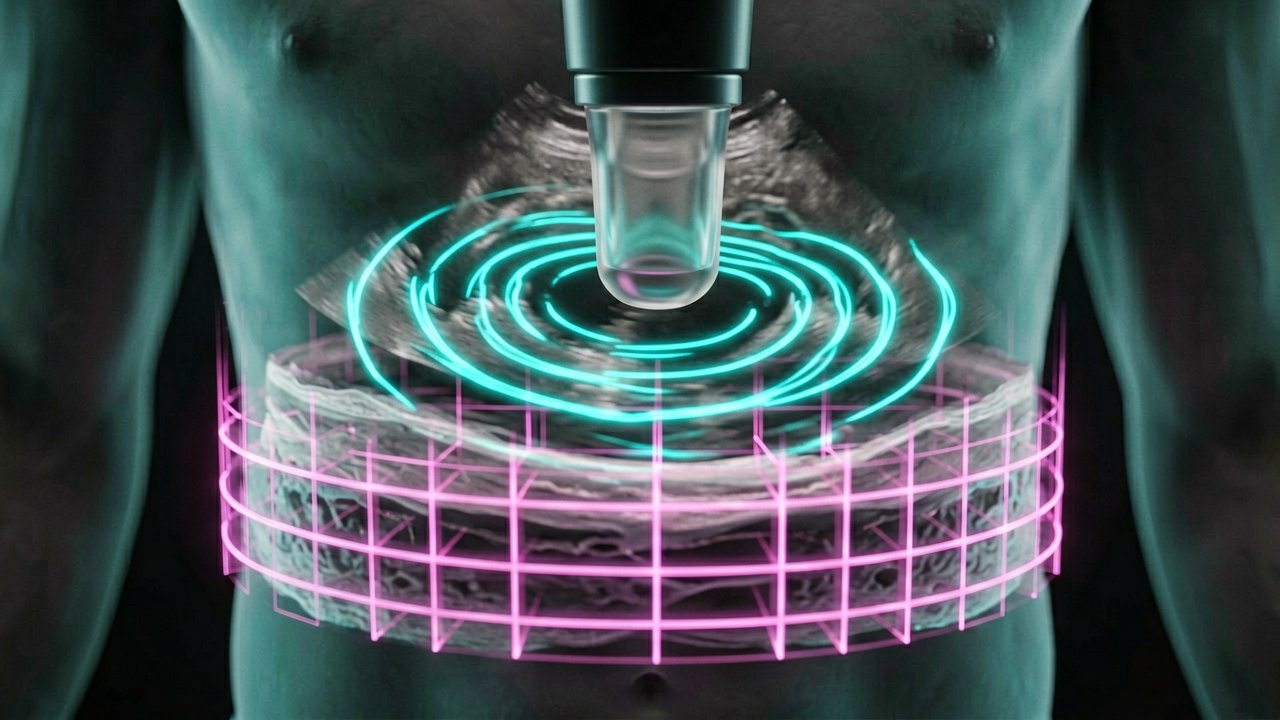
Generative artificial intelligence is orchestrating a profound paradigm shift in point-of-care diagnostics by upscaling traditional, grainy ultrasound scans into high-definition visual assets. At the forefront of this medical transformation, a researcher named Soumee Guha at the University of Virginia is pioneering generative models that circumvent the industry's historical dependency on vast, proprietary clinical datasets. By building specialized deep-learning architectures, this framework mitigates the operator-dependent variability and signal-to-noise ratio deficiencies that have structurally limited the diagnostic authority of basic sonograms. Consequently, medical facilities can transition from hardware-heavy reliance toward scalable software infrastructure, democratizing access to high-fidelity imaging without the capital expenditures usually demanded by next-generation physical scanners.
This micro-level breakthrough mirrors a broader corporate reconfiguration sweeping through the global healthcare ecosystem. Major tech enterprises and specialized artificial intelligence labs are aggressively reallocating capital into autonomous ultrasound solutions. For example, prominent consumer AI lab Midjourney committed over $74 million to deploy an advanced, AI-driven whole-body ultrasound screening service. Similarly, multi-national hardware leaders like Canon Medical Systems are integrating real-time processing technologies to ensure raw acoustic captures provide optimal mathematical conditions for AI-based denoisers. These systemic shifts signal that the future of diagnostic imaging lies in sophisticated algorithms rather than just manufacturing increasingly intricate physical transducers.
Breaking the Data Bottleneck and Enhancing Clinical Interpretability
Historically, deep learning models required millions of vetted clinical images to deliver accurate interpretations, an obstacle that stalled early adoption in niche medical segments. The integration of generative adversarial networks and diffusion models circumvents this limitation by synthesizing hyper-realistic training distributions and executing targeted image denoising. As detailed in recent research on ScienceDirect, modern AI-powered visualization techniques emphasize structural boundaries and organ edges without introducing artifacts. This algorithmic precision ensures that subtle tissues, liver lesions, and early-stage fetal anomalies become readily apparent to general practitioners, minimizing human error and standardizing patient care across disparate diagnostic environments.
Streamlining Workflows and Reducing Hospital Overhead Costs
Integrating generative enhancement platforms directly into field equipment is dramatically accelerating operational velocity across clinics. Clinical reports indicate that the deployment of generative workflows can optimize radiologist productivity, saving significant time by accelerating reporting cadences and minimizing the need for secondary, confirmatory CT or MRI scans. Rather than forcing medical professionals into prolonged manual tuning, the software automatically stabilizes structural details in real time. Ultimately, this software-driven enhancement playbook is reshaping healthcare economics by maximizing the clinical diagnostic capacity of inexpensive, portable ultrasound hardware.
Behind the Scenes: The Technical and Ethical Architecture of Generative Enhancement
What Most Reports Miss: The raw acoustic telemetry captured by a standard ultrasound transducer is inherently messy, filled with acoustic speckle and artifact shadowing that traditional digital signal processors struggle to filter. When generative AI steps in to reconstruct these low-fidelity captures, it is not merely applying a superficial aesthetic filter to make the image look crisp. Instead, specialized deep learning architectures map the low-resolution, noisy data into a high-dimensional latent space, predicting missing structural interfaces based on trained physical models of wave propagation. This allows the system to differentiate between a true tissue boundary and a meaningless artifact artifact, effectively transforming a low-cost, handheld probe into a machine that rivals the diagnostic clarity of a premium, six-figure cart-based system.
However, this reliance on predictive mathematical models introduces a delicate tension between visual clarity and clinical truth. Medical professionals and regulatory bodies remain deeply cautious about the risk of algorithmic hallucinations—instances where a generative network might artificially smooth out a subtle, malignant lesion or synthesize a benign tissue pattern that does not exist in reality. To counter this, pioneering researchers are implementing strict physics-informed constraints within the neural networks. By forcing the generative model to adhere strictly to the laws of acoustic physics and raw RF signal data, developers ensure that the sharpened output remains an authentic representation of the patient's anatomy rather than a statistically plausible fiction.
From an operational standpoint, this software-first revolution is radically shifting the power dynamics within the medical device manufacturing industry. Legacy hardware giants that historically relied on proprietary crystal transducers and high-margin physical components are now forced to pivot toward cloud-native software ecosystems and edge-computing integration. Smaller startups are leveraging these generative algorithms to field-test highly portable, consumer-priced devices that can be deployed in rural clinics or emergency response vehicles. By transferring the computational burden from expensive physical hardware to adaptive AI software, the industry is paving the way for an decentralized diagnostic landscape where high-fidelity imaging is no longer locked behind the capital expenditure budgets of tier-one metropolitan hospitals.
Reading Between the Lines: The Friction Between High-Fidelity Promises and Clinical Reality
Reading Between the Lines: The prevailing industry narrative positions generative AI as an unalloyed triumph for democratized medicine, yet this perspective overlooks a fundamental contradiction in clinical workflows. While upscaling grainy sonograms to high-fidelity visuals looks impressive in a research presentation, it introduces a dangerous psychological bias known as automation bias among frontline clinicians. A sharper, visually pristine image inherently commands more uncritical trust from a general practitioner than a traditional, static-heavy scan. If the underlying model subtly misinterprets an atypical acoustic shadow, it will render that error with crisp, authoritative clarity, potentially leading to misdiagnoses that are far harder for a human operator to detect or question.
Furthermore, the claim that software-driven enhancement will seamlessly lower systemic healthcare costs ignores the historical reality of medical billing and liability. Insurance providers and legal frameworks are built around established, deterministic diagnostic criteria, not probabilistic algorithmic reconstructions. If a clinic utilizes a low-cost handheld device enhanced by a generative network, who bears the malpractice liability when a hallucinated pixel alters a critical triage decision—the hardware manufacturer, the software developer, or the physician who signed off on the synthetic image? Until medical malpractice insurance and regulatory bodies establish clear boundaries for "synthetic data integration," the cost savings of avoiding high-end hardware may be entirely cannibalized by soaring legal and compliance overhead.
This technological leap also threatens to widen the gap between well-funded urban medical centers and the rural clinics it claims to save. High-fidelity generative models running in real time demand substantial computational power, often requiring local edge-processing units or stable, high-speed cloud connectivity to process raw RF data streams. In resource-constrained environments or remote fields where internet topology is fragile, the infrastructure required to support these "low-cost" AI tools remains paradoxically expensive. Without a realistic, grounded strategy for offline deployment, the industry risks creating a two-tiered system where advanced software validation remains a luxury, despite the marketing rhetoric of universal accessibility.
"We are rapidly approaching a medical milestone where a pocket-sized ultrasound probe paired with a clever algorithm can produce a cleaner image of a liver than a million-dollar MRI machine. Now, the industry just has to figure out how to stop the AI from occasionally rendering a perfectly healthy liver with the textbook precision of a completely different patient."
Artūras Malašauskas is an AI Systems Integrator with 20+ years of production-grade web engineering experience. He has designed, shipped, and scaled enterprise Python/PHP systems for logistics, SaaS, and public-sector clients. For the past year, he has focused exclusively on AI integrations: deploying open-source LLMs, building generative media pipelines (image, audio, video), and engineering multi-agent workflows for real production environments. His standard: reproducibility, security, cost-efficient inference—no vaporware. He documents and evaluates emerging AI tooling, separating verified capabilities from marketing noise. Technical editor at: muza-ai.eu, ai-verslas.lt, ai-naujinos.lt Connect on LinkedIn
Comments