Sauce Labs AURA Targets the Critical Blind Spot in Enterprise AI Coding Workflows

The enterprise software ecosystem is facing a massive bottleneck caused by a widening divergence between code generation speeds and verification capabilities. While AI code assistants have triggered a staggering 741% surge in code production, software release velocity has crept up by less than 20%. This imbalance has broken traditional quality assurance frameworks built on manual pipelines and fragile automation scripts. In response, has unveiled AURA, an AI-Unified Release Assurance platform built to resolve this systemic code verification gap and bring automated stability back to the enterprise DevOps lifecycle.
The business risks associated with unverified machine-generated code have escalated rapidly. According to market data from Sauce Labs, 80% of enterprises have already traced a live production failure directly to an AI coding tool, forcing 53% of companies to knowingly deploy flawed software just to hit strict release deadlines. The financial fallout is substantial, with 65% of engineering leaders suffering a quality incident costing over $500,000 within the past year. Legacy testing approaches have reached their ceiling, making it clear that throwing more human testers or headcount at the issue can no longer scale to match the breakneck pace of generative AI tools.
The Structural Shift from Test Automation to Release Assurance
AURA marks a deliberate pivot away from old continuous testing frameworks toward what the industry calls autonomous release assurance. Rather than merely validating whether isolated blocks of code pass individual test scripts, the system operates as a closed-loop agentic platform. It autonomously authors, runs, and evaluates deep test cycles designed to verify the software against actual corporate intent. This machine-speed loop allows enterprise engineering teams to achieve up to 90% fewer live production incidents while simultaneously cutting overall release cycles by 47% and reclaiming 38% of engineering capacity.
Strategic Impact and Enterprise Scale Integration
The platform is designed to layer directly over modern development stacks and existing CI/CD environments without modifying underlying code. Early production rollouts showcase massive shifts in deployment pacing. For instance, retail giant Walmart accelerated its deployment schedules 30x, moving from two releases per month to two per day. By grounding validation pipelines in intent-driven testing rather than manual compliance checkmarks, the technology allows large organizations to confidently leverage generative AI code tools without compromising their operational security, customer retention, or governance standards.
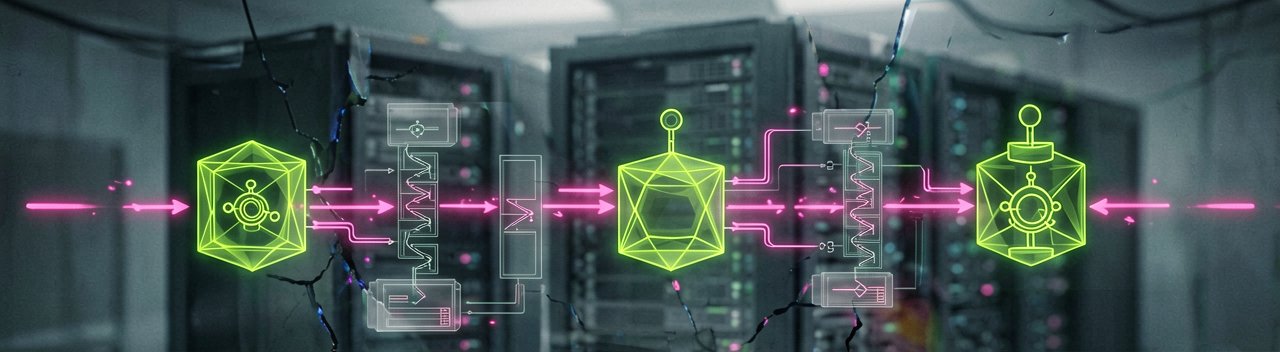
An Inside Look at the Enterprise Code Verification Crisis
What Most Reports Miss: The actual crisis in software engineering is not that generative AI assistants like Cursor or GitHub Copilot write flawed code, but that they have exposed the terminal limitations of our decades-old testing infrastructure. Historically, human developers served as a structural filter, pacing the flow of features to match the speed of legacy continuous integration (CI) pipelines. Now, with generative platforms boosting artifact production at astronomical rates, the bottleneck has shifted entirely downstream to quality assurance, creating a high-stakes environment where traditional automated tests fail to execute fast enough to be meaningful.
From the perspective of engineering executives, this paradigm shift has forced an unmanageable trade-off between deployment velocity and enterprise safety. Data from Sauce Labs reveals a bleak operational reality where more than half of large tech organizations routinely deploy software containing known high-severity bugs simply to satisfy commercial deadlines. Software testing is no longer a technical checkpoint; it has evolved into a massive operational vulnerability that exposes enterprises to catastrophic financial penalties, regulatory non-compliance, and severe reputational damage.
The industry's technical response to this problem has arrived in the form of agentic AI frameworks that operate independently within the development lifecycle. Solutions like AURA function by moving past static script verification and adopting an "intent-driven" model that analyzes user requirements and production behaviors in real time. Rather than relying on human engineers to continually rewrite broken test suites, these closed-loop platforms interpret code modifications, self-heal testing frameworks, and cross-reference failures against historical execution datasets to ensure that applications act exactly as the business originally intended.
This operational transition is foundational for compliance and risk management across highly regulated sectors. By utilizing platforms that correlate production failures directly back to specific automated test parameters, engineering teams can implement scalable guardrails without manual intervention. As large enterprises aim to fully integrate automated coding pipelines, the shift toward autonomous release assurance provides a scalable bridge that aligns rapid software development with rigorous corporate governance.
Reading Between the Lines: The Illusion of Frictionless Software Delivery
Reading Between the Lines: The tech industry’s rush to deploy autonomous release systems like Sauce Labs AURA exposes a glaring contradiction in the broader artificial intelligence narrative. For years, enterprise technology providers promised that generative AI tools would liberate software engineers from tedious work, allowing them to focus entirely on higher-level system architecture and business innovation. Instead, organizations have found themselves trapped in an escalating technical arms race where companies must deploy complex, agentic AI testing systems simply to audit the erratic output of their existing AI code generation assistants.
This dynamic introduces a troubling layer of systemic abstraction into the modern software development lifecycle. When an autonomous testing platform self-heals a suite or evaluates code based on its own interpretation of business intent, it moves engineering teams further away from the source code itself. Seasoned technology analysts remain deeply skeptical of this closed-loop arrangement, pointing out that relying on one machine-learning model to validate the integrity of another creates a dangerous echo chamber where shared architectural biases, hallucinated logic, and subtle security vulnerabilities can easily go unnoticed.
Furthermore, the promised operational efficiency metrics often mask long-term organizational friction. While reducing live production incidents and accelerating deployment schedules look impressive on quarterly performance dashboards, they fundamentally shift where engineering resources are spent. Teams are no longer writing functional features or traditional test cases; they are now tasked with the complex job of prompt engineering, model tuning, and auditing autonomous agents. This transformation threatens to replace the old testing bottleneck with a highly specialized oversight bottleneck that most enterprise engineering departments are completely unequipped to manage.
Ultimately, the long-term viability of autonomous release assurance hinges on whether organizations can maintain true human-in-the-loop oversight as deployment velocity accelerates. If engineering teams blindly trust automated verification platforms to police autonomous coding tools, the underlying software architecture will inevitably become brittle and impossible for human developers to untangle. True enterprise stability will not be achieved merely by accelerating the software delivery pipeline, but by establishing rigorous, independent verification frameworks that ensure automated speed never eclipses human comprehension.
"We have officially entered the golden age of automated efficiency, where machine-learning models generate code at lightning speed and agentic platforms test it just as fast—leaving human engineers with the vital, highly technical task of sitting back, crossing their fingers, and hoping the two algorithms don't quietly agree to ignore the bugs."
Artūras Malašauskas is an AI Systems Integrator with 20+ years of production-grade web engineering experience. He has designed, shipped, and scaled enterprise Python/PHP systems for logistics, SaaS, and public-sector clients. For the past year, he has focused exclusively on AI integrations: deploying open-source LLMs, building generative media pipelines (image, audio, video), and engineering multi-agent workflows for real production environments. His standard: reproducibility, security, cost-efficient inference—no vaporware. He documents and evaluates emerging AI tooling, separating verified capabilities from marketing noise. Technical editor at: muza-ai.eu, ai-verslas.lt, ai-naujinos.lt Connect on LinkedIn
Comments