Cutting Out the Middleman: io.net Launches Agent Cloud to Let AI Buy Its Own Compute
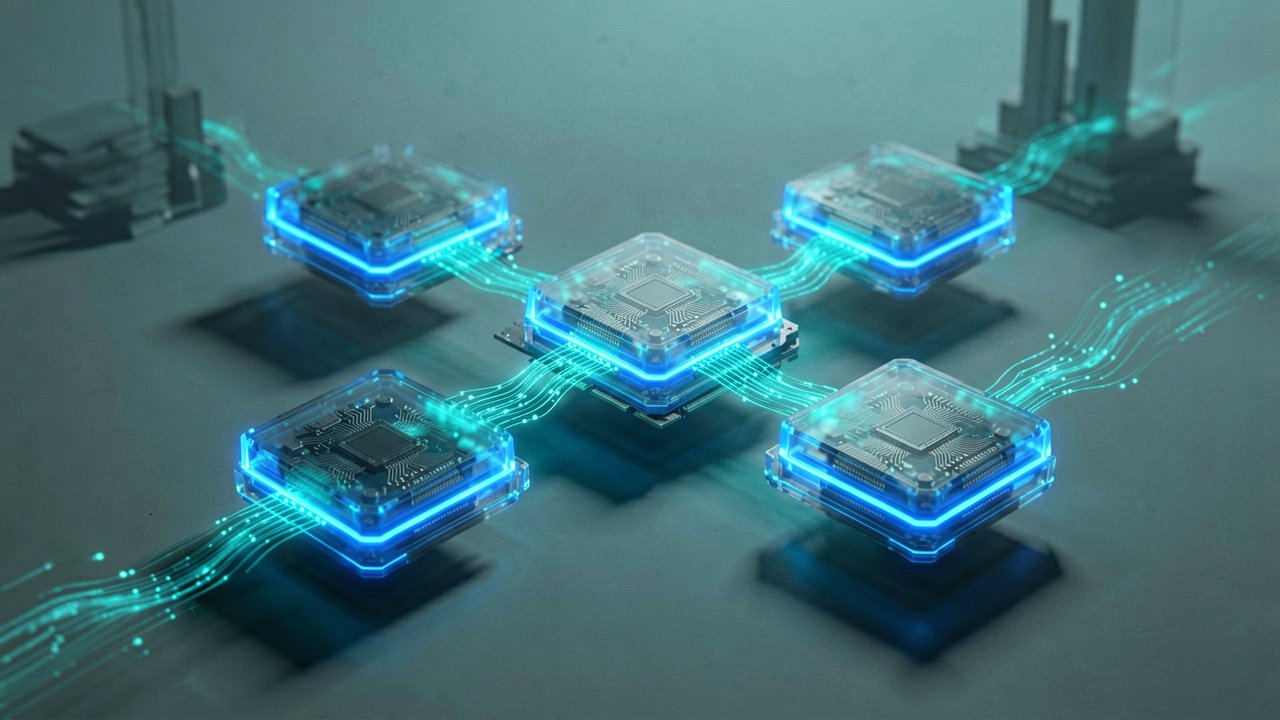
The concept of autonomous AI agents usually comes with a massive asterisk: humans still have to micromanage the server bills. That friction point is exactly what decentralized network pioneer io.net aims to obliterate. In an announcement on July 25, 2026, the company officially launched Agent Cloud, a dedicated platform designed to provide instant, scalable, and entirely autonomous infrastructure for the next wave of AI applications. By deploying an architecture that lets software agents provision and clean up their own resources on demand, the launch marks a shift from manual cloud management to true operational independence for machine workloads.
Instead of relying on clunky, slow-moving centralized hyperscalers, the new system leverages a Model Context Protocol (MCP) native network framework. This allows bursty AI applications—like customer support swarms or continuous code review agents—to spin up decentralized GPU power in under three minutes, execute a task, and shut it down immediately. Crucially, io.net integrated mainstream payment systems like Stripe alongside the crypto-native x402 protocol, giving agents the literal financial tools to buy their own computing power. According to details tracked via , this setup operates on a strict pay-for-work billing model, slashing the idled resource costs that usually plague automated enterprise applications.
Solving the Scale and Latency Dilemma
For a sector that has heavily emphasized raw infrastructure footprint, io.net is leaning into decentralized agility to capture market share. Traditional data centers frequently lock developers into restrictive, long-term contracts and manually intensive setups that simply cannot handle a sudden spike from an autonomous bot network. Agent Cloud works directly around this bottleneck by turning a global, distributed supply of underutilized hardware into a fluid ecosystem. This setup brings down the latency barriers and computational premiums that have kept complex multi-agent workflows restricted to well-funded laboratories.
While the decentralized approach heavily undercuts old-school cloud costs, the ultimate test for Agent Cloud lies in developer adoption. Giving AI the keys to the digital wallet is an elegant technical milestone, but building a robust ecosystem depends on real-world reliability. As autonomous software workflows continue to mature throughout 2026, io.net is banking on the fact that the most successful AI applications will be the ones capable of handling their own infrastructure bills without a human holding their hand.
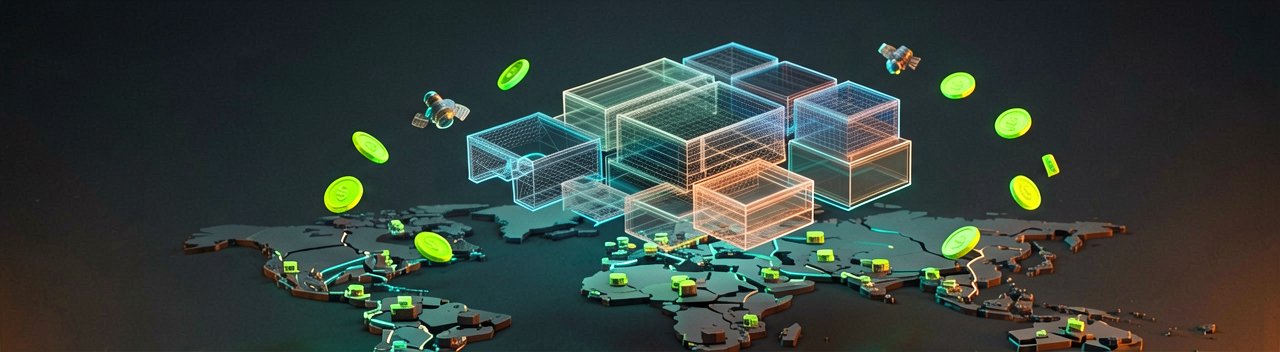
What Most Reports Miss: The shift toward decentralized agent compute isn't just about shaving pennies off a cloud bill; it represents a fundamental rewiring of software ownership. Historically, a developer had to predict traffic, manage API gateways, and manually absorb the idle runtime costs of keeping heavy-duty hardware online. By leveraging a network framework natively integrated with the Model Context Protocol (MCP), io.net passes the operational steering wheel directly to the software. AI systems like Claude Code or Cursor are no longer just tools running scripts—they are actively negotiating the underlying silicon infrastructure needed to complete their jobs.
This dynamic shifts the paradigm toward a concept known as "Agentic DevOps," where the time from identifying a resource bottleneck to deploying a fresh cluster shrinks dramatically. Instead of waiting for a human systems administrator to sign off on an enterprise cloud procurement request, an agent can spin up a geo-distributed cluster, execute its workload, and tear down the infrastructure in under three minutes. This operational agility is especially critical for bursty, high-throughput applications like automated code review queues and customer support swarms. Traditional centralized hyperscalers, bound by rigid multi-year agreements and manual know-your-customer (KYC) roadblocks, simply aren't built for a world where software dictates its own hardware requirements on a second-by-second basis.
Aligning Silicon with Economic Independence
The monetization structure underlying this release also hints at how autonomous commerce will function in an increasingly machine-driven economy. According to market trackers at TradingView, the platform relies heavily on a pay-for-work model, leveraging integrations with mainstream payment processors like Stripe alongside decentralized settlement options. This dual-layered framework removes the financial friction points that typically paralyze autonomous systems. When a machine can directly manage its own wallet to purchase infrastructure, the traditional developer-to-vendor billing layer evaporates, leaving a leaner, highly specialized ecosystem where software pays for exactly what it consumes.
To secure a truly bulletproof transactional layer between these digital entities, the company has paired this compute infrastructure with collaborative initiatives like the Internet Court protocol. This setup ensures that agentic interactions remain contractually sound and verifiable across the decentralized grid, addressing the trust deficit that has long plagued multi-tenant AI systems. By embedding trust and automated billing directly into the network architecture, the barrier to launching sophisticated, self-sustaining software networks has effectively dropped to zero.

As corporate architecture continuously transitions toward automated workflows, the long-term success of decentralized GPU clusters will inevitably hinge on ecosystem reliability and developer inertia. Giant centralized infrastructure providers still hold massive hardware reserves, but their bureaucratic onboarding flows present a structural misalignment with instantaneous machine demands. By turning global, underutilized hardware into an on-demand commodity, this decentralized shift is setting the stage for a future where software runs entirely on its own terms, answering only to the efficiency of its code.
Reading Between the Lines: The intoxicating narrative of fully autonomous AI agents operating as financially independent digital citizens glosses over a harsh physical reality: raw compute is a zero-sum game tightly bound by geography and power grids. While the technical architecture of io.net successfully decouples the software layer from centralized corporate control, it introduces a highly volatile operational environment. Relying on a decentralized network of underutilized consumer and enterprise GPUs assumes a stable, uniform supply of hardware that can seamlessly handle the demanding, deterministic workloads of enterprise AI models. In practice, a sudden surge in market demand or a localized network hiccup could leave a time-sensitive agentic swarm stranded without the specialized silicon required to execute its tasks.
Furthermore, the friction that currently hinders widespread agent deployment is rarely just a matter of infrastructure billing or API latency. The underlying bottleneck remains a trust problem. Giving an autonomous agent a wallet linked to Stripe or crypto protocols opens up a massive surface area for algorithmic financial bleeding, where a minor infinite loop in an agent's reasoning code could drain its entire computing budget before human oversight can intervene. Hyperscalers charge a premium precisely because they offer predictable SLAs and predictable, sandboxed guardrails. The trade-off for the absolute freedom of decentralized compute is the absolute responsibility of managing chaotic, machine-driven cost centers without an enterprise support ticket to save you.
This structural contradiction suggests that the immediate future of Agent Cloud may look less like a total revolution and more like a high-speed sandbox for niche applications. Developers working on low-stakes, bursty computations—like automated Web3 arbitrage bots or localized data scraping operations—will naturally thrive in a frictionless, pay-for-work environment. However, highly regulated industries like healthcare and finance, which require strict data sovereignty and immutable compliance audits, face a steep uphill battle when trying to explain to auditors that their sensitive customer data was processed on an anonymous, geo-distributed cluster. The decentralized model forces a choice between the agility of machine autonomy and the rigid certainty of traditional regulatory compliance.
Looking ahead, the tension between centralization and decentralization will likely force a consolidation of hybrid approaches. Centralized tech giants are already experimenting with scaled-down, edge-based execution frameworks to keep agents local and cheap, meaning decentralized networks aren't competing against a static target. The ultimate survival of independent compute grids depends on their ability to outpace the pricing drops of traditional data centers while convincing conservative enterprise developers that letting software buy its own hardware isn't an operational liability. Until that trust gap narrows, the decentralized agent economy remains a brilliant technical proof-of-concept waiting for a mature market to catch up with its ambitions.
Giving an artificial intelligence its own credit card and the keys to a global supercomputer sounds less like the dawn of a frictionless digital economy and more like a recipe for a machine learning model to accidentally bankrupt its creators while trying to fix a minor typo in a codebase.
Artūras Malašauskas is an AI Systems Integrator with 20+ years of production-grade web engineering experience. He has designed, shipped, and scaled enterprise Python/PHP systems for logistics, SaaS, and public-sector clients. For the past year, he has focused exclusively on AI integrations: deploying open-source LLMs, building generative media pipelines (image, audio, video), and engineering multi-agent workflows for real production environments. His standard: reproducibility, security, cost-efficient inference—no vaporware. He documents and evaluates emerging AI tooling, separating verified capabilities from marketing noise. Technical editor at: muza-ai.eu, ai-verslas.lt, ai-naujinos.lt Connect on LinkedIn
Comments