Upstage Pivots to Autonomous Operations with the Launch of Solar Open 2
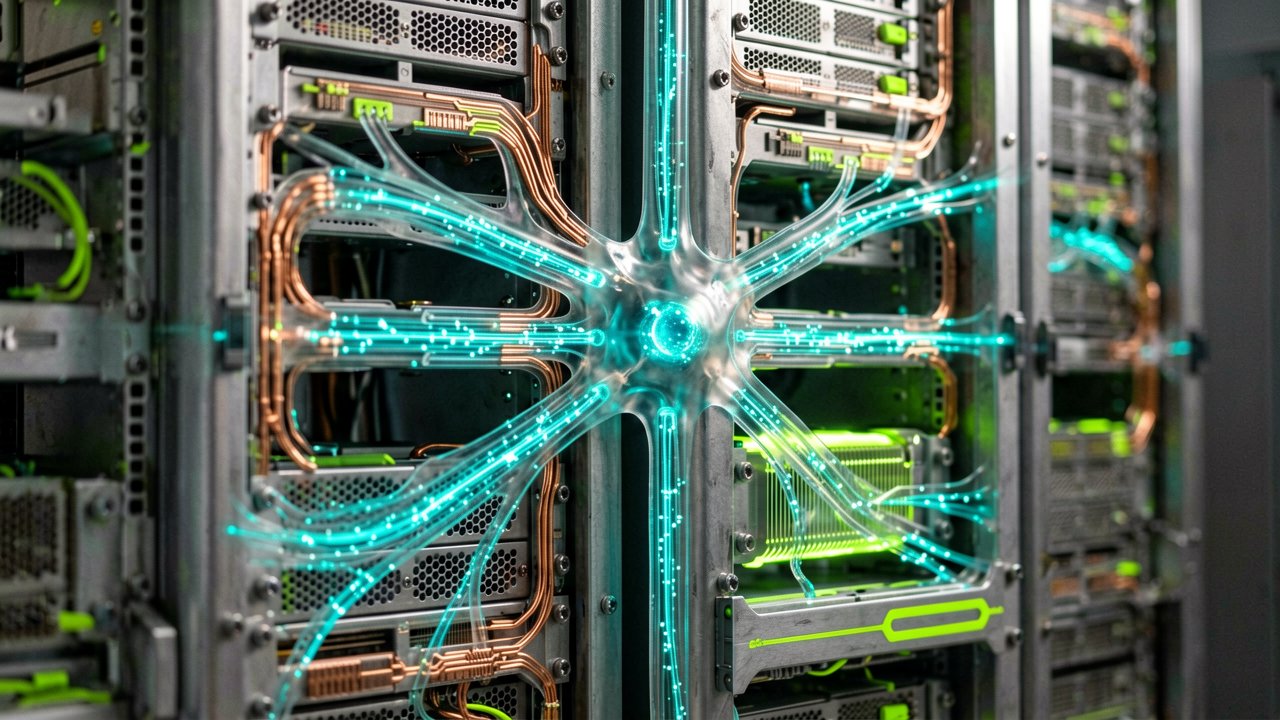
South Korean artificial intelligence pioneer Upstage has officially launched Solar Open 2, its second proprietary foundation model engineered exclusively to power autonomous AI agents. The release signifies a major strategic pivot for the company, moving away from traditional generative text tasks to prioritize agentic capabilities. By delivering an open-weight model tuned specifically for real-world enterprise infrastructure, Upstage positions itself at the forefront of the shift toward autonomous digital workflows.
The market for large language models is transitioning rapidly from simple chat conversationalists to action-oriented agents capable of multi-step execution. Upstage is leaning into this evolution by utilizing a Mixture of Experts architecture that optimizes operational costs. According to the official Upstage Blog, Solar Open 2 features 250 billion total parameters but activates only 15 billion parameters per token. This design maintains the knowledge capacity of a massive system while keeping inference costs low enough for enterprises to execute repeated automated reasoning loops.
To ensure practical viability, the architecture supports a massive 1-million-token context window and runs on highly constrained hardware. Upstage CEO Kim Sung-hun emphasized at a recent developer event that while some contemporary models require 16 NVIDIA B200 graphics processing units, Solar Open 2 can operate on just two quantized NVIDIA H200 GPUs, as reported by The Chosun Daily. This focus on computational efficiency makes localized enterprise deployments economically sustainable for organizations seeking sovereign AI infrastructure.
Strategic Imperatives and Sovereign AI Ecosystems
By bypassing the pure parameter scaling wars dominated by Silicon Valley tech giants, Upstage targets specialized domain tasks and region-specific enterprise needs. Evaluation data released in the arXiv Solar Open 2 Technical Report shows the model outperforming major alternative models like DeepSeek V4 Flash and Mistral Medium 3.5 across agentic benchmarks, including instruction following and tool calling. Its design addresses the technical bottlenecks that have long prevented corporate environments from deploying reliable, self-governing AI workflows.

Commercial Rollout and Industrial Prototyping
Upstage is backing its agentic pivot with a comprehensive commercial rollout strategy spanning consumer web portals and public sectors. The company plans to embed conversational agent services directly into the Daum web portal, which serves over 10 million weekly users, according to details shared by Seoul Economic Daily. Simultaneously, the model will power the company's "Timely" platform to facilitate automated operations across South Korean local governments, public educational institutions, and high-security sectors like finance, healthcare, and defense.
What Most Reports Miss: The Architectural Bet on Agent Efficiency
The engineering philosophy guiding Solar Open 2 exposes a critical reality regarding the practical limits of corporate AI infrastructure. While the broader tech industry remains enamored with ever-increasing parameter sizes, enterprises are actively pushing back against the exorbitant computing costs associated with running massive neural networks. Upstage’s architectural gamble deliberately abandons the brute-force scaling race. Instead, by implementing an advanced Mixture of Experts framework, the company ensures that only a precise fraction of the network engages for any given token, offering an alternative path to high-level automation without the accompanying data center premium.
Industry insiders note that the pivot toward agentic workflows introduces entirely different computational bottlenecks than traditional text generation. An autonomous agent does not merely answer a prompt; it continuously plans, calls external application programming interfaces, loops back to evaluate its own mistakes, and maintains state over extended timelines. This operational loop requires a model that can process immense volumes of text repeatedly without driving a business into financial deficit. By pairing a 1-million-token context window with a design that limits active parameters to just 15 billion, the new architecture explicitly addresses the high-frequency query demands of autonomous agents.
Stakeholder perspectives from the enterprise sector highlight that sovereign AI and localized data control are becoming non-negotiable requirements for sensitive industries. For sectors like defense, banking, and public education, sending proprietary operational data to cloud-hosted APIs owned by massive hyperscalers is a major regulatory liability. The ability to deploy a highly capable agentic model onto just two quantized graphics processing units changes the deployment calculus entirely. This computational efficiency allows localized on-premises infrastructure to become a viable reality, keeping sensitive workflows fully contained within secure corporate boundaries.
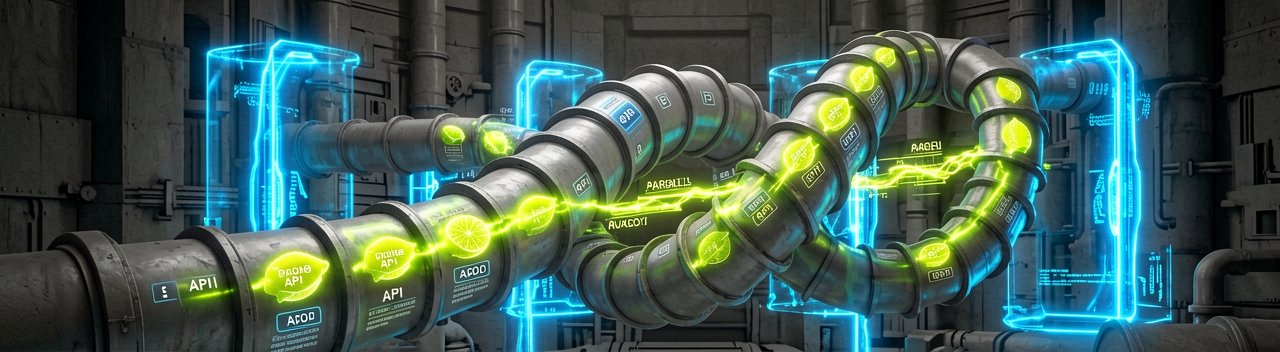
Historically, Upstage established its reputation by optimizing compact models that punched well above their weight class on public leaderboards. This strategic evolution to Solar Open 2 represents the maturity of that methodology, shifting focus from raw academic benchmarking to the messy realities of corporate production environments. By embedding the technology directly into high-traffic consumer web portals and regional government frameworks, the company is treating the rollout as a massive stress test for autonomous infrastructure. The true measure of success will not be found in synthetic testing scores, but in how reliably these digital agents navigate real-world corporate workflows without human intervention.
Reading Between the Lines: The Friction in the Autonomous Shift
The aggressive industry-wide pivot toward autonomous AI agents frequently glosses over the inherent unpredictability of agentic execution. Upstage’s emphasis on lowering inference costs and running models on constrained hardware addresses the financial barriers to deployment, but it does little to solve the reliability paradox. When a model transitions from generating text to autonomously executing multi-step API calls and municipal data processing, the margin for error shrinks to zero. System drift, hallucinated tool arguments, and endless reasoning loops remain systemic challenges across all foundation architectures, regardless of how efficiently their parameter routing is engineered.
Furthermore, a tension exists between Upstage’s open-weight philosophy and its simultaneous play for highly regulated public sector and defense contracts. Providing open-weight architectures is excellent for developer adoption and localized sovereign AI customization, but it complicates long-term monetization. Enterprises are notorious for absorbing open-source innovation, optimizing it internally, and bypassing the vendor’s premium ecosystem entirely. Upstage must walk a fine line, ensuring that its proprietary enterprise orchestration platform, Timely, offers enough distinct utility to justify a subscription model when the underlying weights of Solar Open 2 are accessible to anyone.
The real-world implementation of these autonomous workflows inside South Korean local governments and public schools will serve as an unvarnished litmus test for the technology. Public institutions are structurally risk-averse and rarely equipped to manage the edge cases of self-correcting digital agents. If an automated agent mishandles administrative workflows or misinterprets compliance guidelines, the backlash will fall squarely on the model's design. Upstage is betting that its specialized tuning can overcome these operational hurdles, but shifting from a controlled benchmark to the bureaucratic labyrinth of public sector infrastructure is rarely a seamless transition.
Ultimately, projecting the long-term implications of this strategy reveals a market bifurcating into raw compute monopolies and highly specialized orchestration layers. Upstage has wisely opted out of competing with frontier labs on brute-force scale, choosing instead to become an elite efficiency engineer. However, as frontier models naturally become cheaper and more efficient through industry-wide hardware optimization, the competitive moat built purely on compact parameter efficiency may begin to erode, forcing the company to continually reinvent its architectural advantages.
"The tech industry spent years training users to accept that AI can hallucinate facts; now, we are asked to trust those same hallucination-prone systems to autonomously manage municipal budgets and corporate workflows, under the comforting premise that they are doing so at a drastically reduced cost per token."
Artūras Malašauskas is an AI Systems Integrator with 20+ years of production-grade web engineering experience. He has designed, shipped, and scaled enterprise Python/PHP systems for logistics, SaaS, and public-sector clients. For the past year, he has focused exclusively on AI integrations: deploying open-source LLMs, building generative media pipelines (image, audio, video), and engineering multi-agent workflows for real production environments. His standard: reproducibility, security, cost-efficient inference—no vaporware. He documents and evaluates emerging AI tooling, separating verified capabilities from marketing noise. Technical editor at: muza-ai.eu, ai-verslas.lt, ai-naujinos.lt Connect on LinkedIn
Comments