Harness Tames the Wild West of AI Agents with Familiar Dev Tools

Building an AI agent is incredibly easy, but successfully shipping one into production is where engineering teams usually hit a brick wall. On July 21, 2026, San Francisco-based software delivery company Harness rolled out Agent DLC, a feature suite designed to bring much-needed order to autonomous software. By expanding its traditional platform capabilities to cover the complete AI Agent Development Lifecycle (DLC), the company wants to help engineers test, deploy, and govern intelligent agents using the exact same continuous delivery pipelines and workflows they use for everyday code.
The core problem with AI agents lies in their non-deterministic nature. Traditional application code is completely predictable; if you run a test against the same code twice, you will get the identical result every single time. Agents break this playbook entirely. An autonomous agent relies on an underlying language model to make its own decisions about which tools or APIs to execute, meaning it can choose a different path from one run to the next. According to data cited by , this unpredictability explains why only 8% of organizations have managed to push agentic AI into live production environments.
Unified Pipelines for Unpredictable Code
Instead of forcing teams to stitch together disparate cloud-specific evaluators, standalone runtime firewalls, and separate security tools, the new feature set consolidates agent management directly into the core Harness architecture. This release builds heavily upon the company's previous rollout of Autonomous Worker Agents, integrating five distinct core capabilities that extend conventional DevOps governance to non-deterministic AI architecture.
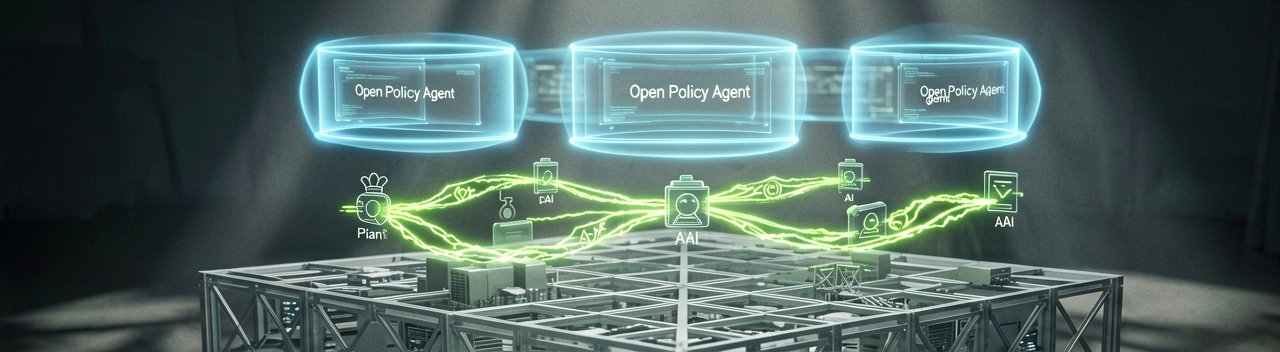
Among these additions, Harness AI Evals creates quality gates within standard continuous integration and deployment pipelines to catch performance regressions. For live systems, Agent Deployments natively extends existing canary release patterns, manual approvals, and Open Policy Agent guardrails to managed external environments like Amazon Bedrock AgentCore and Google Agent Runtime. This approach ensures engineers can orchestrate and monitor agent releases without building dedicated infrastructure or relying on fragmented vendor platforms.
Complete Observability and Open Source Tools
To help teams understand exactly how their autonomous tools behave, the company introduced AgentTrace, a diagnostic layer that captures real-time telemetry at both individual run levels and full user sessions. Because different agents can reach identical conclusions via wildly divergent logic paths, this granular session tracking allows developers to pin down performance bottlenecks, isolate failure points, and compare how adjustments to prompts or base models impact output quality. To drive widespread adoption across the broader developer ecosystem, the core primitives behind this tracing functionality have been made available via an open-source license.
Operational safety is rounded out by runtime feature flagging infrastructure called AI Configs, which allows developers to test model swaps or alter prompt logic instantly without triggering full codebase redeployments. Meanwhile, an AI Asset Catalog continuously scans connected repositories to discover and register active agents, plugins, and skills, ensuring that no autonomous service operates within corporate infrastructure without explicit ownership and visibility.
What Most Reports Miss: The Chaos of the Non-Deterministic Pipeline
The tech industry's sudden pivot toward agentic AI has exposed a glaring cultural divide between data scientists and traditional software engineers. For years, DevOps engineers perfected predictable systems, relying on deterministic unit tests to guarantee that code failing in staging would never disrupt production. Language models break this entirely. When an AI agent decides on its own workflow based on a user's open-ended prompt, traditional testing frameworks fail because there is no single right answer to validate. Engineering leaders frequently complain that their teams spend more time building custom, fragile testing rigs for LLM calls than they do writing core business logic.
This operational friction is exactly why so many enterprise AI initiatives stall at the proof-of-concept stage. When a developer updates an agent's system prompt or swaps the underlying model from GPT-4o to Anthropic's Claude, the downstream ripple effects are notoriously difficult to predict. An agent might suddenly lose its ability to parse a specific legacy API or start looping endlessly through database queries. Without unified evaluation gates baked directly into the continuous integration pipeline, identifying these regressions requires manual, repetitive QA sessions that completely destroy development velocity.

By standardizing agent deployment through existing CI/CD infrastructure, tech leaders are attempting to treat prompts and model configurations like any other piece of source code. Veteran system architects argue that the only way to scale AI safely is to enforce the same strict governance applied to microservices. This means automatically running hundreds of simulated user interactions against an agent before it receives approval for a canary deployment, and having the infrastructure automatically roll back the version if cost or latency metrics spike unexpectedly in production.
Industry analysts point out that this consolidation wave is part of a broader consolidation trend across the enterprise software landscape. Organizations are pushing back against tool sprawl, eager to avoid adopting yet another niche platform just to monitor AI endpoints. Security teams, in particular, are relieved by approaches that leverage established Open Policy Agent guardrails, as it allows them to enforce compliance and access controls uniformly without needing to audit a completely separate stack of AI-native runtime firewalls.
Reading Between the Lines: The Standardization Illusion
The enterprise rush to wrap AI agents in traditional DevOps guardrails relies on a comforting assumption: that if you manage the pipeline rigidly enough, you can eventually force non-deterministic software to behave like standard code. This is an elegant marketing narrative, but it glosses over a fundamental contradiction. Shoving an autonomous, self-directing agent through a standardized CI/CD pipeline does not actually make the agent’s logic predictable; it merely structures the way we deploy its unpredictability. Engineering teams may find solace in uniform canary releases and structured log files, but a well-governed deployment pipeline cannot fix an underlying model that decides to hallucinate a destructive database query at 2:00 AM.
Furthermore, the push toward unified platform governance exposes a growing tension between developer velocity and operational safety. While infrastructure vendors promise seamless integration with existing tools, the reality of testing LLM-driven architectures is notoriously resource-intensive. Running a comprehensive suite of semantic evaluations and multi-turn user simulations for every single prompt tweak introduces massive latency into the deployment pipeline. Organizations may quickly find themselves caught in a frustrating paradox, where the very tools introduced to streamline agent deployment end up reintroducing the bureaucratic bottlenecks that DevOps originally set out to eliminate.
There is also a subtle risk of vendor lock-in masquerading as open-source altruism. Releasing core tracing primitives under an open license is a classic playbook strategy to capture developer mindshare, but the sophisticated orchestration, canary routing, and enterprise-grade policy enforcement remain locked behind proprietary platform walls. As teams deeply embed these specific agent-monitoring hooks into their application logic, switching underlying deployment platforms down the road becomes an increasingly painful architectural nightmare. Software architects must carefully weigh the immediate convenience of pre-built agent pipelines against the long-term flexibility of vendor-agnostic infrastructure.
Ultimately, the true test for these governance frameworks will not be how smoothly they deploy simple chat assistants, but how they handle multi-agent systems operating with real-world financial consequences. When one agent’s output serves as another agent’s unpredictable input, the potential for cascading logic failures scales exponentially. Standardizing the release mechanism is undoubtedly a necessary step toward operational maturity, but tech leaders must remain skeptical. Elevating the discipline of prompt engineering to the rigors of traditional systems engineering requires changing the unpredictable nature of the models themselves, not just changing the software used to ship them.
“We have spent decades building pristine, automated assembly lines to ensure our software is perfectly uniform, only to enthusiastically hand the controls over to an algorithm that improvises its instructions on the fly. It turns out the ultimate goal of modern DevOps isn't actually to eliminate chaos, but merely to ensure that when the robots inevitably lose the plot, they do so inside a beautifully formatted, enterprise-compliant log file.”
Artūras Malašauskas is an AI Systems Integrator with 20+ years of production-grade web engineering experience. He has designed, shipped, and scaled enterprise Python/PHP systems for logistics, SaaS, and public-sector clients. For the past year, he has focused exclusively on AI integrations: deploying open-source LLMs, building generative media pipelines (image, audio, video), and engineering multi-agent workflows for real production environments. His standard: reproducibility, security, cost-efficient inference—no vaporware. He documents and evaluates emerging AI tooling, separating verified capabilities from marketing noise. Technical editor at: muza-ai.eu, ai-verslas.lt, ai-naujinos.lt Connect on LinkedIn
Comments