Whop Ships a Command-Line Interface to Put Business Owners and AI Agents in the Driver’s Seat

The tech landscape just dropped another subtle hint that we are fast approaching a zero-user-interface future, and this time it is coming directly from the digital commerce trenches. On July 21, 2026, the fintech startup and digital marketplace platform Whop officially rolled out its new command-line interface. By doing away with traditional dashboard limitations, the company is granting full-stack API access to entrepreneurs. The move aims to let founders manage their workflows programmatically, treating digital product infrastructure less like a static web app and more like code.
This development is not just about human developers skipping the visual clicks; it is built intentionally for autonomous AI agents. Modern e-commerce managers are increasingly finding that clicking through graphical interfaces creates an automation bottleneck. As detailed in the announcement on the Whop Blog, standard dashboard actions are inherently non-repeatable. Moving operations over to a terminal means every single business interaction becomes a text-based, scriptable command. For founders building complex software-as-a-service empires or digital communities, this turns routine inventory management, plan adjustments, and fulfillment into a playground for automated scripts.
Unlocking the Agentic Economy from the Terminal
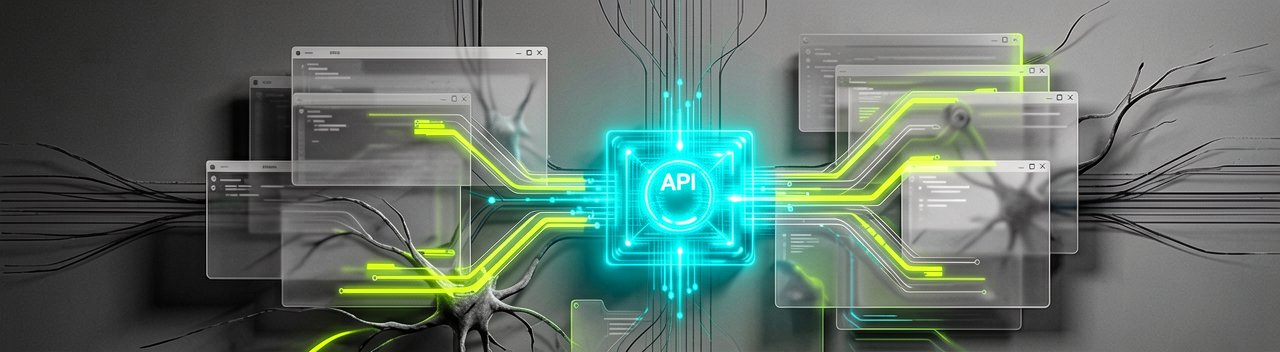
By offering an end-to-end API wrapped in a clean terminal utility, the platform enables software agents to act as genuine team members. Reports by SiliconANGLE highlight how the tool hands over the digital commerce keys to these autonomous systems. Instead of relying on fragile web-scraping scripts or limited third-party integrations, an AI agent can read real-time business data, analyze performance metrics, and execute programmatic changes directly through the terminal. This structural shift bridges the gap between raw data analysis and immediate operational execution.
This release aligns perfectly with the current broader industry pivot toward agentic software architectures. Rather than acting as simple chat systems, these independent models can plan multi-step workflows, handle exceptions, and continually modify their approach. For internet creators and marketplace power users, the line between software engineering and everyday business administration is getting incredibly thin. The terminal is no longer reserved for the IT department; it has officially become the central nervous system for autonomous digital storefronts.
Behind the Scenes: The Infrastructure Shift Driving Agentic Commerce
What Most Reports Miss: This terminal-first approach is not merely a cosmetic update for engineers who prefer green text on black screens; it addresses a fundamental flaw in how modern software handles automation. Traditional web dashboards are built for human eyes, relying on visual elements that change frequently, which inherently breaks brittle browser-automation scripts. By exposing the platform's core logic through a unified command-line tool, developers can bypass the visual layer entirely. This allows autonomous systems to treat an e-commerce storefront like an operating system, executing tasks in milliseconds without the overhead of loading heavy web elements.
For the internet entrepreneurs who rely on these digital marketplaces, the transition introduces a massive paradigm shift in operational scaling. Previously, managing a rapidly growing digital community or software marketplace required hiring customer support teams and operations managers just to handle routine tasks like tier migrations, access provisioning, and promotional campaigns. Early adopters are now finding that a single engineer can pair this new terminal utility with a large language model to build self-healing business workflows. When an anomaly occurs, such as a sudden spike in failed subscriptions or an unexpected drop in user engagement, the AI agent can diagnose the issue and instantly push a configuration fix directly through the API.
This development also marks a significant milestone in the broader maturation of the creator and software economy. Historically, platforms kept their backend mechanics locked behind proprietary walls to prevent churn and retain control over user data. By opening up deep, programmatic access, the platform is betting on an open ecosystem where the most flexible infrastructure wins. Venture capitalists and tech analysts watching the digital commerce space note that providing full-stack terminal access lowers the barrier to entry for highly sophisticated, algorithmic businesses that operate more like quantitative trading desks than traditional retail storefronts.
However, handing total programmatic control to autonomous agents comes with distinct security and operational challenges that seasoned engineers are already parsing. A poorly optimized script or an unaligned AI model could theoretically execute thousands of API requests in seconds, accidentally deleting product tiers, modifying pricing structures, or banning legitimate users before a human operator notices. The success of this terminal-driven model will ultimately depend on how effectively creators implement strict guardrails, rate limits, and verification checkpoints to keep their autonomous digital workforces operating safely within designated boundaries.
Reading Between the Lines: The Friction in Seamless Automation
The Reality Check: While the promise of an autonomous army of AI bots running a digital empire from a terminal sounds like peak efficiency, it glosses over the chaotic reality of live e-commerce. The tech industry loves to celebrate the elimination of human bottlenecks, yet it routinely underestimates how often human judgment acts as the glue holding fragile business operations together. Handing full-stack API access to autonomous agents assumes these models can seamlessly interpret ambiguous customer disputes, erratic marketplace shifts, and complex digital tax compliance without making catastrophic logical leaps.
There is an inherent contradiction in using a command-line interface—the ultimate tool for precise, deterministic developer control—as the primary gateway for probabilistic, inherently unpredictable AI models. Large language models do not think in strict binaries; they operate on statistical probabilities. When an autonomous agent attempts to execute commands through a terminal, a single hallucinated argument or a misinterpreted API parameter can result in systemic database errors. The industry has spent decades moving away from unforgiving text interfaces toward foolproof graphical dashboards precisely because humans make typos, yet we are now racing to let software models write to those same terminals completely unsupervised.
Furthermore, this shift towards hyper-automated, agentic commerce risks turning the digital marketplace into a sterile ecosystem of bots interacting with other bots. If merchant storefronts are entirely managed by algorithmic agents optimizing for maximum revenue extraction, the customer experience will inevitably shift from community-centric interaction to cold programmatic efficiency. Buyers may soon find themselves arguing with automated customer-retention bots that have been given full terminal authority to alter subscription terms on the fly, transforming what used to be a human-centric marketplace into an adversarial arena of software logic.
Ultimately, the democratization of full-stack terminal tools will likely separate the true technical operators from the casual creators. Businesses that possess the engineering talent to implement rigorous validation pipelines, fallback scripts, and strict sandbox testing environments will undoubtedly thrive under this new paradigm. Meanwhile, less technical founders who deploy autonomous agents out of the box will serve as a cautionary tale of what happens when you give an unaligned, unmonitored script the keys to your entire revenue stream.
Giving an autonomous AI agent full-stack command-line access to your business infrastructure is the ultimate test of faith: you are effectively trusting a machine that still cannot reliably count the Rs in "strawberry" to manage your entire life's savings without accidentally deleting the database by Tuesday morning.
Artūras Malašauskas is an AI Systems Integrator with 20+ years of production-grade web engineering experience. He has designed, shipped, and scaled enterprise Python/PHP systems for logistics, SaaS, and public-sector clients. For the past year, he has focused exclusively on AI integrations: deploying open-source LLMs, building generative media pipelines (image, audio, video), and engineering multi-agent workflows for real production environments. His standard: reproducibility, security, cost-efficient inference—no vaporware. He documents and evaluates emerging AI tooling, separating verified capabilities from marketing noise. Technical editor at: muza-ai.eu, ai-verslas.lt, ai-naujinos.lt Connect on LinkedIn
Comments