Open-Source Defiance: OpenScience Platform Emerges to Democratize Advanced AI Research
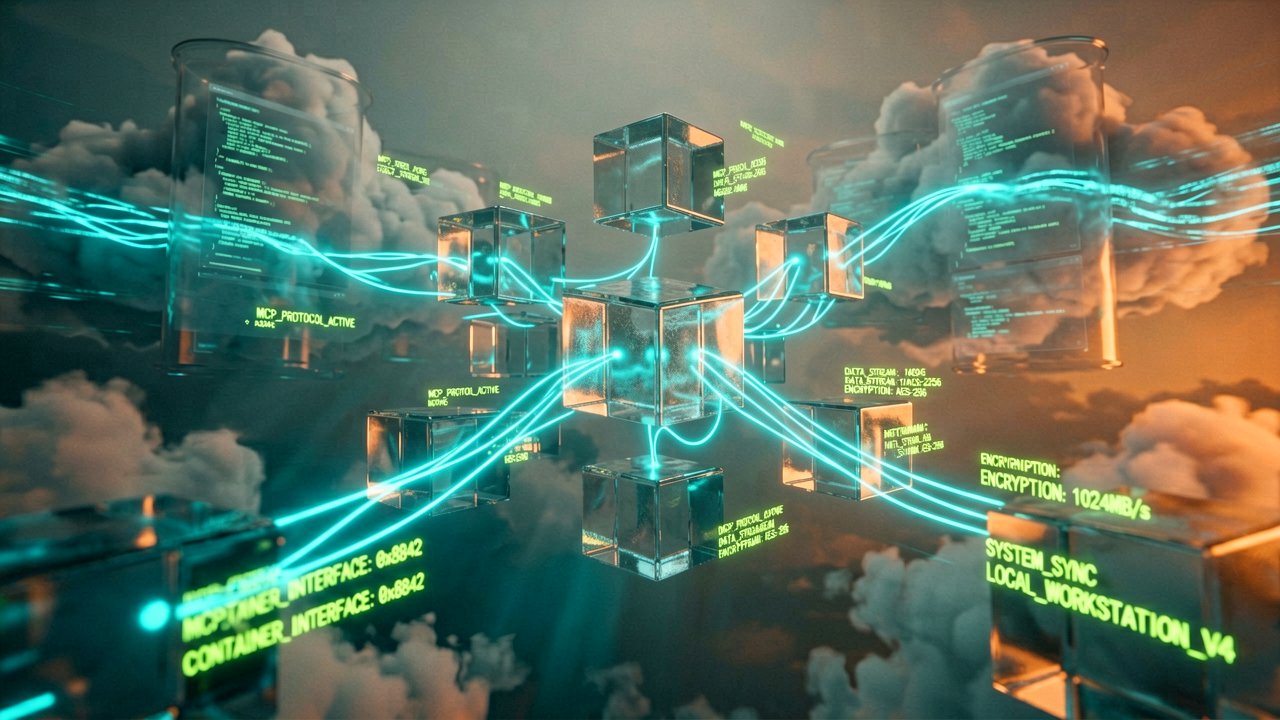
The consolidated grip of proprietary AI gatekeepers on advanced scientific computation faces its most significant challenge yet with the official launch of OpenScience, a fully open-source AI research workbench. Developed in direct response to the debut of Anthropic's Claude Science, OpenScience aims to dismantle vendor lock-in within the academic and life sciences research sectors. By offering an MIT-licensed, local-first alternative, the community-driven project seeks to ensure that critical scientific workflows remain entirely auditable, customizable, and free from the restrictive billing and closed black-box architectures of commercial tech giants.
This strategic shift highlights a growing ideological division within the artificial intelligence ecosystem, particularly as enterprise providers turn specialized agent workflows into core monetization engines. While Anthropic designed its environment to capture high-margin pharmaceutical contracts and drive recurring revenue, the broader community has rallied behind decentralized software. According to market coverage by 36Kr, the new platform expands upon the capabilities of closed environments by providing over 250 built-in research skill packages. This provides more than four times the number of integrated domains originally introduced by its proprietary counterpart, fundamentally shifting control back to individual labs.
Market Displacement and the Model Context Protocol
The rapid rise of open alternatives is accelerated by architectural flexibility. Unlike corporate suites tied to specialized backend infrastructure, open-source workbench alternatives leverage model-agnostic foundations to prevent provider lock-in. Developers and researchers can connect their workspaces directly to open-weight models running locally via Ollama or easily substitute various external APIs. This interoperability depends heavily on the Model Context Protocol (MCP), an architectural framework allowing developer tools to freely link with external databases, local terminals, and computational engines without custom, proprietary middleware.
Data Sovereignty Challenges Corporate Subscriptions
For research institutions, the primary drawback of commercial platforms involves data privacy and operational reproducibility. Proprietary environments require scientific teams to route sensitive datasets through external cloud services, which creates compliance hurdles in regulated industries. Reports from community hubs like Hacker News highlight that a truly reproducible research workflow must be built on entirely reproducible software infrastructure. The shift toward local-first deployment eliminates structural dependencies on corporate APIs, ensuring that analytical histories remain auditable without risking data leaks or sudden pricing increases.

The Financial Realities of Institutional AI Sourcing
The competitive dynamics between closed and open AI models emphasize a broader market optimization regarding cost efficiency. Corporate platforms seek to bundle access to specialized tools under expensive enterprise tiers to secure profitability ahead of highly anticipated market listings. In contrast, decentralized alternatives remove artificial barriers to entry, enabling public universities and smaller laboratories to configure advanced agentic workflows using their own API credentials or free local hardware configurations. This democratized availability forces a commercial reassessment, proving that specialized research infrastructure can no longer be gated behind high subscription walls.
Behind the Scenes: Inside the Fight for Scientific Compute Autonomy
The sudden emergence of decentralized workbenches is the predictable result of years of tension between academic funding models and the cost structures of commercial artificial intelligence labs. For decades, public institutions and research foundations have operated on fixed, multi-year grant cycles that simply cannot keep pace with the volatile, consumption-based pricing models of elite silicon valleys start-ups. When proprietary platforms shift their focus from open APIs to closed enterprise portals, they fundamentally disrupt the predictable budgeting that university labs depend on. This financial mismatch forced an alliance of software engineers, bioinformatics experts, and university consortia to build a parallel, self-hosted infrastructure before public research became entirely priced out of advanced agentic pipelines.
Beyond the simple economics of software licenses, the push for open alternatives addresses a deeper systemic crisis concerning the reproducibility of scientific results. In traditional peer-reviewed research, a study must provide its raw data and exact methodologies so that external teams can verify the conclusions. However, when a critical step in a molecular dynamics calculation or clinical data synthesis happens within a proprietary model, that step becomes a black box that cannot be audited. If a corporate provider updates a model weights or changes its prompt engineering guidelines overnight, subsequent attempts to replicate the study will yield different results. Open-source foundations provide researchers with complete control over the entire technological stack, enabling them to freeze specific model versions and containerize their exact execution environments to guarantee long-term reproducibility.
The technical architecture driving this shift relies on local-first processing, which marks a significant departure from standard cloud-centric AI configurations. By moving the primary agent logic away from remote servers and onto local workstations or regional university compute clusters, researchers completely bypass the network latency and data security risks associated with commercial web APIs. This setup allows researchers to process highly sensitive genomic datasets or proprietary chemical formulations within their own air-gapped server rooms. This capability removes the risk of intellectual property leaks or compliance violations under strict regional data protection frameworks, offering a level of security that remote corporate clouds cannot match.

This structural evolution has triggered intense strategic debates within corporate boardroom circles and the venture capital community. Early tech investors originally assumed that specialized scientific domain wrappers would serve as highly profitable, defensible businesses capable of locking in lucrative pharmaceutical contracts for years to come. The rapid rise of community-managed toolkits, however, demonstrates that core engineering frameworks can be built out quickly through distributed public collaboration. As basic data integration and multi-agent coordination become standard open-source features, commercial providers are forced to reconsider their long-term value propositions, shifting their focus toward providing specialized hardware access and custom enterprise integration services.
Looking ahead, the long-term viability of the open scientific ecosystem will depend on sustained institutional backing and infrastructure funding. While volunteer developer networks are highly effective at building initial software versions, maintaining complex integrations with evolving scientific databases requires consistent financial support. Recognizing this strategic necessity, several national science foundations and private philanthropic organizations have started allocating dedicated computing grants specifically to open-source software maintenance. This deliberate pooling of public resources ensures that the foundational tools of modern scientific discovery remain a public asset, permanently protected from corporate acquisition and monopolized access.
Reading Between the Lines: The Structural Paradox of Ideological Openness
The prevailing narrative surrounding the rise of open-source research platforms paints a romantic picture of decentralized triumph over corporate monopolies, yet it frequently ignores the cold realities of physical infrastructure. Enthusiasts often celebrate the democratization of software frameworks as if code alone could level the playing field, ignoring that modern AI capabilities remain structurally tethered to massive capital expenditures. A fully auditable, localized research workbench is only as democratic as the silicon it runs on. For elite public universities equipped with custom high-performance computing clusters, open software provides true independence, but for resource-constrained laboratories, the lack of subsidized enterprise cloud credits simply replaces a corporate software subscription with an even more cost-prohibitive hardware bill.
This reality exposes a glaring contradiction within the open-source movement itself, which routinely conflates architectural freedom with actual accessibility. By shifting the operational burden from managed cloud ecosystems to local-first infrastructure, community platforms implicitly assume that every biology or chemistry lab possesses the in-house DevOps expertise required to maintain complex, containerized multi-agent environments. Proprietary gatekeepers maintain market dominance not because their underlying algorithms are inherently magical, but because they offer friction-free deployment pipelines that require zero systems engineering overhead. Without intuitive, zero-configuration setup options, open platforms risk creating a new class of technological exclusion, where only institutions rich in specialized engineering talent can truly benefit from decentralized alternatives.
Furthermore, the long-term governance of distributed public repositories introduces serious quality control challenges that contrast sharply with the rigid stability of commercial enterprise service-level agreements. When an academic team relies on a commercial suite, they pay for the guarantee that data connectors and underlying schema will remain backward compatible through multi-year research cycles. In contrast, public repositories run the perpetual risk of fragmented community maintenance, where critical scientific toolkits can suddenly become obsolete if their primary open-source maintainers lose funding or shift focus. This structural instability forces cautious institutional procurement officers to hesitate, as the theoretical beauty of fully auditable software often collides with the practical nightmare of unmaintained code dependencies.
Ultimately, the escalating friction between closed and open AI platforms will likely resolve not in a total victory for either side, but in an uneasy corporate assimilation of open-source innovations. Major technology firms have historically mastered the art of letting the open-source community handle the expensive, experimental heavy lifting of framework design, only to later wrap those identical tools in slick, premium enterprise user interfaces. By adopting standardized frameworks like the Model Context Protocol, proprietary providers can easily ingest community-driven skill packages while keeping users firmly bound to their proprietary model backends. This dynamic suggests that while open-source software successfully breaks down artificial technical barriers, it inadvertently acts as a free research and development department for the very tech giants it seeks to displace.
"In the end, the noble quest to liberate advanced artificial intelligence from corporate gatekeepers has taught us a familiar lesson about digital revolutions: the software may be beautifully free, open, and democratic, but the electricity bill to run it remains strictly capitalist."
Artūras Malašauskas is an AI Systems Integrator with 20+ years of production-grade web engineering experience. He has designed, shipped, and scaled enterprise Python/PHP systems for logistics, SaaS, and public-sector clients. For the past year, he has focused exclusively on AI integrations: deploying open-source LLMs, building generative media pipelines (image, audio, video), and engineering multi-agent workflows for real production environments. His standard: reproducibility, security, cost-efficient inference—no vaporware. He documents and evaluates emerging AI tooling, separating verified capabilities from marketing noise. Technical editor at: muza-ai.eu, ai-verslas.lt, ai-naujinos.lt Connect on LinkedIn
Comments