The End of Firefighting: Publicis Sapient Bets Big on Self-Healing IT Operations
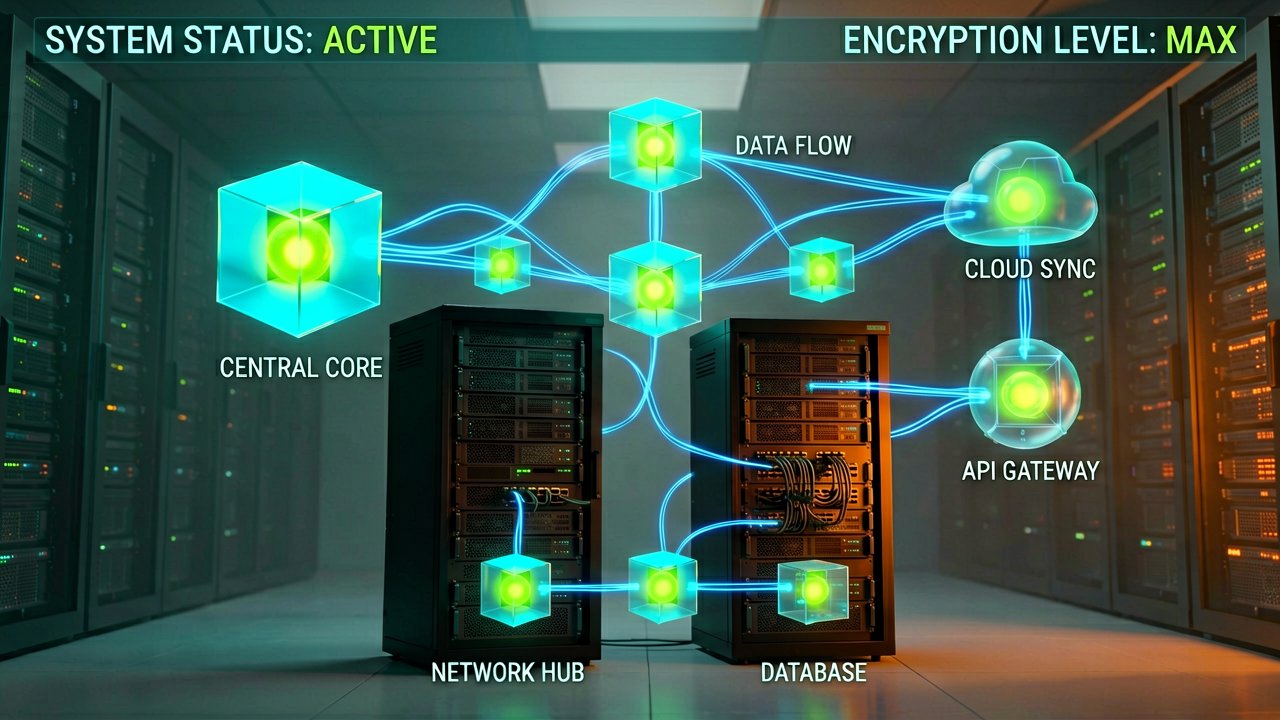
Enterprise IT operations are caught in an endless game of whack-a-mole, but a major tech consultancy wants to hand the hammer to artificial intelligence. Digital business transformation giant Publicis Sapient officially launched Sapient Sustain, an ambitious, agentic AI platform built to pull corporate technology environments out of reactive firefighting mode. Rolled out to global markets, the system claims it can transform fragmented infrastructure into intelligent, autonomous, and fundamentally self-healing ecosystems.
The timing is hardly accidental. Modern organizations are aggressively scaling their AI deployments, accidentally turning their underlying infrastructure into a tangled web of distributed networks, mismatched software layers, and lingering legacy bottlenecks. Traditional automation frameworks simply lack the granular context to coordinate fixes across these complex, multi-cloud setups. By replacing traditional, tiered support models with an orchestrator of autonomous AI agents, the platform is aiming to eliminate the agonizing delays of human handoffs and slash technical debt in one fell swoop.
How the Architecture Actually Works
Instead of relying on rigid, pre-programmed scripts that break the moment a system updates, the platform leverages an advanced enterprise context graph. This framework correlates and analyzes hidden signals streaming across disparate support tickets, raw server logs, and active application infrastructure. By continuously mapping out how different workflows interact, the underlying models can spot the early anomalies that precede a massive crash, intervening with targeted code edits long before end users or business operations feel the sting of an outage.
The financial argument for making this leap is difficult to ignore. According to details shared by Publicis Sapient, the system is designed to trigger up to a 45% reduction in overall IT operational costs. Early deployments have also demonstrated an eight-fold acceleration in mean time to resolution (MTTR), pushing same-day problem resolutions over the 62% mark. Essentially, routine and recurring technical glitches are swallowed by automated, self-healing workflows, freeing up engineering talent to build features rather than patch old wounds.

Early Enterprise Validation
Global brands are already moving past the experimental phase and putting the platform to work. Automotive heavyweight Nissan Motor Co. Ltd. has adopted the system's multi-agent orchestration to streamline its messy incident triage pipelines, using parallel AI workflows to minimize downtime. Meanwhile, international food-and-coffee chain Joe & The Juice is leaning on the platform's predictive incident management to anchor its digital infrastructure as it rapidly scales its global footprint. For an industry that has long promised autonomous tech environments, these early deployments show that operations running without constant human supervision are finally transitioning from marketing hype to corporate reality.
The Architectural Shift: From Static Automation to Agentic Reasoning
Behind the Engineering Blueprint: Moving away from predictable, rule-based runbooks represents a massive paradigm shift in corporate systems administration. Historically, IT automation relied heavily on "if-this-then-that" logic, which inevitably collapsed under the sheer unpredictable volume of multi-cloud microservices. This new platform departs from that rigid structure by deploying an ecosystem of specialized, autonomous AI agents that negotiate with one another in real time. One agent might focus exclusively on monitoring database latency, while another handles security compliance. When an anomaly triggers an alert, these agents collaborate, share telemetry data, and synthesize a resolution strategy without waiting for a human administrator to log into a dashboard.
At the center of this coordination is the enterprise context graph, a dynamic map that serves as the platform's long-term memory. Typical monitoring tools treat a sudden spike in CPU utilization and a sudden drop in database connections as two separate, isolated incidents. The context graph connects these dots, recognizing that a recent code deployment in an upstream payment gateway is the actual root cause of both symptoms. By evaluating these relationships, the system avoids treating superficial symptoms and directly targets the underlying source of failure, drastically reducing the risk of recurring technical debt.
This shift to agentic reasoning completely flips the traditional IT support hierarchy on its head. The classic three-tiered support model—where Level 1 helpdesk workers pass complex issues up to specialized Level 3 engineers—has long been a notorious bottleneck for global enterprises. By embedding domain-specific knowledge directly into the AI infrastructure, routine anomalies are resolved at the edge almost instantly. Human engineers are no longer burdened with repetitive firefighting tasks, allowing them to shift their focus toward high-value architecture design and system optimization.
The Realities of Trust and Autonomy in Corporate Infrastructure
Despite the impressive metrics surrounding operational cost reductions, the road to total operational autonomy is paved with deep institutional skepticism. Chief Information Officers are notoriously protective of their production environments, where a single bad line of automated code can result in millions of dollars in lost revenue. To bridge this trust gap, the platform introduces a granular, risk-adjusted governance layer. Instead of granting the AI blind administrative access from day one, organizations can configure strict operational guardrails, requiring explicit human sign-off for high-impact changes while letting lower-risk patches execute automatically.
Early enterprise adopters are intentionally utilizing these staggered deployment strategies to build internal confidence. In practice, the platform initially operates in an advisory mode, generating recommended fix actions and drafting the exact scripts required for a resolution. Once the operations team verifies that the AI's logic is consistently accurate over a multi-month trial period, the governance gate is gradually opened. This methodical transition turns skeptical sysadmins into system overseers, shifting their daily workflow from manual troubleshooting to high-level policy definition.
Ultimately, the long-term success of platforms like this will depend on their ability to handle edge cases that fall outside historical training data. When unprecedented systemic failures occur, the platform must gracefully offload the problem to human engineers, providing a transparent audit trail of its reasoning up to that point. As global enterprises continue to scale their digital footprints, the line between human-managed and AI-orchestrated infrastructure will continue to blur, making autonomous operations an absolute operational necessity rather than a luxury.
The Hidden Costs of Unsupervised Remediation
Reading Between the Lines: The promise of a 45% reduction in IT operational costs is an incredibly seductive pitch for a board of directors, but it glosses over the complex financial reality of deploying agentic AI at scale. While autonomous platforms undeniably slash the billable hours spent on manual tier-one troubleshooting, they simultaneously introduce a new breed of highly specialized technical overhead. Maintaining an enterprise context graph requires continuous data curation, token consumption monitoring, and regular model alignment audits. Enterprises risk simply trading their expensive army of support technicians for an equally expensive, albeit smaller, elite squad of AI infrastructure engineers and prompt optimization specialists.
There is also a profound systemic paradox hidden inside the concept of self-healing infrastructure. As autonomous agents become more adept at quietly patching bugs, restarting stalled microservices, and reallocating cloud computing resources in the background, the broader organization may become blind to structural flaws in its software architecture. If an inherently unstable application is kept on life support by a hyper-efficient AI wrapper, the underlying engineering team loses the painful, necessary feedback loop that signals the need for a complete code rewrite. In the long run, this artificial stability can lead to an accumulation of invisible technical debt that no automated patch can salvage.
Furthermore, the reliance on multi-agent collaboration creates an incredibly complex blast radius when something inevitably goes wrong. AI models are prone to emergent behaviors when they interact outside controlled environments. One agent attempting to optimize server bandwidth could inadvertently conflict with another agent trying to enforce strict compliance protocols, leading to a localized algorithmic gridlock. Pinpointing exactly why a cluster of autonomous agents chose a catastrophic course of action during a high-stakes, edge-case failure will challenge traditional digital forensics, potentially extending the exact downtime metrics these systems are designed to eliminate.
The Geopolitical and Technical Guardrails of AI Autonomy
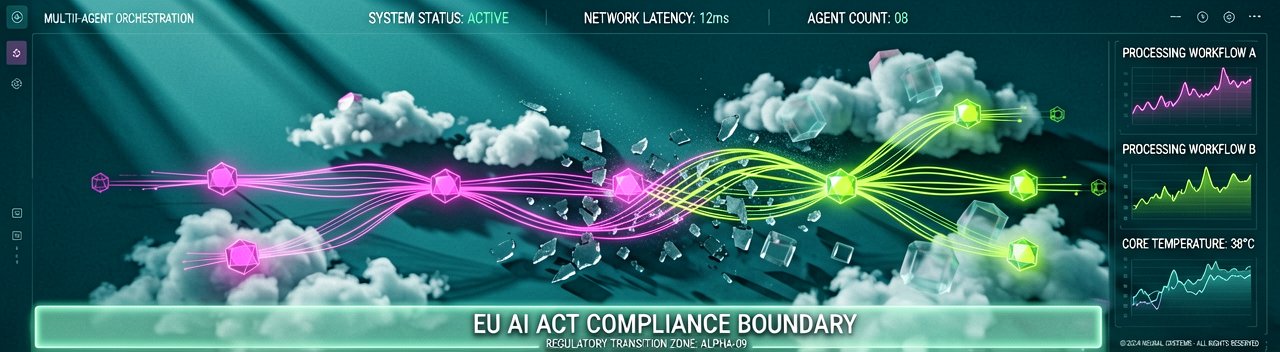
Beyond the software architecture, global organizations must grapple with a fracturing regulatory landscape that does not easily accommodate autonomous machine actions. Under frameworks like the European Union's AI Act or evolving cross-border data privacy mandates, the line between data processing and autonomous decision-making is heavily scrutinized. If an AI agent automatically shifts a consumer database backup to an alternative data center to mitigate a localized outage, it could accidentally violate strict sovereign data-residency laws. Silicon Valley's typical "move fast and break things" philosophy cannot survive the rigid, legal boundaries of international compliance.
This reality forces platforms to walk an incredibly fine line between useful autonomy and paralyzing caution. To remain compliant and safe, these platforms must implement layered veto structures that frequently check back in with human supervisors. However, every time an autonomous workflow is paused to ask an engineer for permission, the platform's core value proposition—near-instantaneous mean time to resolution—is compromised. Navigating this delicate balance will remain an uphill battle for enterprise IT departments, who must decide exactly how much operational control they are truly willing to yield to an algorithm.
"We have spent the last three decades teaching corporate IT departments to document every single keystroke to satisfy cynical auditors, only to now ask those same teams to blindly trust a cluster of autonomous software agents that solve system outages through algorithmic vibe-checks. The automated future will undoubtedly be much faster, provided anyone can figure out how to explain the AI's reasoning to the compliance committee on a Friday afternoon."
Artūras Malašauskas is an AI Systems Integrator with 20+ years of production-grade web engineering experience. He has designed, shipped, and scaled enterprise Python/PHP systems for logistics, SaaS, and public-sector clients. For the past year, he has focused exclusively on AI integrations: deploying open-source LLMs, building generative media pipelines (image, audio, video), and engineering multi-agent workflows for real production environments. His standard: reproducibility, security, cost-efficient inference—no vaporware. He documents and evaluates emerging AI tooling, separating verified capabilities from marketing noise. Technical editor at: muza-ai.eu, ai-verslas.lt, ai-naujinos.lt Connect on LinkedIn
Comments