Network Security's Silent Vulnerability: How Tool Gaps Threaten Enterprise Defenses

Modern enterprise networks are increasingly exposed to a critical yet invisible risk: the administrative and operational gaps that exist between disconnected cybersecurity tools. As organizations rapidly deploy specialized solutions to counter sophisticated threats, they inadvertently build fragmented ecosystems. This unchecked accumulation of disparate platforms creates an oversized, complex architecture where overlapping functionalities and siloed data actively degrade overall security posture.
Security teams now face the daunting task of managing an average of 83 different security tools from 29 separate vendors, according to a recent market study published by Cybersecurity Dive. This severe tool sprawl triggers intense alert fatigue, duplicates telemetry data, and leads to conflicting risk metrics. When security systems cannot natively communicate, malicious actors exploit the functional blind spots between endpoints, cloud environments, and network corridors to establish persistent lateral footholds.
The resulting operational friction directly impairs incident mitigation capabilities by artificially extending attacker dwell time. Research indicates that a unified, consolidated security model can reduce the time required to identify and resolve network breaches by 74 days and 84 days, respectively. Without strategic interoperability, enterprise security architectures remain dangerously reactive, transforming a large collection of premium security products into an unmanageable liability.
The Real TCO of Complex, Unintegrated Security Stacks
The financial and human costs of maintaining a fragmented security stack extend far beyond initial software licensing fees. Organizations must dedicate significant engineering resources to build, maintain, and continuously patch brittle, custom API integrations between siloed vendors. This operational overhead exacerbates existing talent shortages, as security operations center (SOC) analysts require highly specialized training across multiple competing interfaces to investigate a single security incident.
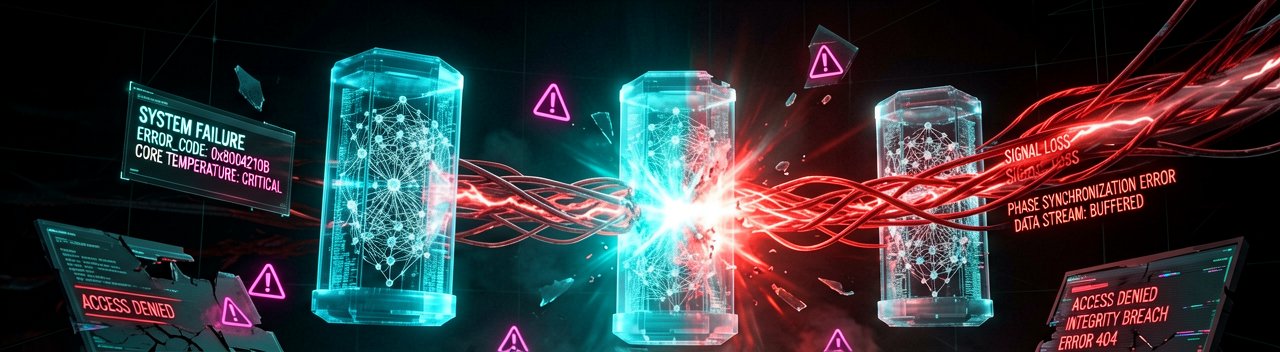
Furthermore, data architecture challenges multiply as network infrastructure grows. According to industry data published by Shibumi, 68% of enterprise organizations identify data silos as their primary operational concern due to tool proliferation. This inability to aggregate and parse security logs in a central location elongates internal debugging cycles and drives up compliance auditing costs. The resulting operational complexity can ultimately reduce an enterprise's annual revenue by as much as 7% through inefficiency and unmitigated operational downtime.
The Strategic Pivot Toward Platformization and Operational Unification
In response to escalating system complexity, enterprise security strategies are undergoing a fundamental market shift. Chief Information Security Officers (CISOs) are actively moving away from traditional "best-of-breed" procurement models toward comprehensive security platforms. Security analysts at Gartner note that converging market forces demand entirely new approaches to cyber risk management, resilience, and resource allocation. This shift emphasizes the reduction of point products in favor of tightly integrated architectures that maximize shared operational context.
This market evolution relies heavily on platform consolidation to transition enterprise operations from reactive alert management to proactive risk mitigation. By unifying endpoint security, identity verification, and network controls under a single orchestration layer, organizations significantly streamline data ingest and threat visibility. Industry forecasts indicate that organizations integrating their disparate security tools and management teams will achieve a 40% reduction in total incident response times. Ultimately, resolving the vulnerabilities between tools requires an architecture optimized for unified context rather than a simple accumulation of independent security features.
An Analytical Breakdown of the Inter-Tool Exploitation Vector
Behind the Scenes: The most sophisticated cyber adversaries do not spend their energy attempting to breach standard, hardened perimeter defenses. Instead, they map out the specific handoff zones where information flows from one corporate utility to another. When automated indicators from an endpoint detection tool fail to seamlessly pass their data to an identity access platform, a temporary security vacuum emerges. Malicious actors leverage this precise lack of continuity to conduct extensive lateral network positioning without ever raising an enterprise-wide alarm.
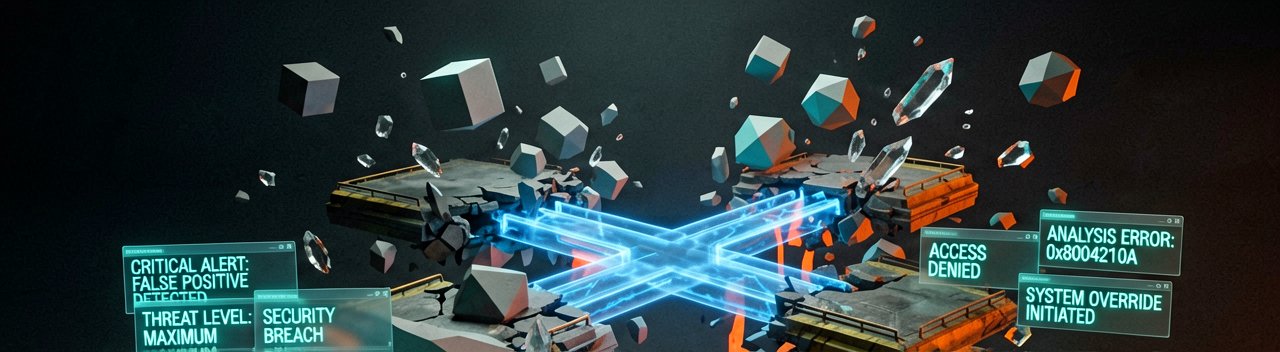
This reality forces an uncomfortable shift in how security executives evaluate corporate risk profiles. Historically, technology leaders evaluated the health of their infrastructure using the individual technical metrics of isolated point products. However, current field reports from vendors like Tenable indicate that structural cyber risk frequently thrives right between these tools. This vulnerability is especially pronounced as operational technology, multi-cloud platforms, and non-human machine identities converge into highly complex, decentralized environments.
The core problem stems from how traditional data layers process context. When an intrusion platform logs an anomaly, but the network access controller views that same asset as fully verified, the system breaks down into conflicting assertions. Security engineering teams are then forced to manually stitch this fragmented telemetry together during live security emergencies. According to industry observations compiled by Seceon, this lack of real-time cohesion allows attackers to rapidly navigate internal networks before human analysts can pinpoint the exact origin of a breach.
Compounding this exposure is the rapid rise of adaptive, automated threat frameworks that purposefully target architectural fragmentation. Modern network infrastructure now contends with dynamic, multi-layered attacks designed to alter their behavior the moment a defensive tool attempts remediation. Analysis by tech columnists at Computer Weekly highlights that organizations managing dozens of siloed applications simply cannot react fast enough to mitigate these real-time shifts. Consequently, platform consolidation has evolved from a simple strategy to save capital into an urgent requirement for enterprise survival.
The Architectural Illusion of Safety through Redundancy
Reading Between the Lines: The traditional enterprise belief that deploying multiple overlapping security layers guarantees protection is failing under modern operational pressures. For decades, organizations operated under the assumption that adding more security vendors created a safer environment. However, this defensive strategy introduces an architectural irony. The very tools purchased to eliminate corporate vulnerabilities often create a more complex network layout that is inherently harder to defend, monitor, and maintain.
This reality exposes a stark contradiction in how corporate risk is managed. While enterprise executives approve large capital investments to purchase new software, they routinely underfund the internal engineering required to integrate these tools. The result is an expensive patchwork of security systems that actively work against each other. When separate platforms compete to block, isolate, or analyze the same network traffic, they trigger system instability and false positives, allowing actual security breaches to slip through unnoticed.
Furthermore, the technology industry's sudden pivot toward artificial intelligence threatens to worsen this fragmentation. Many organizations are buying separate, proprietary AI engines for each individual tool rather than building a single, unified data platform. This approach creates isolated pockets of automation that cannot share information. According to market observations published by Infosecurity Magazine, this uncoordinated automation increases systemic risk, as automated tools can end up blocking legitimate security operations based on incomplete information.
The long-term operational outcome of this tool sprawl will likely lead to a strict vendor rationalization phase. Enterprise networks have grown too complex for humans to manage manually, and the cost of building custom integrations is no longer sustainable. Organizations that refuse to consolidate their infrastructure face a difficult reality. They will continue to pay premium software licensing fees for a collection of tools that increase their total attack surface rather than shrinking it.
The modern enterprise security stack has become the digital equivalent of a high-security vault where the doors are made of reinforced titanium, but the hinges are held together by duct tape and hope. In the end, buying eighty separate systems to protect a network ensures only two things: a bloated IT budget and a group of exhausted engineers who must manually bridge the gaps every time the software inevitably fails to talk to itself.
Artūras Malašauskas is an AI Systems Integrator with 20+ years of production-grade web engineering experience. He has designed, shipped, and scaled enterprise Python/PHP systems for logistics, SaaS, and public-sector clients. For the past year, he has focused exclusively on AI integrations: deploying open-source LLMs, building generative media pipelines (image, audio, video), and engineering multi-agent workflows for real production environments. His standard: reproducibility, security, cost-efficient inference—no vaporware. He documents and evaluates emerging AI tooling, separating verified capabilities from marketing noise. Technical editor at: muza-ai.eu, ai-verslas.lt, ai-naujinos.lt Connect on LinkedIn
Comments