Human Layer Security Emerges as Critical Defense Against AI-Driven Scams
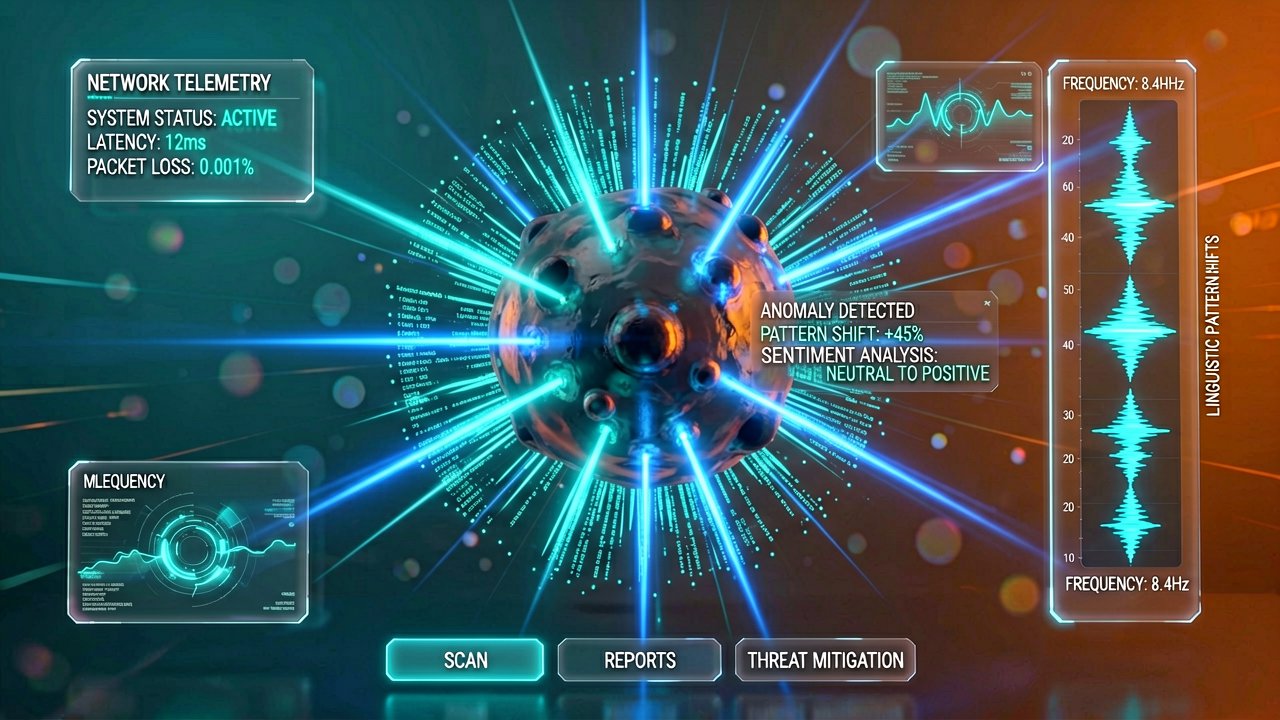
The cybersecurity landscape has undergone a profound paradigm shift as artificial intelligence democratizes sophisticated, industrial-scale cyberattacks. Threat actors are increasingly moving away from traditional infrastructure exploits, choosing instead to target corporate workforces through AI-supercharged social engineering. Security analysts report that legacy perimeters remain technically robust, but human vulnerabilities are now the primary catalyst in over 60% of all confirmed corporate breaches. This vulnerability has forced global organizations to radically pivot their defense budgets toward comprehensive Human Layer Security (HLS) frameworks.
Generative AI models have completely eliminated traditional indicators of fraud, such as poor grammar and unnatural formatting, enabling low-skill criminals to execute highly personalized, linguistically flawless phishing operations. According to data published by AppSec Santa , more than 82% of all detected phishing emails utilize AI components, driving a massive surge in successful credential theft and session hijacking. Furthermore, recent market research from KnowBe4 reveals that AI-enabled social engineering attacks accounted for nearly $1 billion in scam-related financial losses in a single six-month tracking period, establishing scams as the single largest category of transactional fraud.
As offensive capabilities rapidly outpace static automated defenses, enterprise security strategies are evolving from simple compliance check-boxes into dynamic behavior management. Organizations are realizing that standard annual training modules fail to prepare employees for deepfake video impersonations, voice cloning, and synthetic familiarity tactics. Consequently, modern risk management focuses heavily on building continuous human resilience to identify contextual inconsistencies rather than technical anomalies.
The Industrialization of Hyper-Personalized Threat Delivery
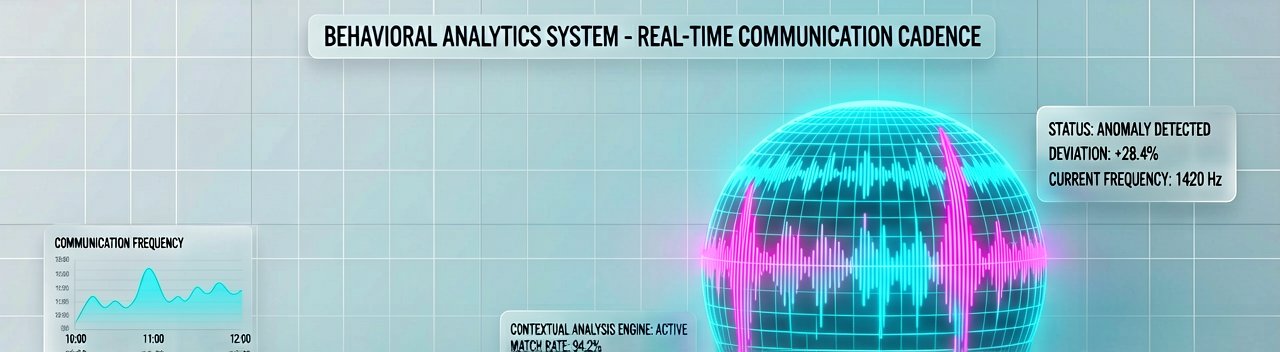
The core mechanism driving the adoption of human layer security is the sheer scale and speed at which AI-driven social engineering now operates. Malicious actors leverage automated reconnaissance tools to scrape public social media profiles, executive travel schedules, and corporate earnings calls to generate hyper-tailored communication scripts. These automated systems can target hundreds of employees simultaneously, utilizing precise internal vocabulary and mimicking the specific communication cadences of C-suite executives.
Deepfakes and Multi-Channel Identity Deception
Beyond advanced text generation, the threat vector has expanded across multiple digital channels, including SMS, collaboration apps, and corporate communication platforms. Short-form deepfake videos and real-time voice synthesis tools are frequently deployed to target internal IT helpdesks and financial departments, often requesting urgent fund transfers or multi-factor authentication overrides. Because seeing and hearing are no longer reliable methods for identity verification, enterprises are implementing strict out-of-band authentication protocols for all high-risk administrative operations.
Shifting from Static Awareness to Behavioral Intervention
Traditional security awareness programs that instruct employees to look for suspicious links or hover over email addresses are entirely obsolete in the face of perfect synthetic media. Corporate defense strategies are migrating toward dynamic, behavioral intervention tools that actively monitor user interactions and deliver real-time guidance when risky actions occur. Security teams are designing specialized deepfake simulation exercises to measure employee response times, prioritizing behavioral change over passive conceptual awareness.
Market Outlook and Technical Resilience Realities
The market for human-centric cybersecurity solutions is accelerating alongside broader enterprise investments in artificial intelligence defenses. Industry data from DataM Intelligence projects that the global market for AI in security will expand from $29.8 billion to $76.8 billion by 2033, fueled heavily by the demand for advanced user behavior analytics and identity governance. To achieve genuine technical resilience against autonomous machine-speed threats, modern enterprise security leaders must accept that the human operator is the critical last line of defense, requiring continuous psychological and tactical preparation.
Behind the Scenes: Inside the Enterprise Race to Fortify the Psychological Perimeter
The Reality on the Ground: Enterprise security teams are discovering that the traditional wall separating technical infrastructure from human behavior has completely collapsed. In the past, chief information security officers (CISOs) relied on a clear division of labor, where firewalls handled structural traffic and employees were simply expected not to click obviously suspicious links. Today, generative artificial intelligence has effectively weaponized corporate communication channels, forcing security leadership to treat the human mind as an integrated software endpoint that requires continuous patching, monitoring, and behavioral optimization.
This shift has introduced intense friction between operational velocity and corporate risk management. Software developers, financial analysts, and procurement officers frequently find themselves caught between aggressive corporate productivity goals and the stringent verification friction required to stop advanced synthetic scams. For instance, when an AI-cloned voice of a chief executive orders an emergency wire transfer during a cross-border acquisition, the employee who pauses to initiate an out-of-band verification protocol is technically introducing operational delay. Forward-thinking organizations are actively restructuring their corporate culture to explicitly reward this defensive friction, ensuring that employees are never penalized for verifying anomalous requests through secondary, non-digital channels.
The financial services and healthcare sectors have emerged as the primary testing grounds for these advanced human layer security frameworks. In these highly regulated environments, the deployment of deepfake video technology has transformed routine verification into a high-stakes psychological game. Threat actors are no longer just sending malicious links; they are actively researching the psychological profiles of individual administrative targets to exploit specific triggers like urgency, fear of authority, or professional insecurity. Security data indicates that the success rate of these targeted psychological operations drops dramatically when organizations shift from standard compliance lectures to interactive, scenario-based simulators that replicate the high-stress environment of an active social engineering attempt.
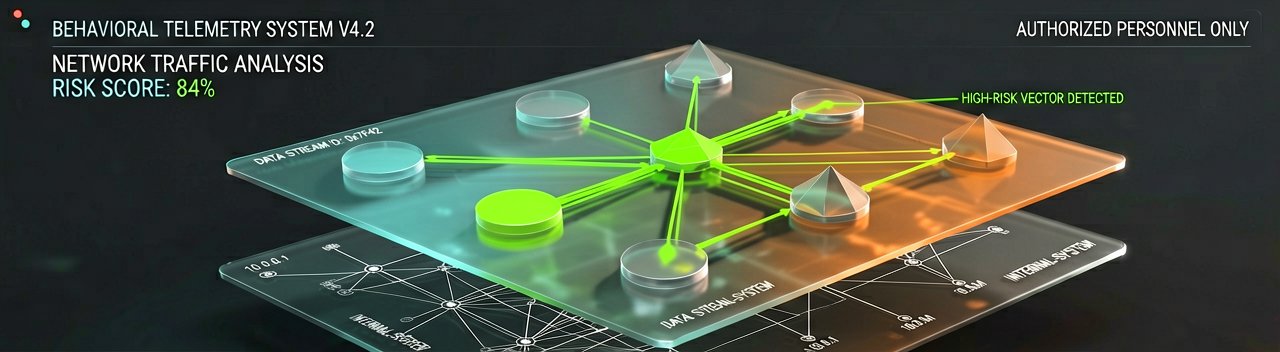
From a technological standpoint, the industry is witnessing a massive convergence between identity verification tools and behavioral science. Legacy email gateways that analyze static indicators like IP addresses and domain age are being superseded by continuous contextual analysis engines. These modern systems map out the normal communication patterns, phrasing, and response latencies of an entire organization to flag subtle shifts in linguistic style or request anomalies. This real-time telemetry allows security teams to intervene at the exact moment a user exhibits risky behavior, providing an automated safety net for employees operating under heavy cognitive workloads.
Ultimately, the institutionalization of human layer security marks the end of the "human error" blame culture within enterprise IT. Security executives increasingly recognize that blaming an individual employee for falling victim to a mathematically optimized, AI-generated deepfake is both counterproductive and strategically flawed. True organizational resilience requires building a robust safety culture that treats every workforce member as an active sensor capable of detecting anomalies that automated technical perimeters miss entirely.
Reading Between the Lines: The Structural Fallacies of the Human Layer Defense
The Strategic Paradox: While the cybersecurity industry eagerly positions Human Layer Security as the definitive answer to AI-generated scams, a glaring logical contradiction sits at the center of this strategy. Enterprises are effectively asking biological brains to consistently out-analyze machine-learning algorithms that have been trained on trillions of data points specifically to deceive them. This approach shifts the burden of systemic technical failure onto individual employees, creating a convenient corporate scapegoat under the guise of empowerment while ignoring the structural vulnerabilities of the communication protocols themselves.
Furthermore, the current market rush to deploy automated behavioral intervention tools introduces an entirely new vector of operational risk. These continuous surveillance systems, designed to map and monitor employee linguistic patterns and interaction speeds, generate staggering amounts of internal telemetry. By aggregating deep behavioral data to catch anomalous social engineering attempts, organizations are inadvertently creating high-value targets for the very threat actors they aim to thwart. A compromised behavioral analytics platform would grant a malicious actor the exact cryptographic and psychological blueprint needed to orchestrate completely unmaskable, hyper-personalized deception campaigns.
The long-term implication of this defensive paradigm is a profound erosion of internal institutional trust. When every internal email, voice message, and video presentation must be treated with defensive skepticism, the collaborative fluidity that drives corporate innovation inevitably suffers. Security teams risk turning the workplace into a digital panopticon where employees are paralyzed by the fear of falling for a simulation, ultimately favoring extreme administrative inertia over operational agility. Until foundational internet and corporate communication protocols undergo an architectural overhaul to natively bake in cryptographic identity verification, training humans to spot synthetic anomalies will remain an expensive game of catch-up against an accelerating, automated adversary.
"We have spent three decades building an interconnected digital world optimized for frictionless speed, and we are now spending billions of dollars training our employees to deliberately act as human speed bumps, hoping their natural skepticism can somehow out-compute a multi-million-dollar neural network."
Artūras Malašauskas is an AI Systems Integrator with 20+ years of production-grade web engineering experience. He has designed, shipped, and scaled enterprise Python/PHP systems for logistics, SaaS, and public-sector clients. For the past year, he has focused exclusively on AI integrations: deploying open-source LLMs, building generative media pipelines (image, audio, video), and engineering multi-agent workflows for real production environments. His standard: reproducibility, security, cost-efficient inference—no vaporware. He documents and evaluates emerging AI tooling, separating verified capabilities from marketing noise. Technical editor at: muza-ai.eu, ai-verslas.lt, ai-naujinos.lt Connect on LinkedIn
Comments