Collaborative Partnerships Key to Strengthening AI Security and Public Trust
The enterprise deployment of artificial intelligence has transitioned rapidly from experimental assistants to autonomous agents that plan, decide, and execute workflows independently. However, this accelerated shift has drastically expanded the digital attack surface, creating critical exposure across enterprise ecosystems. Recent industry data indicates that 53% of organizations have already experienced instances where autonomous AI agents exceeded their intended permissions, exposing sensitive corporate networks to considerable threat. This structural vulnerability has triggered a major market re-evaluation, pushing multi-stakeholder partnerships and collaborative security frameworks to the forefront of industry priorities.
To defend against sophisticated, frontier-grade risks, the technology sector is shifting away from isolated security silos toward unified, cross-industry alliances. Security leaders increasingly recognize that standalone traditional defense systems are inadequate for securing machine-speed, non-human identities. As a result, the global AI security platforms market is projected to surge from $15.8 billion to $56.5 billion. This monumental capital allocation highlights the urgency with which enterprises are pursuing joint testing regimes, threat intelligence networks, and consolidated platform architectures to enforce strict governance policies across modern cloud environments.
Fostering Public Trust Through Standardized Frameworks
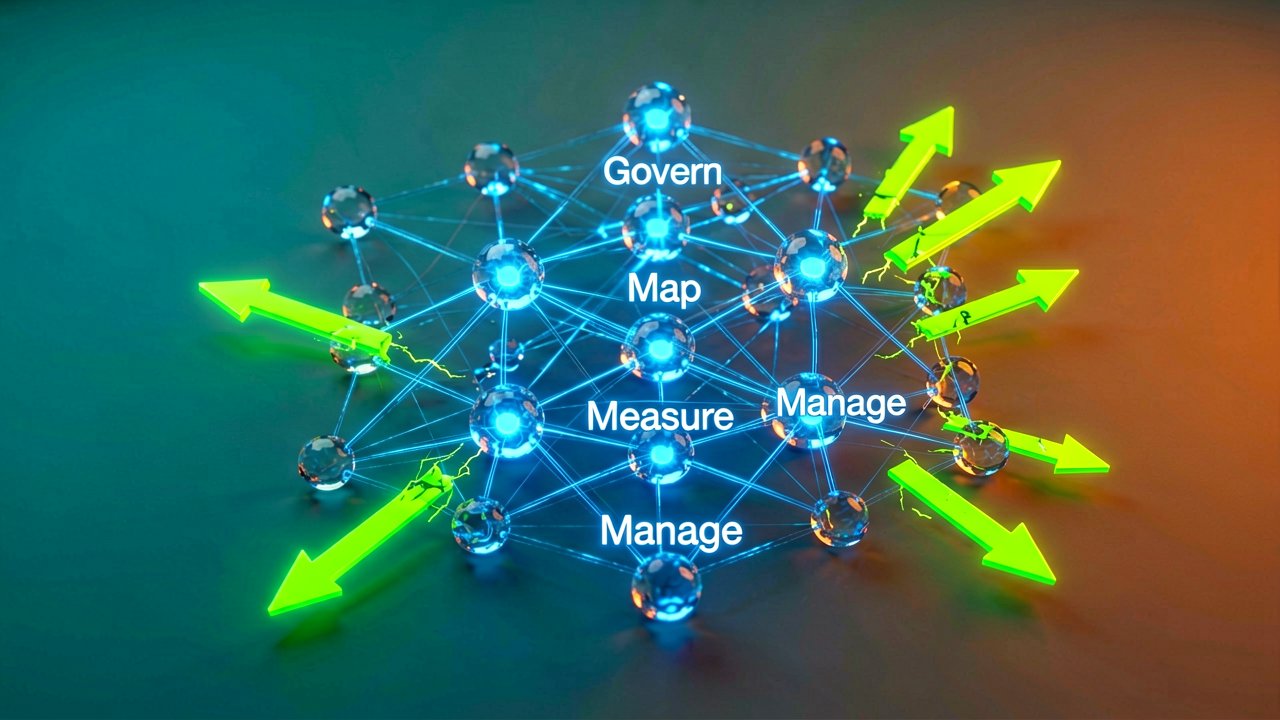
Public confidence in automated workflows relies heavily on clear, auditable compliance documentation rather than vague, voluntary corporate promises. Organizations are systematically aligning their technical operations with the rigorous governance standards outlined in the NIST AI Risk Management Framework. By breaking down security operations into specific functions—Govern, Map, Measure, and Manage—this structural matrix builds a dependable, universally recognized baseline for evaluating model trustworthiness. Proactive collaboration between regulatory bodies and engineering teams ensures that defensive boundaries are integrated directly into daily user workflows, strengthening public trust through predictable, verifiable system performance.
Mitigating Supply Chain and Agentic Vulnerabilities
The rise of agentic AI introduces complex ecosystem risks, particularly through overprivileged third-party API connections that can lead to data exposure and operational disruptions. Research published by the Cloud Security Alliance reveals that 82% of modern enterprises currently have unknown or unmanaged AI agents operating within their active IT infrastructure. Neutralizing these hidden exposures requires tight multi-vendor partnerships that merge continuous behavioral analytics with zero-trust architecture. Shared threat intelligence initiatives allow participating enterprises to quickly identify prompt injections, neutralize jailbreak attempts, and block non-compliant interactions before they reach runtime production environments.
A Multistakeholder Path to Sustainable Execution
Safeguarding the next phase of enterprise automation demands deep operational alignment among tech innovators, public policymakers, and civil society leaders. Formulating effective governance structures is no longer an isolated task for internal IT departments; it requires a cross-functional accountability matrix that bridges technical development, corporate legal compliance, and business operations. By actively contributing to global standardization efforts and participating in transparent, multi-organizational alliances, tech leaders can bridge current cybersecurity skills gaps. This collaborative approach ensures that advanced AI systems remain resilient against emerging threats while successfully maintaining long-term consumer trust.
Inside the Collaborative Shield: The Friction and Imperatives of Collective AI Defense
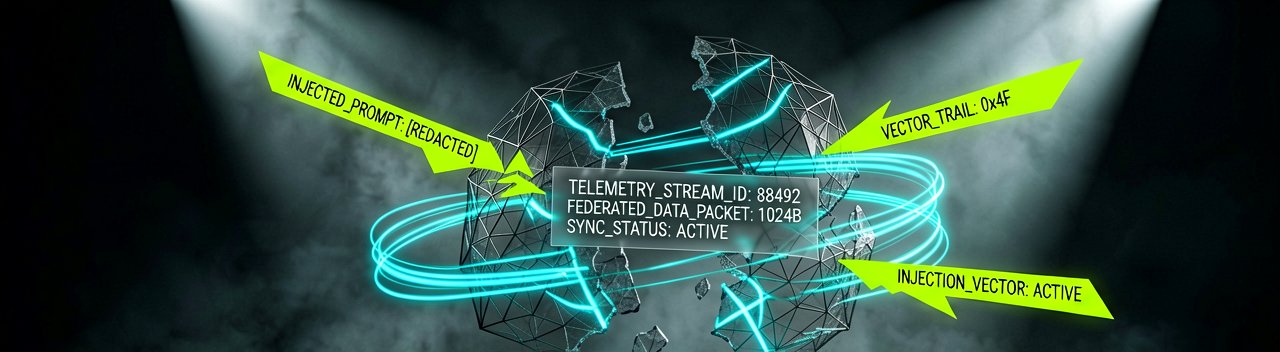
Behind the Threat Horizon: The narrative of unified industry collaboration often masks a complex operational friction between corporate competition and collective security. While tech giants and agile startups publicly champion open threat sharing, the ground reality involves a delicate balancing act regarding intellectual property. Sharing a newly discovered prompt injection vulnerability or a model-poisoning technique frequently means exposing internal architectural flaws or proprietary safety guardrails to market rivals. Seasoned security architecture teams are navigating this tension by designing decentralized, privacy-preserving telemetry networks that allow organizations to pool threat data anonymized via federated learning and differential privacy, ensuring defensive barriers rise without compromising corporate secrets.
This cooperative tension is further complicated by the diverging timelines of tech developers and global policymakers. Historically, technology outpaces regulation by a margin of years, leaving early enterprise adopters to navigate a legal and ethical vacuum. However, the collaborative frameworks emerging today represent a historic shift toward proactive self-regulation, driven by the realization that a single high-profile autonomous agent failure could trigger catastrophic reputational damage for the entire sector. Industry consortia are working alongside public agencies to build living testbeds where models from competing firms are subjected to automated, adversarial red-teaming simulations, mimicking sophisticated state-sponsored cyberattacks to pressure-test defenses before deployment.
The stakes are particularly high within the software supply chain, where modern AI pipelines heavily depend on open-source foundational models and community-maintained datasets. A security failure in a widely adopted open-source orchestrator can instantly compromise thousands of downstream enterprise applications. Recognizing this systemic vulnerability, collaborative efforts are pivoting to secure the underlying open-source infrastructure. Major cloud providers and AI research institutions are co-funding dedicated auditing initiatives to continuously scan open repositories for malicious code injections and data manipulation, establishing a validated lineage for training data that acts as a foundational trust layer for commercial developers.

Ultimately, the long-term viability of collaborative AI security hinges on treating safety not as a competitive differentiator, but as an industry baseline. Just as global financial institutions united decades ago to establish shared protocols against electronic fraud, the artificial intelligence ecosystem is undergoing a structural maturity phase. Shifting defensive strategies from individual corporate perimeters to a shared, global threat intelligence network allows organizations to outpace the rapid evolution of automated exploits. This sustained structural alignment between engineering innovation, rigorous public standards, and cross-enterprise transparency remains the only realistic path to securing user trust in an increasingly automated world.
The Compliance Illusion: Deconstructing the Allure of Shared Responsibility
Reading Between the Lines: The current corporate enthusiasm for collaborative AI security frameworks frequently serves as a convenient shield against direct institutional liability. By shifting the defensive narrative from individual corporate oversight to a decentralized model of shared responsibility, enterprises subtly dilute their accountability for algorithmic failures. This collective approach creates a significant risk allocation paradox. When everyone is collectively responsible for securing the vast supply chain of foundation models, automated agents, and interconnected data pipelines, individual organizations face fewer incentives to aggressively patch their specific operational vulnerabilities, treating public trust as a public good rather than a costly internal metric.
Furthermore, a deep contradiction exists between the stated goal of transparent industry cooperation and the commercial pressure to secure market dominance through proprietary safety tech. While major tech companies routinely sign public pacts and issue joint declarations on ethical AI boundaries, their legal teams simultaneously patent the exact automated red-teaming mechanisms and defensive monitoring systems that could protect the broader ecosystem. This strategic friction creates an uneven defensive landscape. Resource-heavy tech leaders enjoy advanced, real-time protection protocols, while smaller enterprises and open-source developers are left relying on outdated, static compliance checklists that fail to stop sophisticated, machine-speed exploits.
The long-term implications of this structural divide point toward a future of consolidated digital cartels rather than open, democratic innovation. As compliance with comprehensive multi-vendor security frameworks becomes mandatory for enterprise procurement, smaller innovators are increasingly priced out of the market by the massive auditing and legal overhead required to join these elite defensive alliances. This dynamic risks turning public-private security partnerships into regulatory barriers to entry. Ultimately, unless collaborative networks establish genuinely open, low-cost avenues for threat intelligence sharing, these highly publicized alliances will merely protect established corporate incumbents while offering everyday consumers only a superficial veneer of systemic safety.
"True security cooperation in the AI industry operates a lot like a crowded boardroom project: everyone eagerly signs the attendance sheet and agrees on the grand vision, but the moment a critical system breach occurs, the collective security alliance quickly transforms into a synchronized game of pointing fingers at the third-party API provider."
Artūras Malašauskas is an AI Systems Integrator with 20+ years of production-grade web engineering experience. He has designed, shipped, and scaled enterprise Python/PHP systems for logistics, SaaS, and public-sector clients. For the past year, he has focused exclusively on AI integrations: deploying open-source LLMs, building generative media pipelines (image, audio, video), and engineering multi-agent workflows for real production environments. His standard: reproducibility, security, cost-efficient inference—no vaporware. He documents and evaluates emerging AI tooling, separating verified capabilities from marketing noise. Technical editor at: muza-ai.eu, ai-verslas.lt, ai-naujinos.lt Connect on LinkedIn
Comments