Jacobs' AI Framework Appointment Signals Shift in Utility Sector Innovation

The appointment of global engineering firm Jacobs to Yorkshire Water’s artificial intelligence services framework marks a pivotal maturation in how critical infrastructure entities deploy digital solutions. Valued at approximately £32 million ($45 million) over a five-year period, the contract reflects a strategic pivot away from localized AI testing toward fully integrated, enterprise-scale operational deployments. This partnership is designed to leverage machine learning and advanced data science to enhance wastewater asset performance, optimize clean water delivery, and reinforce long-term infrastructure resilience against climate pressures.
The timing of this contract is inextricably linked to the U.K. water sector’s transition into Asset Management Period 8 (AMP8). This upcoming regulatory cycle imposes unprecedented demands on utilities, requiring them to meet stricter environmental targets and tighter regulatory requirements while simultaneously addressing consumer affordability pressures. By establishing a dedicated AI framework, Yorkshire Water is positioning data-driven automation as a core mechanism to fulfill these obligations, shifting its internal data engineering capabilities from standard diagnostic telemetry monitoring into predictive and prescriptive operational control.
Historically, utility innovation focused on physical asset enhancements or siloed software applications that delivered localized efficiency gains. The systemic integration of AI consulting services provided by firms like Jacobs allows utilities to process massive influxes of real-time sensor data to proactively mitigate failures before they manifest physically. As water networks grapple with escalating operational complexities, the industrialization of machine learning frameworks represents the new baseline for utility asset lifecycle management worldwide.
Regulatory Imperatives Driving Digital Evolution
The primary driver behind this large-scale AI procurement is the rigorous regulatory landscape characterizing the AMP8 period. Regulators are demanding higher transparency and rapid environmental mitigation, creating an environment where traditional reactive engineering models are no longer economically or operationally viable. Advanced analytics provide the necessary accuracy to optimize existing assets, offering a capital-efficient alternative to building expensive new physical infrastructure.
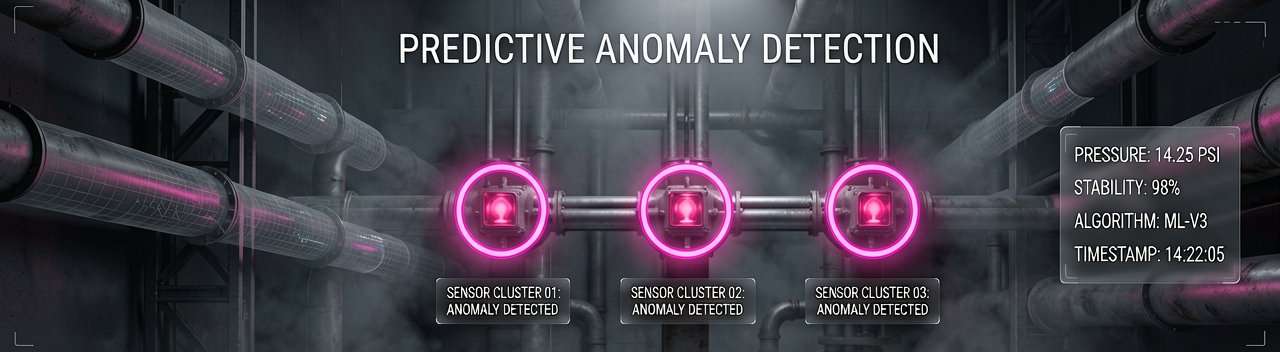
Transitioning from Diagnostic to Predictive Infrastructure Management
The framework directly targets operational bottlenecks such as alarm fatigue in centralized control rooms, where automated systems often overwhelm human operators with false positives. By integrating predictive AI models directly into operational technology networks, the partnership aims to rationalize telemetry alerts and deliver actionable insights for field teams. This methodology transitions the utility from a culture of historical troubleshooting to real-time, automated operational triaging.
Scalability and Productization of Enterprise AI
A key focus of this framework is the collaborative co-development of scalable digital products that integrate directly with existing cloud data infrastructure. Rather than relying on rigid, third-party proprietary software, Yorkshire Water is utilizing engineering partners to build flexible, production-ready machine learning models alongside its internal data science teams. This approach establishes a repeatable blueprint for the global utility sector, demonstrating how legacy infrastructure can safely adopt modern agentic workflows.
An Inside Look at Infrastructure Intelligence
Behind the Digital Transformation: The true significance of Jacobs securing this framework lies in the structural dismantling of data silos that have historically crippled utility management. For decades, water companies have operated on fragmented telemetry systems, where clean water operations, wastewater network monitoring, and asset planning groups utilized entirely separate data architectures. This operational fragmentation meant that critical indicators of systemic failure were often lost in translation between departments. By establishing a unified enterprise AI framework, Yorkshire Water is forcing these distinct operational technology streams into a singular, cohesive data lake, creating the baseline required for true predictive modeling.
From an engineering perspective, the technical challenge shifts from basic data ingestion to real-time algorithmic accuracy at the edge. The collaboration focuses heavily on refining machine learning models to analyze thousands of acoustic loggers, pressure sensors, and flow meters simultaneously. In practical terms, this allows the system to identify the microscopic structural anomalies that precede a major water main burst or sewage pollution incident hours before physical evidence appears. Experienced field engineers are transitioning from manual, scheduled maintenance routes to dynamic, AI-directed dispatch queues, maximizing the efficiency of limited municipal labor forces.
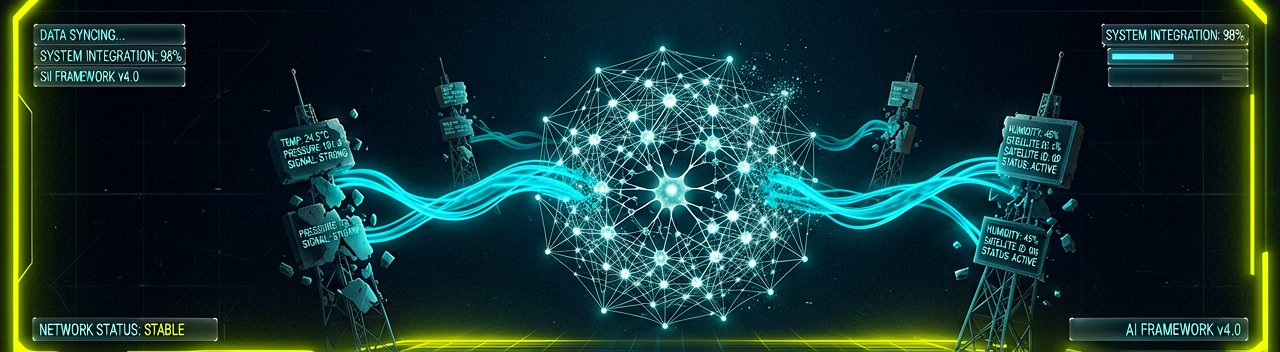
Stakeholder perspectives reveal that this contract is also a calculated response to intense public and political scrutiny over network resilience and environmental compliance. Investors and regulatory bodies are no longer satisfied with post-incident mitigation strategies; the demand is now for demonstrable, proactive prevention. For Jacobs, the framework serves as a high-stakes proving ground to demonstrate that large-scale digital twins and AI agents can deliver measurable capital expenditure savings. If successful, this model will serve as the commercial blueprint for aging infrastructure networks across Europe and North America, proving that software intelligence can effectively extend the lifespan of depreciating physical assets.
The Pragmatic Realities of Algorithmic Infrastructure
Reading Between the Lines: While the industry celebrates this multi-million-pound framework as a definitive leap into the future of automated utility management, experienced infrastructure analysts recognize the steep hill that lies between software procurement and operational reality. The prevailing industry assumption is that legacy networks are readily primed for machine learning intervention, yet the foundational data layers of most century-old water systems remain notoriously messy and fragmented. AI models are only as robust as the telemetry feeding them, and utilities routinely grapple with uncalibrated field sensors, intermittent communication dropouts, and historical data gaps that can easily lead predictive algorithms to incorrect conclusions.
This creates an institutional paradox where the deployment of advanced automation can inadvertently increase operational risk if not tightly controlled. Control room operators already suffer from chronic alarm fatigue, and introducing a new layer of sophisticated, probabilistic AI alerts risks worsening the problem rather than solving it. If an algorithm flags a hypothetical infrastructure failure based on complex statistical correlations that a human operator cannot easily trace or understand, the natural response is often skepticism or outright dismissal. For Jacobs to deliver genuine value, the focus must shift away from theoretical algorithmic complexity and toward creating explainable, highly transparent interfaces that veteran field technicians actually trust.
Furthermore, the long-term commercial structure of these digital frameworks introduces a subtle conflict of interest regarding asset lifecycles. Engineering firms traditionally generate substantial revenue from major capital expenditure projects, such as designing and constructing massive physical treatment works or pipeline expansions. A purely software-driven approach aims to achieve the exact opposite: squeezing extra decades of utility out of existing, depreciating concrete and iron assets to defer expensive capital upgrades. Balancing the commercial incentives of traditional engineering with the cost-cutting, asset-extending goals of enterprise software development will require a level of contractual agility that the heavily regulated utility sector has rarely demonstrated.
"In the end, automating a utility means reconciling the pristine, hyper-logical world of predictive data science with the stubborn reality of Victorian-era underground iron pipes that have been slowly leaking since the industrial revolution; it turns out that even the most brilliant algorithm still eventually has to ask a human being to grab a shovel and dig."
Artūras Malašauskas is an AI Systems Integrator with 20+ years of production-grade web engineering experience. He has designed, shipped, and scaled enterprise Python/PHP systems for logistics, SaaS, and public-sector clients. For the past year, he has focused exclusively on AI integrations: deploying open-source LLMs, building generative media pipelines (image, audio, video), and engineering multi-agent workflows for real production environments. His standard: reproducibility, security, cost-efficient inference—no vaporware. He documents and evaluates emerging AI tooling, separating verified capabilities from marketing noise. Technical editor at: muza-ai.eu, ai-verslas.lt, ai-naujinos.lt Connect on LinkedIn
Comments