Filigran Debuts XTM One: Turning AI Agents into Cybersecurity’s New Operating System
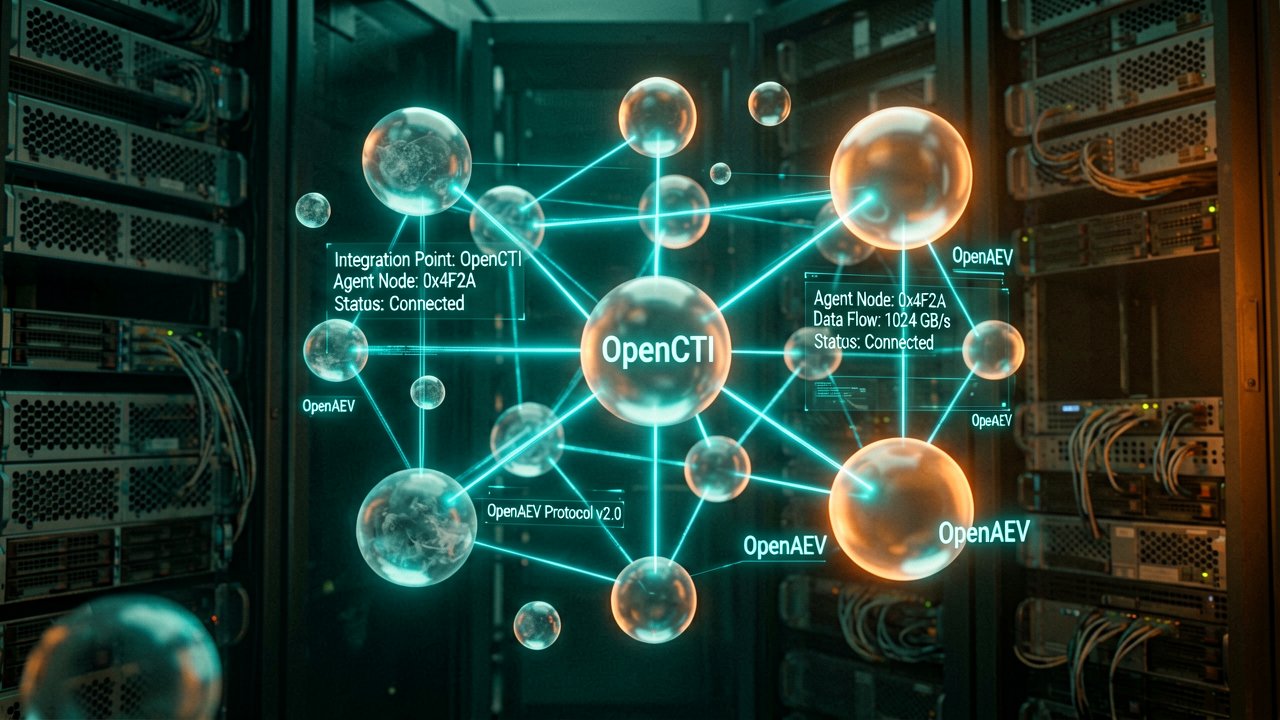
The cybersecurity industry has been swimming in data but drowning in manual friction for years. Today, open-source threat management pioneer Filigran launched XTM One, an AI-native orchestration layer built to fundamentally break that operational bottleneck. Officially unveiled on June 9, 2026, the newly minted platform acts as a bridge between the company's existing flagship products, OpenCTI and OpenAEV, creating a fully automated loop for Continuous Threat Exposure Management (CTEM). Instead of forcing overstretched security teams to awkwardly pivot between independent threat feeds, attack simulation dashboards, and remediation trackers, the new system leverages interacting machine learning agents to unify the entire defensive lifecycle in real time.
According to an official announcement hosted on Business Wire, XTM One represents a crucial shift from basic task-assistance to end-to-end workflow autonomy. While standard security platforms deploy AI as a localized, conversational chatbot tool, Filigran has designed this architecture to coordinate workflows across separate systems natively. The numbers backing the initial rollout are turning heads, too; early platform benchmarks indicate that participating organizations have managed to squeeze threat detection and response cycles down by up to 70%, while simultaneously cutting offensive security testing preparation times by a massive 80%.
Breaking Down the Agentic Architecture
At its core, the platform operates via a network of coordinated, prepackaged AI agents assigned to specific operational pain points. These digital specialists handle everything from automated threat intelligence ingestion and enrichment to generating contextual risk reports. When a fresh vulnerability hits the ecosystem, the orchestration layer can autonomously pass those parameters over to an attack-simulation workflow to validate whether an enterprise's defenses actually hold up under fire. Filigran co-founder Julien Richard pointed out that the current volume of CVEs and active campaign threats has simply outgrown human processing capacity. He framed XTM One not as another bolted-on software feature, but as a proactive "operating system" tailored for modernized threat management.
Flexible Deployments and Sovereign Data Controls
Acknowledging the privacy hesitation that often plagues cloud-heavy enterprise AI, Filigran is keeping options flexible through a "Bring Your Own Large Language Model" (BYOLLM) protocol. The system permits corporate enterprises and government agencies to process heavy workloads utilizing internal neural frameworks or default specialized packages. It supports on-premises deployment models straight out of the gate, an architectural mandate highly valued by strictly regulated industries that are legally blocked from sharing sensitive localized telemetry data with third-party web servers. A natural language interface also simplifies interaction across the board, allowing junior-level analysts to quickly pull complex operational summaries without wrestling with tedious query scripts.

Pricing Tiers and Open Source Extensions
The company is bringing this new layer to the market using a multi-tiered access structure. Existing enterprise subscribers of OpenCTI or OpenAEV can tap into a baseline package of prepackaged agents, an allocation of usage quotas, and native BYOLLM support without any additional overhead charges. Organizations gunning for extensive custom agent creation, advanced orchestration pipelines, and premium model suites will need to purchase a distinct commercial license. For the broader engineering community, Filigran has simultaneously released a free, standalone, open-source Model Context Protocol server, preserving their long-standing grassroots commitment and ensuring external developer architectures can connect right into the ecosystem.
What the Press Release Misses: The Reality of Autonomous Threat Orchestration
Behind the Tech Shockwave: The promise of fully autonomous Continuous Threat Exposure Management sounds like a silver bullet for understaffed security operations centers, but industry veterans recognize that shifting control to AI agents is a calculated gamble. For over a decade, security orchestration, automation, and response tools relied on strict, human-written playbooks. When an alert fired, the system executed an exact, predictable script. Filigran’s move to dump rigid playbooks in favor of interacting machine learning agents fundamentally changes how corporate networks defend themselves. It shifts the defensive posture from deterministic code to probabilistic AI reasoning, a transition that makes some risk-averse Chief Information Security Officers incredibly anxious.
The core tension lies in the autonomous loop established between threat intelligence ingestion and live attack simulation. In traditional environments, threat analysts review raw intelligence feeds, engineer specific detection rules, and hand them off to a separate operations team for testing. XTM One bypasses this bureaucratic pipeline by letting independent AI agents communicate with each other directly. While reducing a detection cycle by 70% is an operational triumph, it raises tough questions about corporate accountability. Early feedback from closed beta testers indicates that validating an AI agent's reasoning during an automated breach simulation requires entirely new auditing frameworks, as security teams must verify that the agent didn't inadvertently disrupt critical production infrastructure during its validation routines.
This operational shift highlights a growing divide within the cyber community regarding the definition of sovereign AI. Filigran’s inclusion of a "Bring Your Own Large Language Model" protocol is not just a convenient feature; it is a tactical response to stricter global data compliance mandates like the European Union's AI Act. Highly regulated sectors, including defense, finance, and critical infrastructure, refuse to let external cloud models ingest local telemetry data or proprietary vulnerability reports. By allowing enterprises to deploy XTM One completely on-premises alongside specialized local models, Filigran is actively courting government agencies that are eager to experiment with agentic automation but legally blocked from utilizing traditional, US-hosted commercial cloud models.

Looking at the broader market landscape, this release intensifies the platform wars between legacy cybersecurity conglomerates and open-source challengers. Established giants have spent billions acquiring disparate tools to build comprehensive security portfolios, yet enterprises still struggle with fractured data silos and vendor lock-in. By leveraging an open-source foundational layer through OpenCTI and OpenAEV, Filigran positions its new orchestration hub as an ecosystem aggregator rather than a closed garden. Maintaining this open architecture while simultaneously locking advanced automation capabilities behind a commercial enterprise license is a delicate balancing act, but it represents the new standard for open-core companies trying to monetize cutting-edge AI research.
Ultimately, the success of this agent-driven model will be judged in the trenches of active cyber warfare, where adversaries are already deploying their own adversarial machine learning frameworks. An automated defense system is only as robust as its underlying data and the speed at which it can adapt to novel, never-before-seen exploit chains. By releasing a free Model Context Protocol server alongside their enterprise tiers, Filigran is banking on the global open-source community to continuously stress-test, refine, and expand the platform's integration capabilities. If independent developers embrace the protocol, XTM One could realistically establish itself as a dominant connective fabric for modern enterprise defense, proving that collaboration remains cybersecurity's strongest asset against increasingly sophisticated digital threats.
Reading Between the Lines: The Friction Point of Autonomous Defense
Reading Between the Lines: The cybersecurity market treats the word "automation" like an absolute virtue, but the reality on the ground is rarely so clean-cut. Filigran’s claim that XTM One can condense threat detection and response cycles by 70% relies on a major assumption: that enterprise IT environments are pristine, well-documented, and ready to be handed over to autonomous algorithmic entities. In the wild, most corporate networks are chaotic tapestries of legacy databases, unpatched shadow IT, and fragile custom scripts. Dropping an interacting network of AI agents into this delicate mix risks creating a cure that is occasionally as disruptive as the disease, potentially triggering cascading system false-positives under the banner of real-time mitigation.
There is also an inherent paradox embedded within Filigran's dual embrace of open-source philosophy and proprietary monetization. The company has earned widespread industry trust by maintaining OpenCTI as a transparent, collaborative threat intelligence hub. However, locking the most sophisticated orchestration pipelines and advanced model suites behind a commercial enterprise license creates a stark operational tier system. This setup forces mid-market enterprises into a difficult position where they can aggregate threat data for free, but must pay a premium to actually act on that data with modern efficiency. It undercuts the egalitarian spirit of open-source security by turning comprehensive automated defense into a luxury software product.
Furthermore, the reliance on a "Bring Your Own Large Language Model" protocol introduces a highly complex layer of risk management. While sovereign data controls look phenomenal on a compliance checklist, they shift the immense burden of model optimization, prompt engineering, and hallucination containment directly onto the customer. A security operations center using an incorrectly tuned internal model might find its AI agents misinterpreting threat context, leading to overlooked vulnerabilities or accidental self-inflicted denial-of-service incidents during automated breach simulations. If an organization has to spend hundreds of engineering hours baby-sitting its automated orchestrator to ensure it behaves rationally, the promised operational efficiency vanishes entirely.
Looking toward the immediate horizon, this shift to agentic defense will inevitably trigger an evolution in adversarial tactics. Threat actors are not going to sit idly by while corporate networks deploy automated loops to thwart their campaigns; they will actively look to exploit the machine learning models themselves. By feeding poisoned telemetry data into public threat feeds, clever adversaries could theoretically manipulate the behavioral thresholds of platforms like XTM One, tricking the automated systems into ignoring malicious lateral movements. The industry is effectively entering a high-stakes chess match where the primary battleground is no longer just software code, but the integrity of the training data driving the defensive algorithms.
"We are rapidly approaching a future where enterprise security consists of corporate AI agents endlessly arguing with adversarial AI agents over network access privileges, leaving human security analysts with little left to do but watch the telemetry dials spin and pray that nobody accidentally unplugs the server."
Artūras Malašauskas is an AI Systems Integrator with 20+ years of production-grade web engineering experience. He has designed, shipped, and scaled enterprise Python/PHP systems for logistics, SaaS, and public-sector clients. For the past year, he has focused exclusively on AI integrations: deploying open-source LLMs, building generative media pipelines (image, audio, video), and engineering multi-agent workflows for real production environments. His standard: reproducibility, security, cost-efficient inference—no vaporware. He documents and evaluates emerging AI tooling, separating verified capabilities from marketing noise. Technical editor at: muza-ai.eu, ai-verslas.lt, ai-naujinos.lt Connect on LinkedIn
Comments